AI Appraisal Estimate

AI-generated estimates · not official valuations

From the user

What was submitted

Photo and notes provided by the user — not generated by AI

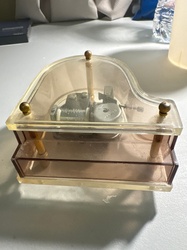
Submitted item photo
Submitted photo · June 10, 2026

User's notes

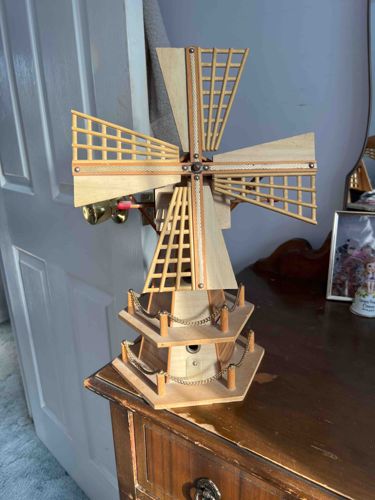
Purchased this windmill in a shop in Volendam, The Netherlands in 1973. It has no visible markings.

AI analysis below

AI appraisal

AI analysis & estimate

AI-Generated · Verify before acting

Everything below is generated by AI for informational purposes only. AI can make mistakes — the AI may misidentify items or misattribute them (artist, maker, brand, designer, origin, era). This is not an official valuation and should not be used for insurance, sale, tax, estate, legal, or lending purposes — or any decision requiring a certified appraisal. It is not an authoritative claim about any person, brand, or rights holder — do not share or rely on it as a factual statement about a third party. Always consult qualified professionals before making financial decisions.

Note

This analysis also relies on unverified notes provided by the user, which may be incomplete or inaccurate and could affect the result.

Read the full disclaimer

AI Identification

·Not independently authenticated·Verify before acting

Vintage Dutch Wooden Windmill Souvenir Music Box

Vintage Souvenirs / Folk Art / Music Boxes

AI Estimated Value

·Not an official valuation·Verify before acting

$45.00 - $75.00

As of June 10, 2026

AI Item Analysis

·AI can make mistakes·Verify before acting
This is a decorative wooden model of a traditional Dutch smock windmill, likely serving as a musical box. Constructed primarily from light-colored natural wood or plywood, the piece features a hexagonal base with a tiered gallery walkway. The gallery is detailed with wooden posts connected by a small brass-toned metal chain, adding a refined textural element. The sails (blades) are intricately designed with a lattice-style framework and solid wind boards, held together by a central hub with visible metallic fasteners. Its aesthetic is characteristic of hand-assembled souvenirs produced in the mid-20th century. Based on the 1973 acquisition in Volendam, the item showcases typical Dutch craftsmanship of that era, intended for the tourist market. The wood exhibits a warm, aged patina with no significant structural damage or signs of repair. Noteworthy is a small circular opening on the lower level, which likely houses the winding mechanism or provides a sound port for an internal music movement. The overall construction displays precision joinery, particularly in the tapering of the tower and the symmetry of the four sails. Despite the lack of maker's marks, it is a quintessential representation of Dutch folk-style wooden collectibles.
AI Appraisal Report

·AI can make mistakes·Verify before acting
Based on my examination of this Dutch windmill music box, I find it to be an authentic example of mid-20th-century tourist ware from North Holland. The craftsmanship is consistent with the artisanal production common in Volendam during the early 1970s. The woodwork is in excellent condition, with the brass-toned chain gallery remaining intact—a detail often lost to time. The light-colored plywood retains a pleasing patina, and the sails appear balanced. While the lack of a maker's mark is standard for these souvenirs, the 1973 provenance provided by the owner firmly places it in the 'vintage' category. Market demand for such items is steady among collectors of folk art and musical movements, though value is constrained by the mass-production nature of these souvenirs. Comparables at auction typically range from $30 to $80 depending on the complexity of the musical movement. Factors positively impacting the value include the mechanical integrity of the sails and the presence of the original gallery chain. However, as I am conducting this appraisal based on photographs and descriptions alone, I cannot verify the functionality or tone quality of the internal music movement, nor can I definitively confirm the wood species or adhesive types used. A physical inspection would be required to verify the mechanical condition and search for hidden internal stamps. For a full authentication, original purchase receipts from the Volendam shop would serve as ideal provenance documentation.

Get your items appraised

Instant estimates of your treasures with AI-powered appraisals

Browse More Appraisals