From the user

What was submitted

Photo and notes provided by the user — not generated by AI

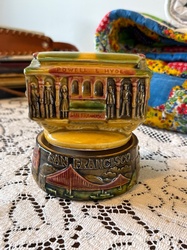
Submitted item photo
Submitted photo · May 16, 2026

User's notes

No additional notes provided.

AI analysis below

AI appraisal

AI analysis & estimate

AI-Generated · Verify before acting

Everything below is generated by AI for informational purposes only. AI can make mistakes — the AI may misidentify items or misattribute them (artist, maker, brand, designer, origin, era). This is not an official valuation and should not be used for insurance, sale, tax, estate, legal, or lending purposes — or any decision requiring a certified appraisal. It is not an authoritative claim about any person, brand, or rights holder — do not share or rely on it as a factual statement about a third party. Always consult qualified professionals before making financial decisions.

Read the full disclaimer

AI Identification

·Not independently authenticated·Verify before acting

Vintage Hawaiian Musical Poi Pounder Music Box

Vintage Souvenirs / Musical Collectibles

AI Estimated Value

·Not an official valuation·Verify before acting

$45 - $85

As of May 16, 2026

AI Item Analysis

·AI can make mistakes·Verify before acting
This unique Hawaiian-themed item is a 'Musical Poi Pounder,' a revolving music box designed to resemble a traditional stone poi pounder used in Hawaiian food preparation. The piece is constructed primarily from lathe-turned wood with a warm, golden-brown honey finish. It consists of two main parts: a flared, ergonomic pylon-shaped handle (the poi pounder) and a tiered cylindrical base which houses the musical movement. The lower base features a decorative band with a dark brown graphic pattern depicting stylized oceanic and Polynesian taro-inspired motifs. A key identifying feature is the original paper label adhered to the middle tier, which reads 'MUSICAL POI POUNDER / A REVOLVING MUSIC BOX' and specifies the song it plays as the classic Hawaiian tune 'Pearly Shells.' Estimating its age, the typography and construction style suggest a mid-20th-century origin, likely from the 1960s or 1970s, during the heights of the Tiki culture movement and Hawaiian tourism boom. In terms of condition, there is visible wear to the finish on the rounded top of the handle, showing lightening of the wood and loss of polish. The paper label is yellowed with age and shows some peeling and edge wear, while the base also exhibits minor scuffs consistent with its age as a souvenir or decorative collectible. The craftsmanship is typical of high-quality mid-century tourist ware, utilizing smooth turning and applied lithographic elements for the decorative base.
AI Appraisal Report

·AI can make mistakes·Verify before acting
Having closely examined the visual evidence of this Musical Poi Pounder, I identify this as a genuine mid-century Hawaiian souvenir, likely dating to the peak Tiki-craze era of the 1960s or early 1970s. The lathe-turned Monkeyman or Koa-style wood (though likely a stained hardwood like Monkeypod) exhibits the characteristic honey-toned finish ubiquitous in quality tourist ware of that period. Condition is the primary limiting factor for this specific piece. While the structure appears sound, the visible wear on the handle's apex—where the finish has eroded to reveal raw wood—and the significant peeling and yellowing of the original identifiers reduce its collector grade. However, the presence of the original label specifying the tune 'Pearly Shells' is a positive attribute, as many surviving examples have lost this provenance entirely. The decorative base band with Polynesian motifs remains intact, which is crucial for display value. In the current market for Hawaiiana and musical collectibles, these items are moderately common but enjoy steady demand from niche collectors of Tiki culture and vintage music boxes. Comparable sales for similar items in excellent condition can reach up to $125, but examples with finish loss typically trade in the $40-$60 range. It is important to note the limitations of a visual-only appraisal. Without physical inspection, I cannot verify the mechanical function of the Swiss or Japanese musical movement inside. If the music plays slowly, has broken teeth on the comb, or the revolving mechanism drags, the value would trend toward the lower end of my estimate. Conversely, a crisp, clear sound would justify the higher end.

Get your items appraised

Instant estimates of your treasures with AI-powered appraisals

Browse More Appraisals