AI Appraisal Estimate

AI-generated estimates · not official valuations

From the user

What was submitted

Photo and notes provided by the user — not generated by AI

Submitted item photo
Submitted photo · July 14, 2026

User's notes

No additional notes provided.

AI analysis below

AI appraisal

AI analysis & estimate

AI-Generated · Verify before acting

Everything below is generated by AI for informational purposes only. AI can make mistakes — the AI may misidentify items or misattribute them (artist, maker, brand, designer, origin, era). This is not an official valuation and should not be used for insurance, sale, tax, estate, legal, or lending purposes — or any decision requiring a certified appraisal. It is not an authoritative claim about any person, brand, or rights holder — do not share or rely on it as a factual statement about a third party. Always consult qualified professionals before making financial decisions.

Read the full disclaimer

AI Identification

·Not independently authenticated·Verify before acting

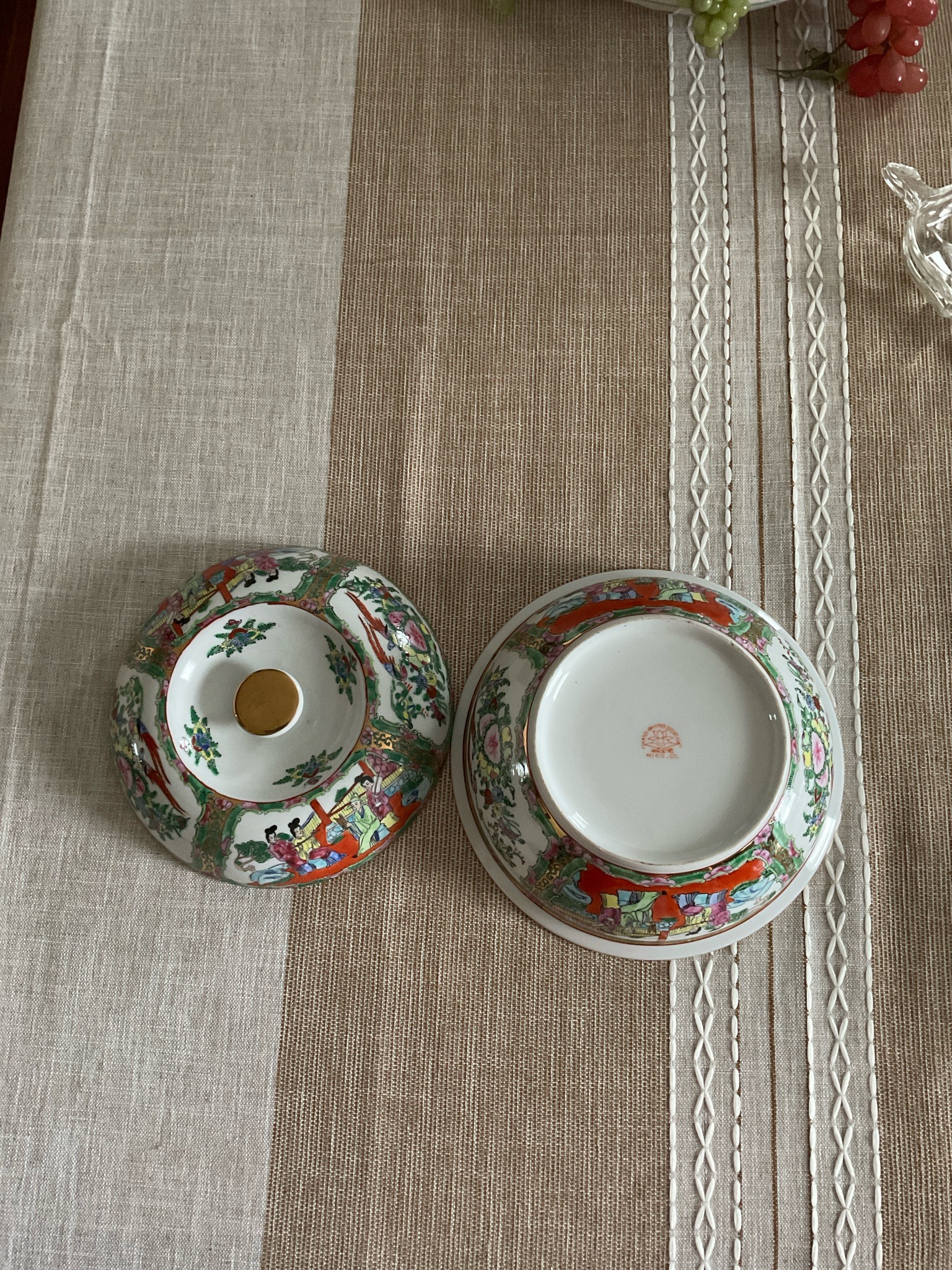
Famille rose-style porcelain covered bowl

Ceramics and Porcelain

AI Estimated Value

·Not an official valuation·Verify before acting

$150 - $350

As of July 14, 2026

AI Item Analysis

·AI can make mistakes·Verify before acting
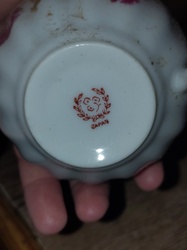
This item is a decorative porcelain bowl with a matching lid, featuring a design stylistically consistent with Chinese export 'Rose Medallion' or 'Famille Rose' patterns. The exterior of both the bowl and the lid are adorned with polychrome enamels, predominantly in shades of rose, green, and orange. The decoration includes panels or vignettes depicting courtly or domestic figures, interspersed with floral motifs, butterflies, and foliage. The lid features a gilded knob at the center. On the underside of the bowl, there is a red overglaze mark that appears to be a floral emblem or lotus above text that reads 'MADE IN CHINA', though physical verification would be required to analyze the stamp's manufacture. The piece appears to be made of white porcelain with a transparent glaze. Regarding condition, the surfaces show minor visible wear to the gilding on the knob and rim, but no major cracks or chips are immediately evident from the image. The style and mark are consistent with mid-to-late 20th-century decorative production intended for the export market, although the lack of physical examination means the exact age and specific kiln origin remain hypotheses based on visual signals.
AI Appraisal Report

·AI can make mistakes·Verify before acting
Based on my visual examination of the provided image, this object appears to be a porcelain covered bowl in the Famille Rose palette, specifically following the 'Rose Medallion' style associated with Chinese export ceramics. From what I can see, the piece is decorated with bird, butterfly, and courtly figure vignettes. It bears a red overglaze mark that appears consistent with mid-to-late 20th-century production intended for the export market. However, I cannot verify the exact age or chemical composition of the glaze and paste through a digital image; such a determination would require a physical inspection to assess the weight, foot ring wear, and translucency. The value estimate is based on the hypothesis that this is a 20th-century decorative piece. While the overall condition appears good with only minor rubbing to the gilding, the presence of chips or hairline cracks not visible in the photo could significantly decrease the value. The current market for mid-century Chinese export porcelain is stable, driven largely by decorative appeal rather than rarity. If this piece were found to be a much earlier Qing Dynasty example (19th century or prior), the value could increase substantially, potentially reaching into the four-figure range. Conversely, if it is a contemporary mass-produced imitation with transfer-printed elements rather than hand-painted enamels, the value would likely fall below $50. To confirm the attribution and origin, I would recommend a physical examination by a specialist to look for tell-tale signs of traditional kiln firing and to verify the authenticity of the mark, as marks on such pieces can be mimicked or applied at a later date. Provenance documentation would also assist in establishing a more precise timeline of manufacture.

Get your items appraised

Instant estimates of your treasures with AI-powered appraisals

Browse More Appraisals