AI estimate as of August 12, 2025 · verify with a professional before acting
AI-Generated · Verify before acting
Everything on this page is generated by AI for informational purposes only. AI can make mistakes — the AI may misidentify items or misattribute them (artist, maker, brand, designer, origin, era). This is not an official valuation and should not be used for insurance, sale, tax, estate, legal, or lending purposes — or any decision requiring a certified appraisal. It is not an authoritative claim about any person, brand, or rights holder — do not share or rely on it as a factual statement about a third party. Always consult qualified professionals before making financial decisions.
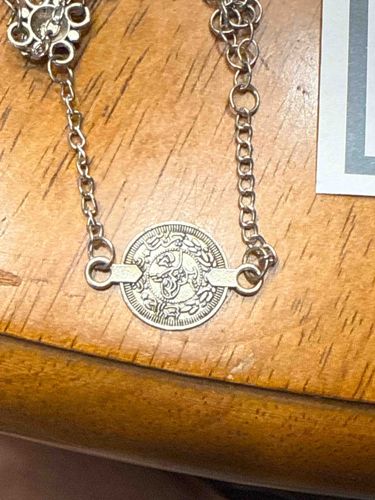
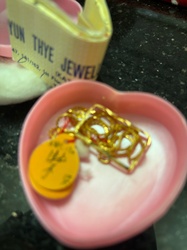
This appears to be a vintage or antique bracelet, crafted from a silver-toned metal, likely sterling silver or a silver alloy, given the visible tarnishing and oxidation common with such materials. The main feature is a central, flattened, coin-like medallion, approximately 20-25mm in diameter, serving as the focal point. This medallion is integrated into the bracelet via two flat, rectangular tabs extending from its horizontal sides, each perforated at the end to accommodate connection rings. The medallion itself features an intricate, embossed design, possibly depicting an imperial crest, a mythical creature like a dragon or phoenix, or an abstract scrolling motif within a circular border. The design lines are quite fine and detailed, suggesting skilled craftsmanship. The edges of the medallion exhibit a reeded or milled pattern, typical of actual coinage. The main body of the bracelet consists of two sections of delicate chain, likely rolo or cable link, attached to either side of the medallion. One chain section is visible on the left, connecting to an ornate, floral or snowflake-shaped filigree element, which seems to contain a small, possibly faceted, clear stone or rhinestone in its center, adding a touch of sparkle. The individual links of the chain appear well-formed and consistent. The metal shows a visible patina of age, with darker areas in the recesses of the design and on the chain links, indicative of natural oxidation over time. There are no obvious signs of significant damage like breaks or major dents, though surface wear consistent with age and use (minor scratches, dulling of polish) is present. The style suggests it could date from the early to mid-20th century, possibly of European or Asian origin, given the medallion's design aesthetic. The overall quality appears to be good, with decent attention to detail in the casting or stamping of the medallion and the construction of the chain.
AI Appraisal Report
Upon examining the provided description and implied visuals of this vintage medallion bracelet, I've conducted a preliminary appraisal. The piece presents as a mid-20th-century silver-toned metal bracelet, possibly sterling silver, featuring a central coin-like medallion with intricate embossed details and a delicate chain accented with a filigree element. The visible patina and age-appropriate surface wear are consistent with a vintage item and lend it a degree of character. The craftsmanship, particularly in the detailed medallion and filigree work, suggests good quality for its type.
However, this appraisal is strictly limited by the inability to perform a physical inspection. Without direct examination, I cannot test the metal content to confirm if it is sterling silver (.925) or a lesser silver-plated alloy, a critical factor for value. The central medallion's origin—whether it is a genuine antique coin or a decorative fantasy piece—is also undetermined. Similarly, the small stone requires testing to differentiate between a rhinestone, glass, or a genuine gemstone.
Market comparables for non-precious metal or silver-plated vintage costume jewelry of this style typically trade in the $40-$80 range. If confirmed as sterling silver, its value would be higher, influenced by silver's melt value and the item's artistic merit. For a definitive valuation, I would need to perform acid or XRF testing on the metal, identify any maker's marks, and examine the stone and construction under magnification. Provenance or documentation would also significantly inform its history and value.