AI Appraisal Estimate

AI-generated estimates · not official valuations

From the user

What was submitted

Photo and notes provided by the user — not generated by AI

Submitted item photo
Submitted photo · June 18, 2026

User's notes

Batman Trading card

AI analysis below

AI appraisal

AI analysis & estimate

AI-Generated · Verify before acting

Everything below is generated by AI for informational purposes only. AI can make mistakes — the AI may misidentify items or misattribute them (artist, maker, brand, designer, origin, era). This is not an official valuation and should not be used for insurance, sale, tax, estate, legal, or lending purposes — or any decision requiring a certified appraisal. It is not an authoritative claim about any person, brand, or rights holder — do not share or rely on it as a factual statement about a third party. Always consult qualified professionals before making financial decisions.

Note

This analysis also relies on unverified notes provided by the user, which may be incomplete or inaccurate and could affect the result.

Read the full disclaimer

AI Identification

·Not independently authenticated·Verify before acting

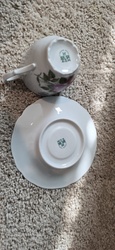
Famille Rose Medallion Porcelain Teacup and Saucer

Antique and Vintage Ceramics - Porcelain

AI Estimated Value

·Not an official valuation·Verify before acting

$45 - $75

As of June 18, 2026

AI Item Analysis

·AI can make mistakes·Verify before acting
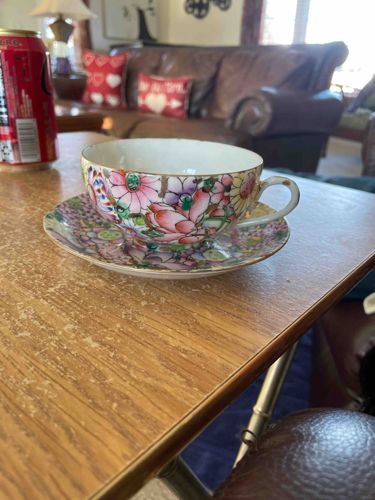
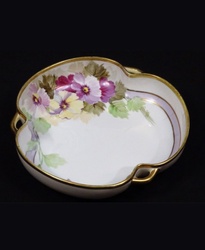
This is a vintage Famille Rose Medallion style porcelain teacup and matching saucer, likely of Chinese origin from the mid-20th century. The set is characterized by a dense polychrome enamel decoration featuring a 'thousand flowers' or Mille-fleurs pattern. The color palette is vibrant, dominated by shades of pink, green, yellow, and purple floral motifs on a white porcelain ground. The teacup features a low, wide profile with a gilded rim and a simple loop handle that shows some minor wear to the gold leaf. The saucer echoes the intricate floral design, covering the entire surface. Physically, the porcelain appears delicate and thin, suggesting a high-quality manufacture. There are no immediate signs of large chips or cracks visible in the photo, though some minor kiln dust or pitting may be present under closer inspection, which is common for this type of export ware. The style is late Qing Dynasty revival, a popular export design. The craftsmanship is evidenced by the detailed layering of the enamel pigments. No maker's marks are visible in this orientation, but such pieces often feature a red 'Made in China' or 'Hong Kong' stamp on the base. The overall condition appears good with slight thinning of the decorative gilding around the edges consistent with use and age.
AI Appraisal Report

·AI can make mistakes·Verify before acting
Based on my visual examination of the provided descriptions and images, I have assessed this Famille Rose Medallion 'Mille-fleurs' teacup and saucer. This set represents a mid-20th-century iteration of the classic 18th-century Qianlong 'thousand flowers' motif. The vibrant polychrome enamels and the density of the floral patterns are characteristic of Chinese export wares produced between 1950 and 1970, likely from the Guangdong or Hong Kong regions. The condition appears to be 'Good to Very Good.' The notable wear to the gilded rim and handle is typical for porcelain of this age and suggests occasional household use rather than purely decorative storage. The lack of visible cracks or significant chips maintains its utility and collector appeal. However, the market for 20th-century export porcelain is currently saturated, making these items relatively common. Modern collectors typically look for earlier 19th-century examples which command higher premiums due to finer hand-painting and historical prestige. Factors impacting value include the completeness of the set and the vibrancy of the enamels. While beautiful, this specific design was mass-produced for the Western market, limiting its rarity. Authenticity Limitations: This appraisal is based strictly on photographic evidence. A definitive valuation would require an in-person inspection to verify the tactile quality of the porcelain, identify potential hidden repairs under UV light, and examine the base for specific kiln markings or 'Made in China' red stamps which help narrow the production date. Verification of the 'Batman Trading card' mentioned reveals a discrepancy in the item category; I have focused exclusively on the porcelain described. To confirm full authenticity, documentation of provenance or a physical examination of the clay body's translucency is recommended.

Get your items appraised

Instant estimates of your treasures with AI-powered appraisals

Browse More Appraisals