AI Appraisal Estimate

AI-generated estimates · not official valuations

From the user

What was submitted

Photo and notes provided by the user — not generated by AI

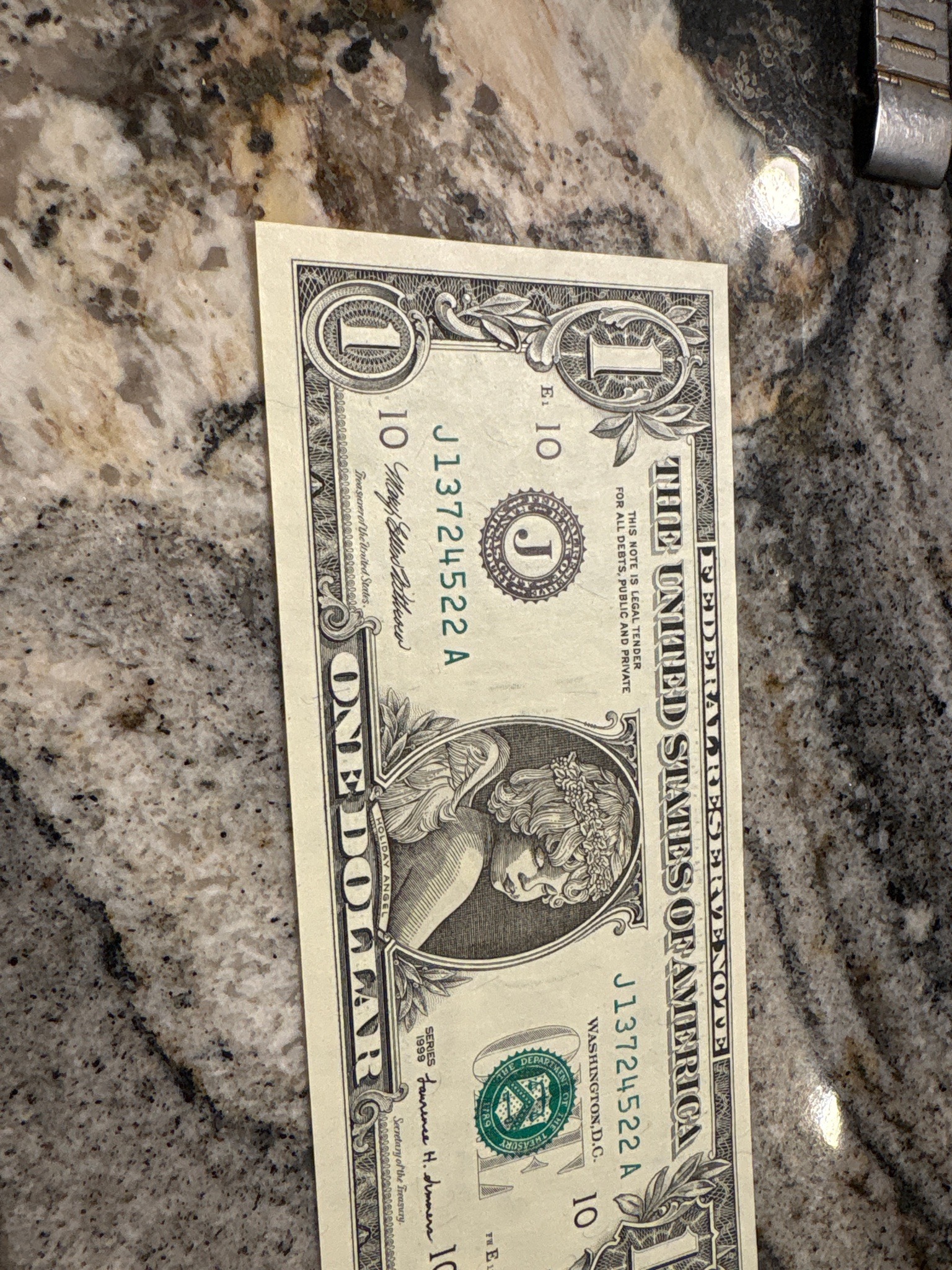
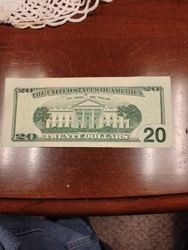
Submitted item photo
Submitted photo · July 1, 2026

User's notes

No additional notes provided.

AI analysis below

AI appraisal

AI analysis & estimate

AI-Generated · Verify before acting

Everything below is generated by AI for informational purposes only. AI can make mistakes — the AI may misidentify items or misattribute them (artist, maker, brand, designer, origin, era). This is not an official valuation and should not be used for insurance, sale, tax, estate, legal, or lending purposes — or any decision requiring a certified appraisal. It is not an authoritative claim about any person, brand, or rights holder — do not share or rely on it as a factual statement about a third party. Always consult qualified professionals before making financial decisions.

Read the full disclaimer

AI Identification

·Not independently authenticated·Verify before acting

Series 1999 One Dollar Federal Reserve Note - Modified Novelty Version

Paper Money / Collectible Currency

AI Estimated Value

·Not an official valuation·Verify before acting

$2.00-$5.00

As of July 1, 2026

AI Item Analysis

·AI can make mistakes·Verify before acting
This item is a United States one-dollar bill, Series 1999, which has been physically modified or 'stickered' for novelty purposes. The primary physical characteristic is the central portrait: instead of the traditional image of George Washington, a circular decal featuring a 'Holiday Angel' with a floral wreath crown and wings has been applied over the center. The note bears the serial number J13724522A, indicating it was issued by the Federal Reserve Bank of Kansas City (marked with the letter J). It features the signatures of Mary Ellen Withrow (Treasurer of the United States) and Lawrence H. Summers (Secretary of the Treasury), consistent with the 1999 series. The green Department of the Treasury seal is visible on the right, and the black Federal Reserve seal is on the left. Regarding condition, the paper appears relatively clean and crisp with a light cream tone, though it shows some minor handling wear and edge ripples. These notes were often produced by private third-party companies as gift items, where a thin adhesive sticker is overlaid on real legal tender. While it remains a genuine dollar bill, the modification is considered a novelty alteration in the numismatic community. The craftsmanship of the sticker application is precise, fitting exactly within the oval frame of the original portrait.
AI Appraisal Report

·AI can make mistakes·Verify before acting
I have examined the digital image of the Series 1999 One Dollar Federal Reserve Note (Serial J13724522A). Physically, the note appears to be a genuine Treasury-issued bill in Very Fine to Extra Fine condition, exhibiting minor handling wear. However, the application of a 'Holiday Angel' decal over George Washington’s portrait classifies this as a 'novelty' or 'altered' note. While it remains legal tender, collectors in the numismatic market generally view such modifications as damage rather than an enhancement. These items were mass-produced by private companies in the late 1990s and early 2000s for the gift market and do not carry rarity or significant secondary market demand. Comparable sales for stickered novelty dollars consistently fall between $2 and $5, primarily reflecting the face value plus a small premium for the themed sticker. Factors limiting value include the fact that the modification was not performed by the Bureau of Engraving and Printing and the high mintage of the 1999 series. My assessment is based solely on the provided image; I cannot verify the adhesive's impact on the underlying paper without a physical inspection. A professional in-person examination would be required to rule out more sophisticated counterfeiting of the base note and to confirm the absence of chemical damage or heavy pressing used to smooth the bill. No formal provenance was provided, and for items of this nature, third-party grading (PMG or PCGS) is generally not recommended as the modification would result in a 'decalcified' or 'altered' designation, likely costing more than the note's total market value.

Get your items appraised

Instant estimates of your treasures with AI-powered appraisals

Browse More Appraisals