AI estimate as of September 9, 2025 · verify with a professional before acting
AI-Generated · Verify before acting
Everything on this page is generated by AI for informational purposes only. AI can make mistakes — the AI may misidentify items or misattribute them (artist, maker, brand, designer, origin, era). This is not an official valuation and should not be used for insurance, sale, tax, estate, legal, or lending purposes — or any decision requiring a certified appraisal. It is not an authoritative claim about any person, brand, or rights holder — do not share or rely on it as a factual statement about a third party. Always consult qualified professionals before making financial decisions.
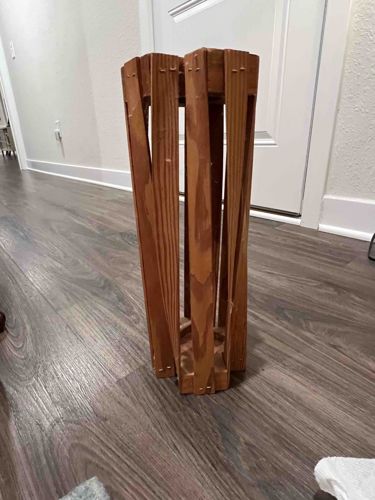
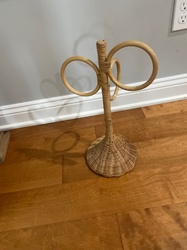
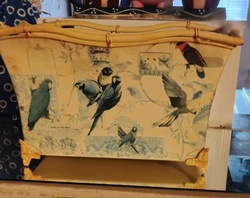
This item is a floor-standing wooden structure, appearing to be an umbrella stand or cane holder, characterized by its open, slatted design. It is constructed from solid wood, likely pine or a similar softwood, given the visible grain pattern and warm reddish-brown stain that enhances the natural wood tones. The structure is composed of multiple vertical wooden slats or planks, arranged to form a roughly square or rectangular base, tapering slightly inward towards the top, with a hollow interior designed to hold long items. Each slat features a slight bevel or chamfer along its edges, adding a decorative element and softening the overall lines. The construction appears to be machine-cut, with visible nail or staple fastenings on the top and bottom edges connecting the vertical slats to unseen horizontal supports. The overall craftsmanship suggests a mass-produced item rather than fine artisanal work, though it is sturdy and functional. The wood exhibits a noticeable patina consistent with age and use, including minor scratches, scuffs, and areas where the finish may be slightly worn, particularly on edges and corners, indicating its vintage status. There are no obvious signs of major damage like cracks or breaks, suggesting it is in good, usable condition given its age. No maker's marks, signatures, or specific manufacturing details are visible from the provided image. Based on its style and apparent construction, it likely dates from the mid to late 20th century, possibly the 1960s to 1980s, reflecting a simple, functional aesthetic often found in domestic furnishings of that period. Its unique aspect lies in its utilitarian design combined with the warmth of natural wood, making it a functional decorative piece.
AI Appraisal Report
Based on my visual examination of the provided image, this Vintage Wooden Umbrella Stand or Cane Holder appears to be in good, usable condition consistent with its age. I assess its authenticity as a genuine mid to late 20th-century home accessory, likely manufactured between the 1960s and 1980s, given its construction style, visible wood grain (suggesting pine or similar softwood), and warm reddish-brown stain. The visible patina, including minor scratches, scuffs, and areas of finish wear, corroborates its vintage status and indicates typical use over time. The absence of major damage like cracks or breaks is a positive factor for its condition.
Market conditions for utilitarian vintage wooden items like this are generally stable but not highly lucrative. Comparables often include similar mass-produced furniture accessories from the mid-century modern or rustic revival periods. Demand for such items is moderate, driven by individuals seeking functional and aesthetically warm home accents. Rarity is low; these were common household items. Factors significantly impacting value include its good condition relative to age and its functional appeal. However, its mass-produced nature, lack of discernible maker's marks or artisanal quality, and common design limit its upper value.
Limitations in authenticity verification from images alone exist. While the visual evidence strongly supports the dating and type of item, I cannot definitively confirm the wood species, the exact manufacturing process (e.g., specific nails vs. staples), or rule out any hidden repairs or structural weaknesses without an in-person examination. For full authentication and a more precise dating, an in-person physical inspection would be needed to assess hidden joints, internal construction, and detect any restoration or alterations not visible in the image. Provenance documentation would also add significant value and verification if available. However, for an item of this nature, such detailed examination typically exceeds its inherent market value.