AI Appraisal Estimate

AI-generated estimates · not official valuations

From the user

What was submitted

Photo and notes provided by the user — not generated by AI

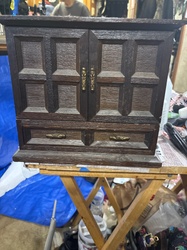
Submitted item photo
Submitted photo · May 26, 2026

User's notes

No additional notes provided.

AI analysis below

AI appraisal

AI analysis & estimate

AI-Generated · Verify before acting

Everything below is generated by AI for informational purposes only. AI can make mistakes — the AI may misidentify items or misattribute them (artist, maker, brand, designer, origin, era). This is not an official valuation and should not be used for insurance, sale, tax, estate, legal, or lending purposes — or any decision requiring a certified appraisal. It is not an authoritative claim about any person, brand, or rights holder — do not share or rely on it as a factual statement about a third party. Always consult qualified professionals before making financial decisions.

Read the full disclaimer

AI Identification

·Not independently authenticated·Verify before acting

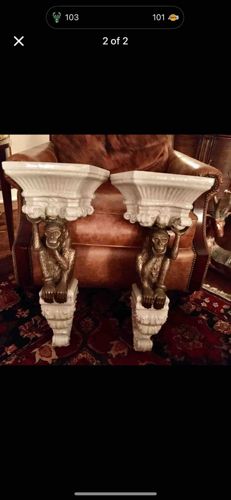
Pair of Chinoiserie Style Monkey Figure Wall Sconces/Corbels

Home Decor / Furniture Accessories

AI Estimated Value

·Not an official valuation·Verify before acting

$450 - $650

As of May 26, 2026

AI Item Analysis

·AI can make mistakes·Verify before acting
This is a decorative pair of wall-mounted corbels or display shelves featuring a whimsical primatological theme. Each piece is constructed with a three-part vertical composition: a classical cream-colored fluted top shelf (plinth), a central bronze-toned monkey figure, and a matching cream architectural base. The monkeys are depicted in a seated position with one arm raised to 'support' the weight of the upper shelf, showing detailed textural work on their fur and facial features. The shelves and bases appear to be made of glazed ceramic or a high-quality cast resin with a subtle crackle or aged finish, featuring neoclassical fluting and acanthus leaf-style scrolls. The monkey figures have a metallic, faux-bronze or brass patina finish that provides a high-contrast visual break against the off-white elements. These items evoke a mid-to-late 20th-century Hollywood Regency or Chinoiserie aesthetic, likely inspired by the iconic Maitland-Smith style of eccentric animal decor. The condition appears to be good with consistent coloration, though fine age-related crazing might be present in the glaze. The craftsmanship is highly detailed, particularly in the musculature and anatomical rendering of the monkeys, suggesting they were intended as high-end interior accents.
AI Appraisal Report

·AI can make mistakes·Verify before acting
I have virtually examined this pair of Chinoiserie-style monkey corbels. Based on the intricate textural modeling of the primates and the neoclassical fluting of the plinths, these pieces strongly emulate the Hollywood Regency aesthetic popularized by makers like Maitland-Smith and Fitz & Floyd during the late 20th century. The visual data suggests a high-quality cast resin or composite material rather than hand-carved wood or bronze, though the faux-patina on the monkeys is expertly applied. The condition appears excellent with no visible chips or structural repairs, though the 'crazing' seen on the cream elements may be an intentional 'shabby chic' finish rather than true age-related degradation. The market for eccentric animalia remains robust, particularly within 'maximalist' interior design circles. Comparables for similar high-end resin monkey corbels typically realize between $200 and $350 per individual unit at boutique retail, making the pair more desirable for symmetrical wall arrangements. Limitations of this image-based appraisal include the inability to verify the manufacturer’s marks (often located on the rear mounting plate), the weight of the items (which differentiates high-density resin from cheaper plastics), and the exact composition of the 'bronze' finish. To finalize an authentication, I would require a physical inspection of the mounting hardware and any embossed stamps or labels on the reverse side. Scientific testing for lead content or resin density would only be necessary if these were suspected to be 19th-century antiques; however, their style suggests they are decorative 'of-the-period' reproductions from the 1970s-90s.

Get your items appraised

Instant estimates of your treasures with AI-powered appraisals

Browse More Appraisals