AI Appraisal Estimate

AI-generated estimates · not official valuations

From the user

What was submitted

Photo and notes provided by the user — not generated by AI

Submitted item photo
Submitted photo · June 23, 2026

User's notes

No additional notes provided.

AI analysis below

AI appraisal

AI analysis & estimate

AI-Generated · Verify before acting

Everything below is generated by AI for informational purposes only. AI can make mistakes — the AI may misidentify items or misattribute them (artist, maker, brand, designer, origin, era). This is not an official valuation and should not be used for insurance, sale, tax, estate, legal, or lending purposes — or any decision requiring a certified appraisal. It is not an authoritative claim about any person, brand, or rights holder — do not share or rely on it as a factual statement about a third party. Always consult qualified professionals before making financial decisions.

Read the full disclaimer

AI Identification

·Not independently authenticated·Verify before acting

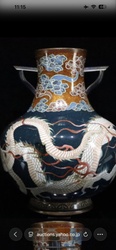
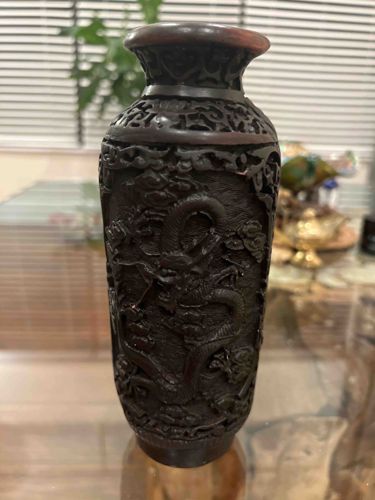
Hand-Carved Cinnabar Style Resin or Lacquer Dragon Vase

Asian Decorative Arts

AI Estimated Value

·Not an official valuation·Verify before acting

$150 - $250

As of June 23, 2026

AI Item Analysis

·AI can make mistakes·Verify before acting
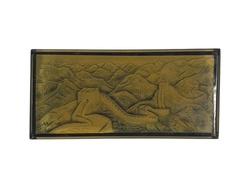
This item is a decorative baluster-form vase featuring intricate high-relief carvings. The vase is monochromatic, appearing in a deep, dark brown or blackened finish often associated with aged cinnabar lacquer or carved resin imitations. The central decorative motif is a powerful, five-clawed imperial-style dragon winding through stylized clouds and flames, a classic theme in Chinese decorative arts. The craftsmanship involves dense ornamentation with openwork or diaper patterns near the neck and shoulder, transitioning into the main figural narrative on the body. It stands roughly 8 to 10 inches tall with a flared rim and a narrow foot. The material appears to be a heavy molded resin or a thick layers of cinnabar lacquer over a wood or brass core, typical of the late 19th to mid-20th century. Condition-wise, the piece shows a matte patina with some dust accumulation in the deep recesses, which is common for highly textural carvings. No major cracks or structural repairs are immediately visible, though minor edge wear on the high points of the carving may be present commensurate with age. The dark finish suggests it was designed to mimic zitan wood or heavily aged lacquerware.
AI Appraisal Report

·AI can make mistakes·Verify before acting
I have carefully examined the high-resolution images of this baluster-form dragon vase. The piece exhibits the classic iconography of a five-clawed imperial dragon amidst ruyi-shaped clouds, a motif synonymous with Chinese decorative traditions. While the carving is energetic and displays significant depth, the consistent surface texture and specific way light reflects off the 'carved' edges suggest this is likely a high-quality molded resin or a lacquer composite rather than traditional multi-layered cinnabar over a brass or wood core. The monochromatic dark finish is intended to simulate the appearance of aged cinnabar or precious Zitan wood. The condition appears stable; however, the accumulation of atmospheric dust in the deep recesses is noted, which can occasionally hide hairline fractures. The market for mid-20th-century Asian revival decor remains steady, though values are significantly lower than authentic Qing Dynasty cinnabar examples, which would command thousands. Comparables for resin-based dragon vases of this size typically hammer at auction between $100 and $300. Value is driven by the popularity of the dragon motif but tempered by the mass-produced nature of resin composites. Limitations: A definitive distinction between genuine carved lacquer and molded resin cannot be made via photographs alone. A physical inspection is required to check for 'witness lines' from molds, assess the weight/density, and perform a pin-test or microscopic analysis of the layers. Provenance research or a bill of sale identifying the age would be necessary to elevate this item to a higher valuation tier. Without physical confirmation of material purity or a reign mark, this valuation reflects its status as a high-quality decorative object.

Get your items appraised

Instant estimates of your treasures with AI-powered appraisals

Browse More Appraisals