AI estimate as of September 21, 2025 · verify with a professional before acting
AI-Generated · Verify before acting
Everything on this page is generated by AI for informational purposes only. AI can make mistakes — the AI may misidentify items or misattribute them (artist, maker, brand, designer, origin, era). This is not an official valuation and should not be used for insurance, sale, tax, estate, legal, or lending purposes — or any decision requiring a certified appraisal. It is not an authoritative claim about any person, brand, or rights holder — do not share or rely on it as a factual statement about a third party. Always consult qualified professionals before making financial decisions.
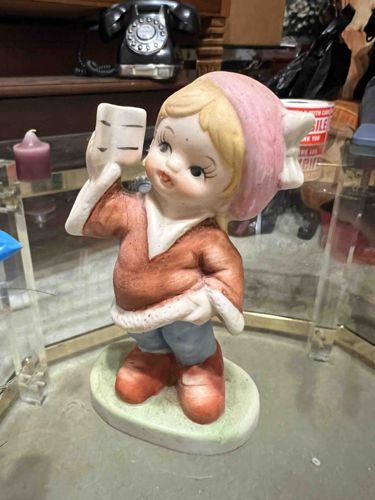
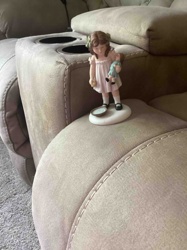
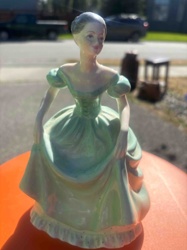
This item is a porcelain figurine depicting a young girl dressed in winter attire, presumably a caroler, holding what appears to be a songbook or sheet music. The figurine is primarily crafted from glazed porcelain, exhibiting a smooth and glossy finish. The girl has blonde hair peeking out from a light pink bonnet with white ruffle-like details around the edges. Her facial features include large, expressive eyes with long lashes, delicate eyebrows, a small nose, and a tiny mouth, all painted with a rosy hue on her cheeks. She is wearing a reddish-brown coat with a white fur trim around the collar, cuffs, and hem, and light blue pants or leggings, tucked into reddish-orange boots. The base of the figurine is an oval shape, painted light green to simulate grass or snow-covered ground, suggesting an outdoor winter scene. The overall color palette is pastel, typical of collectible figurines from the mid-20th century. There are no visible chips, cracks, or significant damage, and the glaze appears intact, indicating good preservation. The craftsmanship suggests mass production, yet with careful hand-painted details. There are no discernible maker's marks or signatures visible in the provided images, making it difficult to pinpoint the exact manufacturer or origin, but stylistically it aligns with common collectible ceramic figures produced from the 1950s to the 1980s. The 'songbook' she holds is a simple white rectangular block with painted black lines, reinforcing the caroling theme. The figurine likely stands around 6-8 inches tall, given its appearance next to other household items.
AI Appraisal Report
I have visually examined this porcelain figurine, depicting a young caroler. From the images provided, the condition appears to be excellent, with no visible chips, cracks, or significant glaze loss. The color palette and styling suggest a production period likely between the 1950s and 1980s, consistent with mass-produced collectible ceramic figures. The hand-painted details are of good quality for this type of item. The materials are consistent with glazed porcelain.
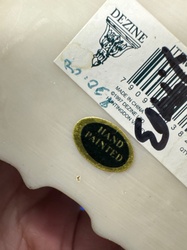
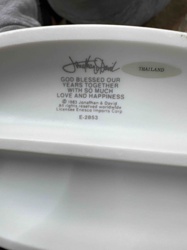
However, a significant limitation in assessing authenticity and value is the absence of any discernible maker's marks or signatures in the images. Without these, it's impossible to attribute the piece to a specific manufacturer, which is crucial for determining provenance and establishing market comparables for branded collectibles. The design, while charming, is not unique enough to be instantly recognizable without a maker's mark.
In terms of market conditions, unbranded or lesser-known porcelain figurines of this type generally have modest demand in the secondary market. Items from well-known manufacturers such as Hummel or Lladro command higher prices due to their established brand recognition, artistic quality, and collector base. This figurine, while in good condition, falls into a broad category of decorative porcelain that typically sells for relatively low prices unless associated with a sought-after brand or artist, or possessing unique characteristics. Therefore, rarity is not a significant factor here.
To definitively authenticate and establish a precise value, an in-person examination would be required to thoroughly inspect for marks, assess the true quality of the porcelain and painting, and potentially identify manufacturing techniques that could hint at its origin. Additionally, any provenance documentation, such as original sales receipts or certificates, would be invaluable. Without this additional information, the value is based purely on its aesthetic appeal and condition as a generic vintage decorative item.