These notes were written by the person who submitted this item. Appraiser.AI has not verified them, and the AI's identification and estimate may rely on them.
AI Estimated Value
Not an official valuation
$40-80
AI estimate as of July 24, 2025 · verify with a professional before acting
AI-Generated · Verify before acting
Everything on this page is generated by AI for informational purposes only. AI can make mistakes — the AI may misidentify items or misattribute them (artist, maker, brand, designer, origin, era). This is not an official valuation and should not be used for insurance, sale, tax, estate, legal, or lending purposes — or any decision requiring a certified appraisal. It is not an authoritative claim about any person, brand, or rights holder — do not share or rely on it as a factual statement about a third party. Always consult qualified professionals before making financial decisions.
This analysis also relies on unverified notes provided by the user, which may be incomplete or inaccurate and could affect the result.
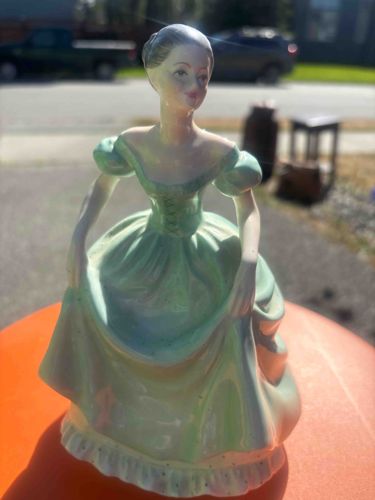
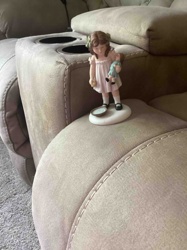
This item is a ceramic or porcelain figurine depicting a female figure, likely a dancer or a lady in a formal gown, given her pose and attire. The figure is made of a glazed material, exhibiting a smooth, lustrous finish. Her dress is primarily a soft, pastel green or mint color, with a slight variation in shading that suggests folds and movement. The bodice of the gown appears to have a laced-up or corseted detail, and the sleeves are puffed. The figure's skin tone is a naturalistic pale complexion, and her hair is styled in an updo, colored a dark brown or black. Her facial features are delicately painted, including eyes, eyebrows, and lips, conveying a serene or contemplative expression. She holds the sides of her skirt, as if curtsying or preparing to dance, which is a common pose for such figurines. The base of the figurine is integrated with the dress, flaring out and featuring a ribbed or ruffled detail around the bottom edge, also in the same pastel green color with perhaps hints of blue or cream. There appear to be no significant chips, cracks, or repairs visible in the provided image. The glaze shows a consistent sheen, suggesting good preservation. Without visible maker's marks or size reference, precise manufacturing details and age are difficult to ascertain, but the style is indicative of mid-20th century ceramic production, often associated with companies producing decorative porcelain. The craftsmanship appears to be of good quality, with attention to detail in the sculpting and painting, characteristic of collectible figurines rather than mass-produced generic items. Given the context 'Antique', it reinforces an estimated age of at least 50+ years.
AI Appraisal Report
Upon visual examination of the Pastel Green Gown Figurine, it presents as a mid-20th-century decorative piece, likely of European origin, possibly German or Spanish, given the style. The craftsmanship is of good quality, with delicate hand-painting on the facial features and molded details in the gown. The figure is in excellent condition, showing a consistent glaze with no apparent chips, cracks, or crazing from the provided image. The 'antique' designation suggests it is at least 50 years old, which is consistent with its mid-century aesthetic.
The market for these types of collectible figurines is stable but highly dependent on the manufacturer. Without a visible maker's mark (such as from makers like Royal Doulton, Lladro, or Dresden), the value is based on its decorative appeal and general quality. Comparable, unmarked porcelain figurines of this era and quality typically sell in the secondary market for between $40 and $80. Rarity is difficult to establish without identifying the maker, but the style is relatively common for the period.
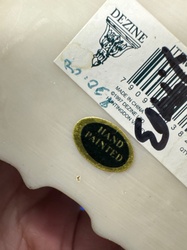
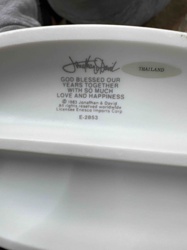
A significant limitation of this appraisal is the inability to perform a physical inspection. A definitive valuation and authentication would require examining the underside for any maker's marks, stamps, or incised numbers. Verifying the material as porcelain versus ceramic and checking for subtle repairs under UV light can only be done in person. Without such marks, its value remains that of a handsome, well-preserved decorative object rather than a specific, sought-after collectible.