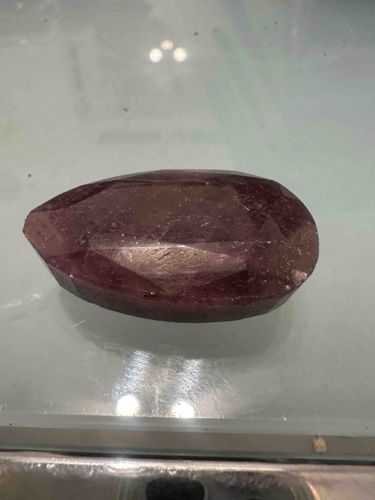
200 ct untreated red ruby parting planes pear shape
These notes were written by the person who submitted this item. Appraiser.AI has not verified them, and the AI's identification and estimate may rely on them.
AI Estimated Value
Not an official valuation
$500,000 - $1,500,000
AI estimate as of November 2, 2025 · verify with a professional before acting
AI-Generated · Verify before acting
Everything on this page is generated by AI for informational purposes only. AI can make mistakes — the AI may misidentify items or misattribute them (artist, maker, brand, designer, origin, era). This is not an official valuation and should not be used for insurance, sale, tax, estate, legal, or lending purposes — or any decision requiring a certified appraisal. It is not an authoritative claim about any person, brand, or rights holder — do not share or rely on it as a factual statement about a third party. Always consult qualified professionals before making financial decisions.
This analysis also relies on unverified notes provided by the user, which may be incomplete or inaccurate and could affect the result.
This item is identified as a large, untreated red ruby, specifically described as having 'parting planes' and a 'pear shape.' The stone exhibits a deep, reddish-purple hue, consistent with natural ruby coloration, particularly for unheated specimens that may show variations in color saturation and clarity. Its form is definitively pear-shaped, wider at one end and tapering to a point at the other, a classic and desirable gemstone cut. The surface of the ruby appears to have multiple facets, indicating it has been cut and polished to enhance its brilliance, though the reflections within the stone suggest internal characteristics or inclusions, possibly related to the 'parting planes' mentioned. These parting planes are typically structural weaknesses or natural cleavages within the crystal, which can affect its durability and how light interacts with it. The overall polish of the facets seems good, reflecting ambient light. There are no obvious large chips or cracks visible from the image, but specific surface abrasions or minor scratches cannot be entirely ruled out without closer inspection. The deep red color, characteristic of rubies, is well-represented, and the size, stated as 200 carats, indicates a substantial and significant gemstone. The 'untreated' designation is crucial, suggesting it has not undergone heat treatment or other common enhancements, which typically adds to its rarity and value. The craftsmanship of the cut appears to be to a reasonable standard for such a large stone, aiming to maximize its visual appeal while retaining its substantial carat weight. The stone's substantial size and untreated nature make it a remarkable and potentially valuable specimen.
AI Appraisal Report
Based on my visual examination of the provided image and the owner's description, this 200-carat untreated red ruby, exhibiting parting planes and a pear shape, presents as a remarkably substantial gemstone. The deep reddish-purple hue is consistent with unheated rubies, which often display a richer, more nuanced color than their treated counterparts. The pear shape cut appears well-executed to maximize the stone's significant weight and visual presence. The 'untreated' designation is a critical value driver, as unenhanced rubies of this size and color are exceedingly rare and highly sought after in the market. The presence of 'parting planes' suggests internal structural features or inclusions, which, while natural, can impact clarity and durability, and thus value. However, for a 200-carat stone, some internal characteristics are expected and can even attest to its natural origin.
Market conditions for large, untreated rubies remain robust, driven by strong demand from high-end collectors and investors. Comparable sales of large untreated rubies, though infrequent, often command prices well into the high hundreds of thousands to multi-millions of dollars, depending on the specifics of color, clarity, and origin. The sheer size of 200 carats makes this an exceptional rarity.
Factors significantly impacting value include the 'untreated' status, the impressive carat weight, and the desirable pear shape. The primary mitigating factor would be the extent and visibility of the 'parting planes' and other inclusions, which can affect overall brilliance and transparency.
It is imperative to state that authenticity verification and precise valuation from images alone are inherently limited. For a full authentication and accurate appraisal, an in-person examination is critical. This would involve detailed gemological testing to confirm its natural origin, 'untreated' status, and precise chemical composition. Additionally, a thorough clarity grading under magnification to assess the impact of the parting planes and other inclusions, and an origin report from a reputable gemological laboratory (e.g., GIA, Gubelin, SSEF) would be indispensable for establishing its market value with certainty. Without these physical examinations and documentation, the appraisal provided is an estimate based on the visual information and owner's claim.