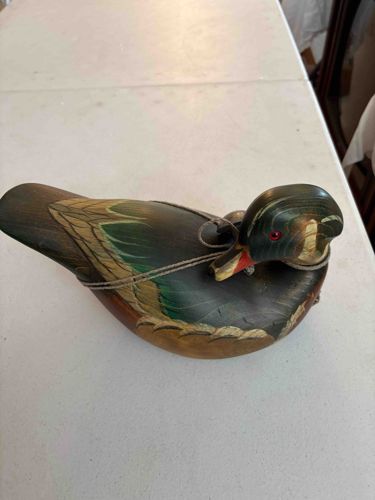
Carved Wood Mallard Duck Decoy
This item is a decorative hand-carved and hand-painted wooden duck decoy, depicting a male Mallard. The piece is constructed from a solid block of wood, likely a lightweight variety such as cedar or pine, and features a separate head attachment typical of traditional decoy construction. The color palette includes deep forest greens on the head and wing feathers, accented with earthy ochre and cream tones that highlight the carved feather patterns. A notable feature is the use of small, red-beaded eyes which add a lifelike quality. The bill is detailed with orange and black paint. The item shows signs of age and wear appropriate for a vintage piece, including light scuffs on the wood’s surface, minor paint thinning on the edges, and a subtle patina that suggests it may date from the mid-to-late 20th century. A thin cord is wrapped around the body and neck, which may have served for display or as a simplistic tether. While no maker's mark is visible from this angle, the stylized feather carving suggests a folk-art influence rather than a strictly utilitarian hunting tool. The craftsmanship is evident in the smooth kontours of the body and the rhythmic, incised lines used to create texture on the plumage.
AI-Generated Appraisal Disclaimer
Estimated Value
$150-$250
Basic Information
Category
Folk Art / Collectibles
Appraised On
December 19, 2025
Estimated Value
$150-$250
Item Description
This item is a decorative hand-carved and hand-painted wooden duck decoy, depicting a male Mallard. The piece is constructed from a solid block of wood, likely a lightweight variety such as cedar or pine, and features a separate head attachment typical of traditional decoy construction. The color palette includes deep forest greens on the head and wing feathers, accented with earthy ochre and cream tones that highlight the carved feather patterns. A notable feature is the use of small, red-beaded eyes which add a lifelike quality. The bill is detailed with orange and black paint. The item shows signs of age and wear appropriate for a vintage piece, including light scuffs on the wood’s surface, minor paint thinning on the edges, and a subtle patina that suggests it may date from the mid-to-late 20th century. A thin cord is wrapped around the body and neck, which may have served for display or as a simplistic tether. While no maker's mark is visible from this angle, the stylized feather carving suggests a folk-art influence rather than a strictly utilitarian hunting tool. The craftsmanship is evident in the smooth kontours of the body and the rhythmic, incised lines used to create texture on the plumage.
Get Your Items Appraised
Instant estimates of your treasures with AI-powered instant appraisals