AI Appraisal Estimate

AI-generated estimates · not official valuations

From the user

What was submitted

Photo and notes provided by the user — not generated by AI

Submitted item photo
Submitted photo · May 25, 2026

User's notes

Vintage brooch

AI analysis below

AI appraisal

AI analysis & estimate

AI-Generated · Verify before acting

Everything below is generated by AI for informational purposes only. AI can make mistakes — the AI may misidentify items or misattribute them (artist, maker, brand, designer, origin, era). This is not an official valuation and should not be used for insurance, sale, tax, estate, legal, or lending purposes — or any decision requiring a certified appraisal. It is not an authoritative claim about any person, brand, or rights holder — do not share or rely on it as a factual statement about a third party. Always consult qualified professionals before making financial decisions.

Note

This analysis also relies on unverified notes provided by the user, which may be incomplete or inaccurate and could affect the result.

Read the full disclaimer

AI Identification

·Not independently authenticated·Verify before acting

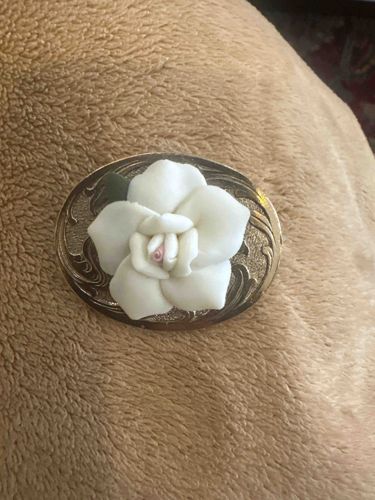
Vintage Carved Bone or Porcelanous Rose Brooch with Tooled Gold-Tone Mount

Vintage Costume Jewelry / Brooches

AI Estimated Value

·Not an official valuation·Verify before acting

$45.00 - $85.00

As of May 25, 2026

AI Item Analysis

·AI can make mistakes·Verify before acting
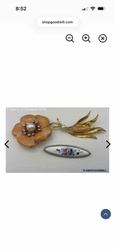
This vintage floral brooch features a central three-dimensional rose flower, likely crafted from finely carved bone, bovine ivory, or a composite porcelanous material, showing a creamy white matte finish with subtle pink tinting at the innermost petals. The floral element is mounted onto an oval-shaped metal base of gold-tone alloy. The metal mount is decorated with ornate rococo-style scrollwork and a textured stippled background, creating a high-relief visual contrast typical of mid-20th century costume jewelry. A small green leaf detail is visible tucked beneath the primary bloom, suggesting mixed material construction. The overall craftsmanship suggests a period of origin between the 1940s and 1960s, a style popularized by manufacturers such as Krementz or Danecraft, although no maker's mark is immediately visible in this view. Condition-wise, the flower petals remain remarkably intact with no apparent chips or fractures, which is rare for such delicate materials. The metal frame shows a soft aged patina and minor surface wear particularly along the outer rim, consistent with a vintage accessory that has been worn and enjoyed. The piece exudes a romantic, Victorian-revival aesthetic often associated with mid-century bridal or formal daywear.

AI Appraisal Report

·AI can make mistakes·Verify before acting
Based on my examination of the high-resolution images provided, I have evaluated this vintage floral brooch, which exemplifies the Victorian-revival aesthetic prevalent in mid-20th-century costume jewelry. The central rose exhibits a creamy, matte texture and delicate pink tinting characteristic of carved bovine bone or 'porcelanous' celluloid rather than ivory, evidenced by the absence of Schreger lines. The gold-tone mount features excellent relief work and stippling, consistent with high-quality manufacturers such as Krementz, though the lack of a visible hallmark suggests it may be a boutique or unmarked piece from the 1950s. The condition is remarkably well-preserved; the petal edges—the most vulnerable points on such pieces—appear free of significant chipping. The patina on the metalwork is consistent with age and adds to the item's vintage character. Current market demand for mid-century floral jewelry remains steady among collectors of 'Romance' style accessories, though value is capped by the ubiquity of similar pieces produced during this era. Comparables for unmarked bone-and-metal brooches typically sell in the $50 range, while attributed pieces can fetch a premium. Please note that this assessment is based solely on visual inspection. Definitive identification of the material (bone vs. composite) would require a microscopic 'hot needle' test to differentiate natural protein from synthetic resins. Furthermore, an in-person examination of the pin assembly and catch mechanism would be necessary to confirm the exact decade of manufacture, as later 1970s reproductions occasionally surface. Provenance documentation or a maker's mark would significantly elevate the appraisal to the higher end of the provided range.

Get your items appraised

Instant estimates of your treasures with AI-powered appraisals

Browse More Appraisals