AI estimate as of November 13, 2025 · verify with a professional before acting
AI-Generated · Verify before acting
Everything on this page is generated by AI for informational purposes only. AI can make mistakes — the AI may misidentify items or misattribute them (artist, maker, brand, designer, origin, era). This is not an official valuation and should not be used for insurance, sale, tax, estate, legal, or lending purposes — or any decision requiring a certified appraisal. It is not an authoritative claim about any person, brand, or rights holder — do not share or rely on it as a factual statement about a third party. Always consult qualified professionals before making financial decisions.
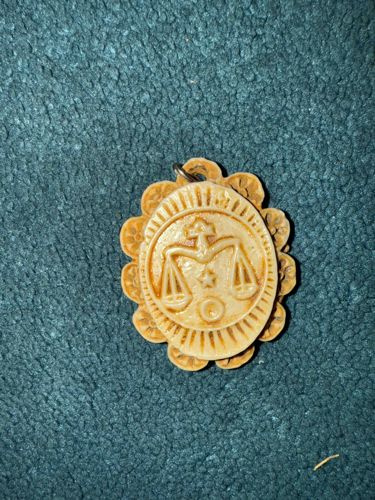
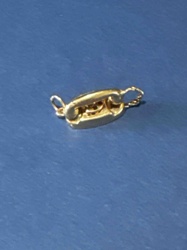
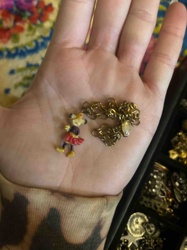
This item is a small, oval-shaped charm or pendant, likely crafted from carved bone, resin, or a similar natural material, given its off-white to light beige color with subtle variations in tone. It is approximately 1 to 1.5 inches in length. The surface is textured, indicating a hand-carved or molded origin, and it is attached to a small, silver-colored metal jump ring at the top, suggesting it was intended to be worn on a necklace, bracelet, or used as a keychain. The central motif is a detailed depiction of the astrological sign Libra, featuring a balanced scale with two pans. Above the scale is a stylized cross, and below it, a five-pointed star and a small circular element (possibly representing a dot or planet symbol). The central design is encircled by a border of radiating lines, suggesting beams or rays. This inner oval is then set within a larger, scalloped or floral-edged frame, adding to its decorative appeal. The edges of the charm show some slight darkening or patination, consistent with age or handling, but there are no discernible chips, cracks, or significant damage. The craftsmanship appears to be folk art or handcrafted in style, with a certain charm in its slightly imperfect yet intentional detailing. The reverse side is not visible, but it is likely plain or bears minimal carving. The overall aesthetic suggests an item from the mid to late 20th century, possibly earlier depending on the material. The carving is relatively shallow but clear.
AI Appraisal Report
This Carved Bone or Resin Libra Zodiac Charm/Pendant is in good condition, showing only minor wear and patination consistent with age and handling. There are no visible chips, cracks, or significant damage from the image provided. Authenticity seems likely given the handcrafted style, which is typical for such folk art pieces; however, without direct examination, I cannot definitively confirm the material (bone vs. resin) or rule out modern reproductions. Physical inspection would be needed to assess material composition, the depth and intricacy of the carving, and the exact nature of any wear.
Market conditions for zodiac-themed charms, especially those with a handcrafted or vintage aesthetic, are steady but not high-value. Comparable items, typically found in vintage markets, craft fairs, or online artisanal shops, range from functional jewelry pieces to decorative accents. Demand is primarily from individuals seeking personalized or symbolic accessories, or collectors of folk art and vintage jewelry. The item's rarity is not exceptional; while unique due to its handmade nature, similar general styles exist. Factors impacting value include the material (genuine carved bone would be more desirable than resin), the age, and the quality of the carving. The slightly imperfect detailing adds to its charm rather than detracting significantly.
To fully authenticate and assess value, an in-person examination is crucial to determine the exact material composition, distinguish between bone and various resins, evaluate the craftsmanship in detail, and find any artist's marks if present. Provenance documentation, though unlikely for an item of this type unless part of a collection, could also add value. Without physical inspection, the assessment is based solely on visual cues from the image, which can be misleading regarding material and finer details.