AI estimate as of October 18, 2026 · verify with a professional before acting
AI-Generated · Verify before acting
Everything on this page is generated by AI for informational purposes only. AI can make mistakes — the AI may misidentify items or misattribute them (artist, maker, brand, designer, origin, era). This is not an official valuation and should not be used for insurance, sale, tax, estate, legal, or lending purposes — or any decision requiring a certified appraisal. It is not an authoritative claim about any person, brand, or rights holder — do not share or rely on it as a factual statement about a third party. Always consult qualified professionals before making financial decisions.
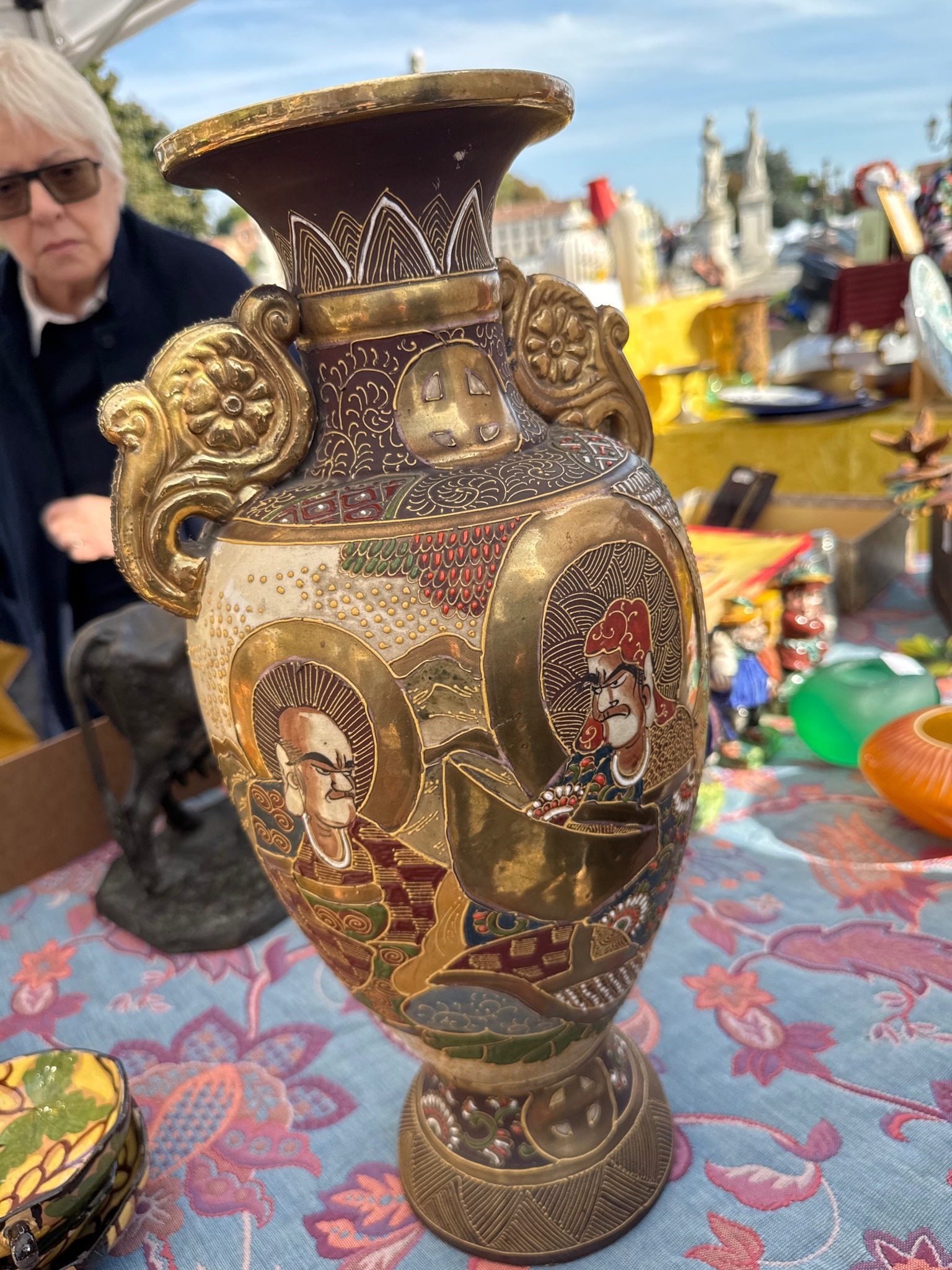
This is a large, heavily decorated ceramic vessel that appears to be a Satsuma-style earthenware vase, though it is unauthenticated. The physical characteristics include a bulbous body, a flared rim, a pedestal foot, and two prominent, ornate applied handles at the shoulder with scroll and floral motifs. The primary color palette features a rich background of dark brown, cream, and extensive raised gilding, accented with panels in red, green, blue, and black. The body is densely decorated with traditional Japanese figural scenes depicting robed sages or scholars within arched cartouches, surrounded by intricate brocade patterns, raised dots (moriage), and fine line work. The vase exhibits visible signs of age and wear, including rubbing to the heavy gilding, minor surface scuffs, and some crazing in the glaze, which is consistent with vintage or antique decorative ceramics found at open-air markets. There are no maker's marks or signatures visible from this camera angle; the identification is based solely on the visual style, decorative motifs, and color scheme characteristic of Japanese Satsuma-ware from the Meiji period or later revival eras. The craftsmanship demonstrates detailed hand-painting and relief work, though authenticity and exact age remain unverified.
AI Appraisal Report
Based on the visual characteristics in the photograph, I have evaluated this large decorative vessel. I can see a bulbous body, flared rim, pedestal foot, and ornate applied handles, along with a rich background of dark brown and cream, extensive raised gilding, and figurative scenes depicting robed sages within cartouches. Based on these stylistic traits, the piece presents visually as a Satsuma-style earthenware vase consistent with late 19th or 20th-century decorative ceramics. However, I can't verify from a photo whether the materials, pigments, or construction methods align strictly with Meiji period standards, and I see no maker's marks from this camera angle. Consequently, the attribution must remain a working hypothesis. My estimated value range of $800 to $1,200 assumes that the attribution to traditional Satsuma-style production is correct and accounts for visible signs of age such as rubbing to the gilding, surface scuffs, and glaze crazing. General market demand for decorative Satsuma-style wares remains steady among collectors of Asian art, though values vary significantly based on craftsmanship and condition. If this piece were to turn out to be a later reproduction, a modern replica, or executed merely in the style of Satsuma ware rather than a period piece, the market value would drop substantially, typically falling into the $150 to $300 range. To confirm authenticity and exact age, a physical inspection by a qualified expert, detailed examination of the paste and glaze under magnification, and potential provenance research or hallmark verification would be necessary. A physical examination is also required to fully assess the impact of the surface wear on the overall value.