AI Appraisal Estimate

AI-generated estimates · not official valuations

From the user

What was submitted

Photo and notes provided by the user — not generated by AI

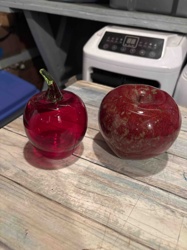
Submitted item photo
Submitted photo · June 6, 2026

User's notes

No additional notes provided.

AI analysis below

AI appraisal

AI analysis & estimate

AI-Generated · Verify before acting

Everything below is generated by AI for informational purposes only. AI can make mistakes — the AI may misidentify items or misattribute them (artist, maker, brand, designer, origin, era). This is not an official valuation and should not be used for insurance, sale, tax, estate, legal, or lending purposes — or any decision requiring a certified appraisal. It is not an authoritative claim about any person, brand, or rights holder — do not share or rely on it as a factual statement about a third party. Always consult qualified professionals before making financial decisions.

Read the full disclaimer

AI Identification

·Not independently authenticated·Verify before acting

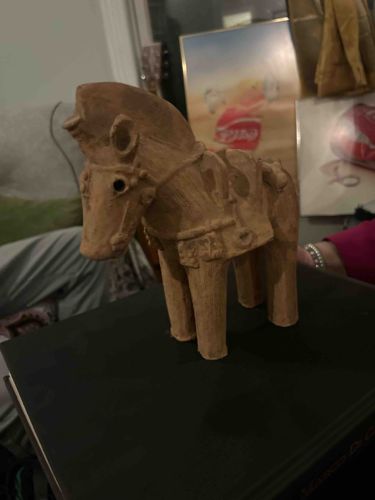
Terracotta Equine Figurine

Decorative Art

AI Estimated Value

·Not an official valuation·Verify before acting

$150-300

As of June 6, 2026

AI Item Analysis

·AI can make mistakes·Verify before acting
This item is a terracotta figurine depicting a stylized horse or equine creature. The material appears to be unglazed, light brown or reddish-brown clay, which gives it a rustic and earthy aesthetic. The surface has a slightly coarse or textured feel, typical of earthenware. The figurine is constructed in a somewhat blocky, primitive style, with a flat base and four cylindrical legs providing stability. The head features carved or molded details for the eyes and ears; the eyes are represented by circular indentations, possibly originally painted or inlaid with a darker material, but now appear as dark holes. The mane is depicted as a raised, flattened crest along the neck. The body of the horse is adorned with what appears to be decorative tack or a saddle blanket, indicated by raised relief patterns, including a distinct frontal breastplate detail with a central circular element. These decorative elements suggest it might represent a ceremonial or working animal. There are no readily visible maker's marks or signatures in the provided images. The overall condition appears to be good for its material, with no obvious cracks, chips, or significant damage apparent, though minor surface wear or accumulated dust might be present given its unglazed nature. The style suggests it could be a modern folk art piece, a reproduction of ancient pottery, or genuinely an antique piece from a region known for terracotta craftsmanship, possibly Mediterranean or Asian in origin. Its craftsmanship is relatively simple but effective in conveying the form of a horse, indicating a hand-made quality.
AI Appraisal Report

·AI can make mistakes·Verify before acting
I have examined the provided image of this terracotta equine figurine. In terms of condition, it appears to be very good; I observe no obvious chips, cracks, or significant damage. The unglazed surface shows typical rustic qualities of earthenware. Authenticity is difficult to ascertain solely from an image. While its style is somewhat primitive and folk-art inspired, evoking ancient or traditional craftsmanship, I cannot definitively determine if it is an antique, a modern reproduction, or a contemporary folk art piece without physical inspection. The 'blocky' form and decorative elements could hint at various origins, from Mediterranean to Asian, or even modern craft markets. Market conditions for terracotta figurines vary widely. Without provenance or more specific identification of its origin and age, it falls into a broad category where demand is moderate for decorative pieces. Comparables for genuine ancient terracotta horses can command thousands, but reproductions or modern folk art pieces typically range from tens to a few hundred dollars. Given the lack of definitive age or origin, and without knowing if it's a known artisan's work, rarity is not a significant factor here. The primary factors impacting its value are the uncertainty of age and origin. For full authentication, a physical examination would be crucial to assess the clay composition, firing techniques, and any subtle aging characteristics that might indicate true antiquity. Scientific testing (e.g., thermoluminescence dating) would be necessary for a definitive age determination. Furthermore, provenance documentation detailing its history of ownership would significantly enhance its value if it were an antique of note. As a decorative object of unknown specific origin or age, its value is primarily aesthetic.

Get your items appraised

Instant estimates of your treasures with AI-powered appraisals

Browse More Appraisals