AI Appraisal Estimate

AI-generated estimates · not official valuations

From the user

What was submitted

Photo and notes provided by the user — not generated by AI

Submitted item photo
Submitted photo · June 6, 2026

User's notes

No additional notes provided.

AI analysis below

AI appraisal

AI analysis & estimate

AI-Generated · Verify before acting

Everything below is generated by AI for informational purposes only. AI can make mistakes — the AI may misidentify items or misattribute them (artist, maker, brand, designer, origin, era). This is not an official valuation and should not be used for insurance, sale, tax, estate, legal, or lending purposes — or any decision requiring a certified appraisal. It is not an authoritative claim about any person, brand, or rights holder — do not share or rely on it as a factual statement about a third party. Always consult qualified professionals before making financial decisions.

Read the full disclaimer

AI Identification

·Not independently authenticated·Verify before acting

Japanese Woodblock Print with Theatrical Figure

Japanese Woodblock Print

AI Estimated Value

·Not an official valuation·Verify before acting

$150-300

As of June 6, 2026

AI Item Analysis

·AI can make mistakes·Verify before acting
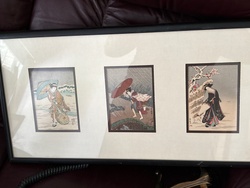
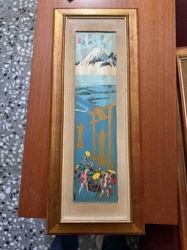
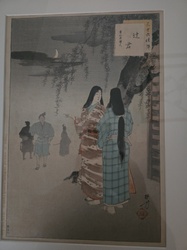
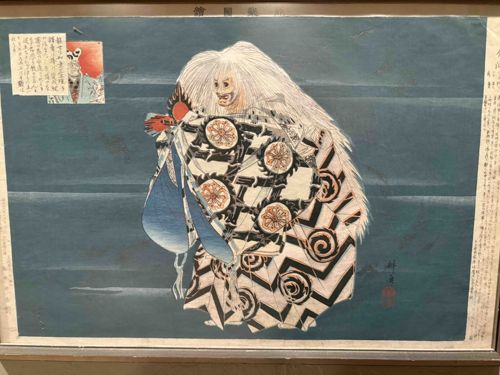
This appears to be an antique Japanese woodblock print depicting a figure in a theatrical costume. The figure is central, facing right, with a large head of wild, white hair and a stylized, somewhat mask-like face with open mouth. The figure wears an elaborate robe or cloak with a striking black and white zig-zag pattern and round motifs featuring red and orange details. One arm is visible holding a red object. The background is a dark, muted blue-green, suggesting a night or outdoor scene with subtle horizontal lines hinting at water or distant hills. There are areas of text in Japanese characters on the left and right sides vertical columns. A smaller inset image is located on the upper left, showing a skeletal figure in a red-orange background with text in Japanese characters. The colors are vibrant yet show some signs of age and potential fading. There are visible areas of potential water damage or staining, particularly in the dark blue background. The paper itself appears somewhat crinkled or uneven in places, which could be due to age or handling. The print exhibits typical characteristics of Ukiyo-e style, possibly related to Kabuki theater themes. There are red seals present on the lower right, likely indicating the artist's signature or publisher. The craftsmanship appears detailed, with fine lines and layered coloring typical of quality woodblock printing of the period. The condition seems fair to good, considering its age, with notable areas of staining and potential creasing.

AI Appraisal Report

·AI can make mistakes·Verify before acting
I have examined this Japanese woodblock print based on the provided image. The print appears to be an authentic Ukiyo-e, likely depicting a Kabuki actor, a common theme in this genre. The style, composition, and use of color are consistent with Japanese woodblock prints from the Edo or Meiji period. The red seals are a positive sign, suggesting an artist's signature or publisher's mark, which aids in attribution. The craftsmanship appears detailed, as expected from a period print. However, the condition is only fair to good. The image clearly shows significant staining and potential water damage, particularly in the background, which substantially impacts value. There is also evidence of creasing or unevenness in the paper. Market conditions for Ukiyo-e prints vary greatly depending on the artist, subject matter, condition, and rarity. Prints by highly sought-after artists in excellent condition can fetch significant sums, while those by lesser-known artists or in poor condition are considerably less valuable. Comparables would include other Kabuki-themed prints of similar age and condition. While there is demand for Ukiyo-e, the notable condition issues here will limit its appeal and value. Authenticity cannot be definitively verified from images alone. A physical examination is crucial to assess paper type, printing techniques, pigment composition, and potential restoration efforts. Provenance documentation, detailing the print's history of ownership, would also be highly valuable for authentication and establishing rarity. Scientific testing of pigments could further confirm age and authenticity.

Get your items appraised

Instant estimates of your treasures with AI-powered appraisals

Browse More Appraisals