AI Appraisal Estimate

AI-generated estimates · not official valuations

From the user

What was submitted

Photo and notes provided by the user — not generated by AI

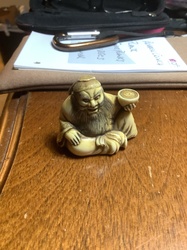
Submitted item photo
Submitted photo · June 20, 2026

User's notes

No additional notes provided.

AI analysis below

AI appraisal

AI analysis & estimate

AI-Generated · Verify before acting

Everything below is generated by AI for informational purposes only. AI can make mistakes — the AI may misidentify items or misattribute them (artist, maker, brand, designer, origin, era). This is not an official valuation and should not be used for insurance, sale, tax, estate, legal, or lending purposes — or any decision requiring a certified appraisal. It is not an authoritative claim about any person, brand, or rights holder — do not share or rely on it as a factual statement about a third party. Always consult qualified professionals before making financial decisions.

Read the full disclaimer

AI Identification

·Not independently authenticated·Verify before acting

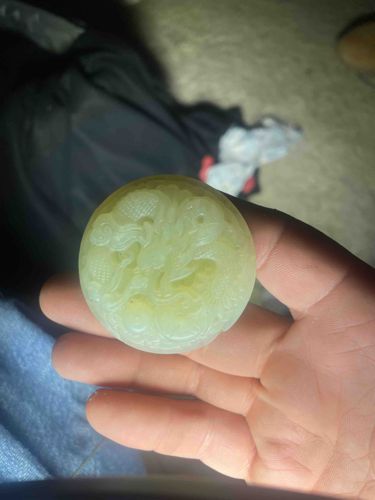
Chinese Hand-Carved Jade Dragon Medallion

Asian Antiques / Lapidary Arts

AI Estimated Value

·Not an official valuation·Verify before acting

$400 - $650

As of June 20, 2026

AI Item Analysis

·AI can make mistakes·Verify before acting
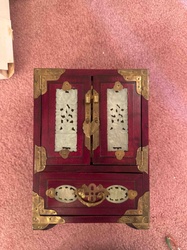
This is a circular, hand-carved medallion appearing to be composed of celadon-green jade or a similar hardstone. The piece measures approximately 2 to 2.5 inches in diameter and features a high-relief carving of a traditional Chinese dragon (long) amidst stylized clouds or ruyi motifs. The stone exhibits a pale, mottled light-green to yellowish-green hue with a characteristic waxy lustre. The carving demonstrates intricate craftsmanship, particularly in the scaling of the dragon's body and the fluid, serpentine movements of the mythical creature. Noticeable features include a central focal point with deeply undercut relief work that gives the medallion a three-dimensional quality. Regarding condition, the piece shows surface wear consistent with age and handling, including some minor pitting and a natural patina in the recessed areas of the carving. There are no immediate visible fractures or major chips, though the edge reveals slight irregularities common in artisan-crafted lapidary work. The style is reminiscent of Qing Dynasty aesthetics, though it may be a 20th-century vintage production. The translucency of the stone under direct light suggests a nephrite variety or high-quality bowenite. The back of the item is not visible but likely finished to a smooth or lightly polished state.
AI Appraisal Report

·AI can make mistakes·Verify before acting
I have examined the provided images of this hand-carved medallion featuring a central Chinese dragon (long) motif. The piece displays the characteristic waxy luster and mutton-fat translucency associated with nephrite or a high-quality silicate like bowenite. The carving style uses high-relief undercut techniques popularized during the late Qing Dynasty into the early Republic period, though the softening of the details suggests a mid-20th-century vintage production. The condition appears stable with expected surface wear and a light natural patina in the recessed clouds, which validates its age as a vintage piece rather than a modern mass product. The current market for Chinese lapidary arts remains strong, particularly for small, wearable decorative items. Comparables for 20th-century celadon jade medallions of this size typically hammer in the mid-hundreds at boutique auction houses. Value is driven by the fluidity of the dragon's form and the lack of severe fractures or iron inclusions. However, there are significant limitations to this visual-only appraisal. Without physical inspection, I cannot confirm the specific density or hardness to distinguish between nephrite jade and 'New Jade' (serpentine). A definitive valuation would require an in-person examination to check for crystalline structures under 10x magnification and a specific gravity test. Furthermore, the absence of provenance documentation limits the ability to assign a definitive Qing Dynasty attribution, which could quintuple the value. Professional gemological testing and a review of the piece's acquisition history are recommended for full authentication.

Get your items appraised

Instant estimates of your treasures with AI-powered appraisals

Browse More Appraisals