AI estimate as of September 18, 2025 · verify with a professional before acting
AI-Generated · Verify before acting
Everything on this page is generated by AI for informational purposes only. AI can make mistakes — the AI may misidentify items or misattribute them (artist, maker, brand, designer, origin, era). This is not an official valuation and should not be used for insurance, sale, tax, estate, legal, or lending purposes — or any decision requiring a certified appraisal. It is not an authoritative claim about any person, brand, or rights holder — do not share or rely on it as a factual statement about a third party. Always consult qualified professionals before making financial decisions.
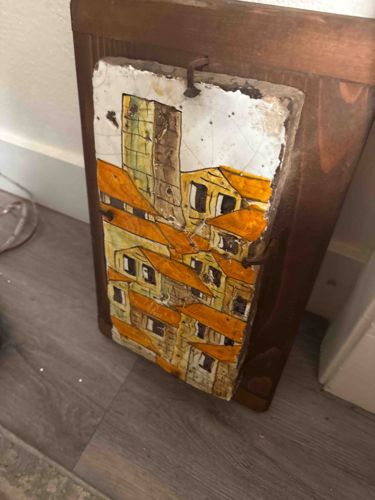
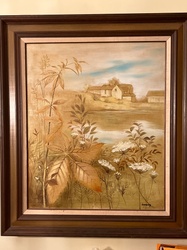
This item is a framed hand-painted ceramic tile, likely depicting a stylized European village scene, possibly Mediterranean or Italian due to the architectural style and color palette. The central motif features a prominent rectangular tower, perhaps a campanile, in shades of yellow and light green, towering over a cluster of buildings with distinct orange-red terracotta-style roofs. The buildings themselves are rendered in earthy tones of yellow, beige, and brown, with dark rectangular windows. The painting style is somewhat naive or folk art in nature, characterized by bold outlines and a textured, almost impasto application of paint, particularly visible on the roofs and walls. The ceramic tile itself appears to be handmade or at least irregularly shaped, with visible uneven edges and a roughly finished surface. There is clear evidence of crazing (fine cracks) in the white glazed areas around the painted scene, suggesting age or a particular firing process. The tile is affixed to a dark-stained wooden backing or frame, which appears to be a simple, flat piece of wood with slightly beveled or rounded edges. A single metal hook or loop, possibly a bent nail or wire, is embedded in the upper part of the ceramic tile, suggesting it was originally intended for hanging or as a decorative element. The overall condition shows signs of wear consistent with age, including discoloration, dirt accumulation, and chips or imperfections along the edges of the ceramic. The raw, unrefined edges of the tile and the simple mounting suggest a rustic or artisanal origin, possibly from the mid-20th century or later, designed as a decorative souvenir or art piece. The craftsmanship, while not highly refined, possesses a certain charm and individuality indicative of handcrafted goods.
AI Appraisal Report
Upon examining the provided image, I have assessed this framed hand-painted ceramic tile. The piece depicts a charming, stylized European village scene, likely of Mediterranean origin, rendered in a folk art or naive style. The craftsmanship suggests an artisanal, possibly souvenir-quality, piece from the mid-to-late 20th century. The visible crazing in the glaze, irregular tile shape, and simple wood mount are consistent with handcrafted items of this type.
The primary factors impacting its value are its decorative appeal rather than any recognized artist or specific provenance. The condition shows signs of age, including wear, dirt accumulation, and discoloration, which is expected but limits its value to the decorative market. The market for unsigned, decorative ceramic art is generally modest. Comparable rustic, hand-painted tiles of a similar era and quality typically sell in the lower price range. There is a steady but not high demand for such pieces, often sought for their rustic charm to complement specific interior design styles. The lack of a signature, studio mark, or provenance documentation prevents it from being attributed to a specific artist or workshop, which is the most significant limitation on its value.
It is crucial to note that this appraisal is based solely on visual information from an image. A definitive assessment of authenticity, materials, and age would require in-person examination to look for maker's marks, analyze the composition of the ceramic and glazes, and assess the wood frame more closely. Without physical inspection, I cannot confirm the exact origin or rule out a more modern reproduction, though the details suggest it is a vintage piece.