AI estimate as of July 30, 2025 · verify with a professional before acting
AI-Generated · Verify before acting
Everything on this page is generated by AI for informational purposes only. AI can make mistakes — the AI may misidentify items or misattribute them (artist, maker, brand, designer, origin, era). This is not an official valuation and should not be used for insurance, sale, tax, estate, legal, or lending purposes — or any decision requiring a certified appraisal. It is not an authoritative claim about any person, brand, or rights holder — do not share or rely on it as a factual statement about a third party. Always consult qualified professionals before making financial decisions.
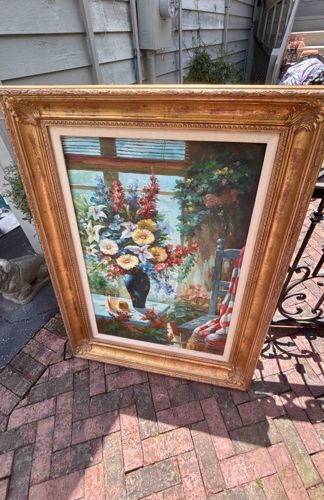
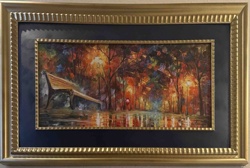
This item is a framed oil painting depicting a vibrant floral still life arranged in a window setting. The artwork features a large bouquet of various flowers, including what appear to be lilies, chrysanthemums, and snapdragons, presented in a dark, possibly navy blue or black vase. The color palette is rich and varied, with prominent use of reds, yellows, whites, purples, and greens against a light blue background, suggesting a window view or exterior scene. The brushstrokes appear visible and somewhat impasto, contributing to a painterly texture. To the right of the floral arrangement, a wooden chair is partially visible, draped with a red and white checkered blanket or fabric, adding a domestic touch to the scene. The painting is housed within a substantial, ornate gold-colored frame, likely constructed from wood or a composite material with a gilded finish. The frame features intricate molded details, including a noticeable inner border with a beaded or rope-like pattern and an outer, wider section with carved or cast floral and scroll motifs. The overall condition of the frame appears good, though some minor wear consistent with age and handling, such as small nicks or slight fading of the gilding, may be present but are not clearly discernible from the image. The painting itself seems to be in good condition with no obvious signs of significant damage, tears, or repairs to the canvas or paint layer. There's a subtle patina to both the frame and the artwork, indicating its age. Based on the style of the painting and the frame, it likely dates from the late 20th century, possibly 1970s-1990s, exhibiting a traditional or classic realist style with elements of impressionistic brushwork. No visible artist's signature or specific manufacturing marks are apparent from the provided image.
AI Appraisal Report
Based on my visual examination of the provided image, this Floral Still Life Oil Painting in Ornate Gold Frame appears to be in good overall condition. The canvas shows no obvious tears or significant paint loss. The ornate gold-colored frame, likely wood or composite with gesso and gilding, exhibits good structural integrity, although minor wear consistent with handling and age, such as small nicks or slight fading of the gilding, is to be expected but not clearly discernible in the image. The brushstrokes suggest a late 20th-century origin (1970s-1990s), a period where decorative floral still lifes were popular.
Market conditions for unsigned contemporary decorative art of this type are moderate. While attractive, the lack of an identifiable artist significantly impacts its value. Comparables for unsigned floral oil paintings with decorative frames typically range from $150 to $400 in secondary markets, depending on size, artistic merit, and condition. The ornate frame adds aesthetic value but doesn't elevate the overall appraisal significantly without a known artist.
Demand for such decorative pieces is steady, particularly for interior design purposes, but rarity is low as many similar works were produced. The primary factors impacting value are the unknown artist and the piece's decorative, rather than fine art, status.
It is crucial to note the limitations of authenticity verification from images alone. An in-person examination would be needed to confirm the medium (e.g., oil versus acrylic), assess the true condition of the paint and canvas for craquelure, discoloration, or professional repairs. Full authentication would also require locating a signature, artist's estate information, exhibition history, or other provenance documentation. Scientific testing, such as pigment analysis, could further aid in dating the work but is not typically warranted for decorative pieces of this type.