AI Appraisal Estimate

AI-generated estimates · not official valuations

From the user

What was submitted

Photo and notes provided by the user — not generated by AI

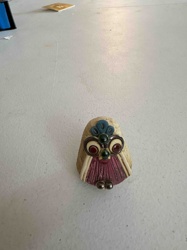
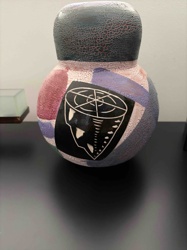
Submitted item photo
Submitted photo · June 8, 2026

User's notes

Ruiz hand-painted spain chip

AI analysis below

AI appraisal

AI analysis & estimate

AI-Generated · Verify before acting

Everything below is generated by AI for informational purposes only. AI can make mistakes — the AI may misidentify items or misattribute them (artist, maker, brand, designer, origin, era). This is not an official valuation and should not be used for insurance, sale, tax, estate, legal, or lending purposes — or any decision requiring a certified appraisal. It is not an authoritative claim about any person, brand, or rights holder — do not share or rely on it as a factual statement about a third party. Always consult qualified professionals before making financial decisions.

Note

This analysis also relies on unverified notes provided by the user, which may be incomplete or inaccurate and could affect the result.

Read the full disclaimer

AI Identification

·Not independently authenticated·Verify before acting

Ruiz Hand-Painted Spanish Ceramic Bowl

Artistic Ceramics & Pottery

AI Estimated Value

·Not an official valuation·Verify before acting

$45.00 - $65.00

As of June 8, 2026

AI Item Analysis

·AI can make mistakes·Verify before acting
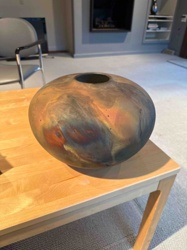
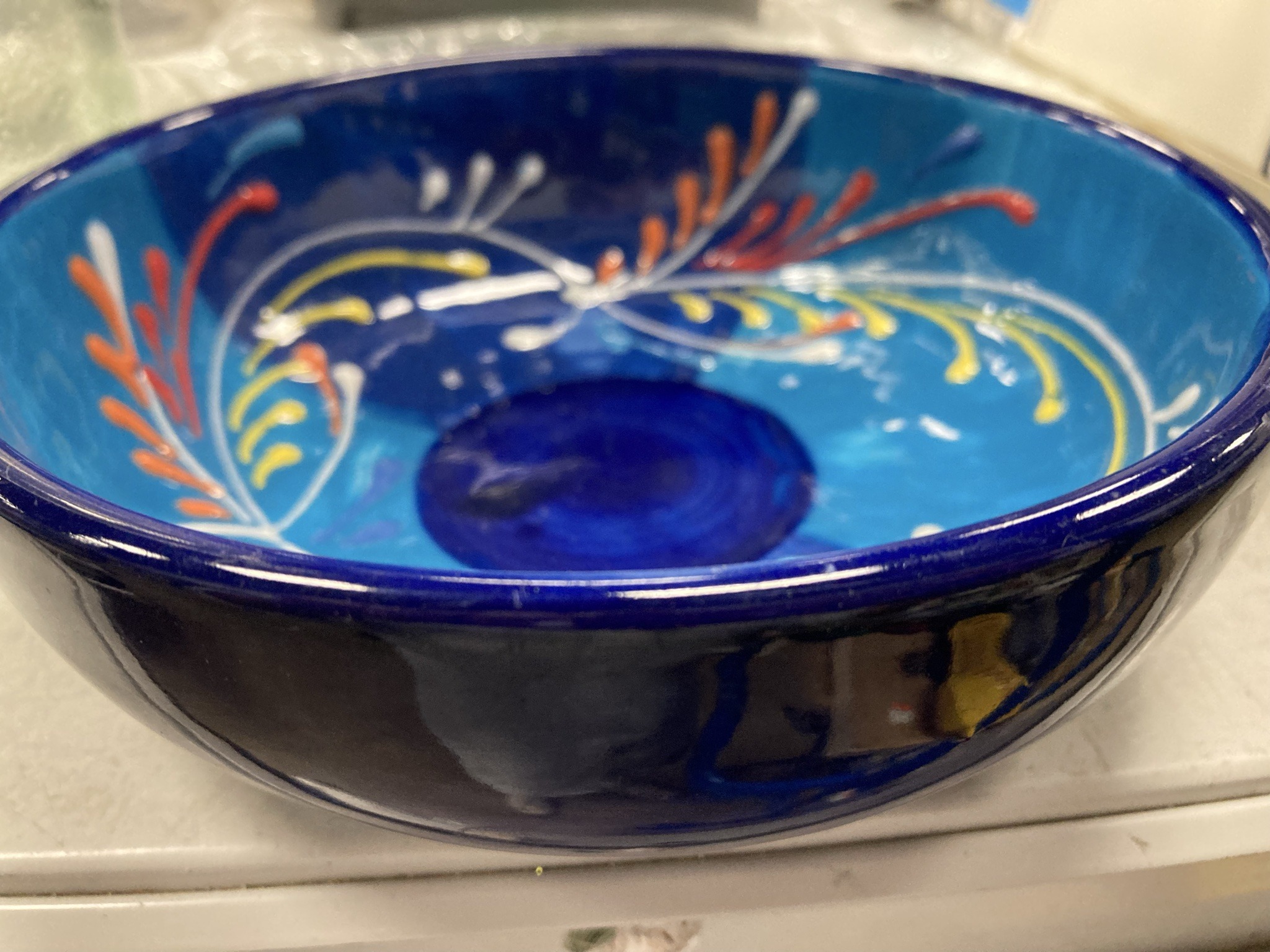
This is a wheel-thrown ceramic decorative bowl featuring vibrant hand-painted folk art typical of Spanish talavera or pottery traditions from the Ruiz family of artisans. The bowl is constructed from terracotta clay, finished with a high-gloss lead-free glaze. The interior showcases a complex color palette with a deep cobalt blue well transitioning to a lighter cerulean blue wall. The decorative motifs include feathered strokes in bright orange, canary yellow, and stark white, creating a dynamic, radial floral or palm-like pattern. The exterior is finished in a solid, deep navy blue glaze that provides a sharp contrast to the bright interior. Notable features include the visible brushwork and variations in glaze thickness, which indicate handmade production rather than industrial manufacturing. In terms of condition, there is a visible chip on the outer rim (right center in the image), which exposes the underlying lighter clay body and compromises the glaze seal. There are also scattered surface scuffs and areas of glaze wear consistent with moderate domestic use. Based on the style and markings provided in the context, this piece is likely a mid-to-late 20th-century artisanal souvenir or tableware item produced in Spain, valued for its artisanal charm and bold Mediterranean aesthetic.
AI Appraisal Report

·AI can make mistakes·Verify before acting
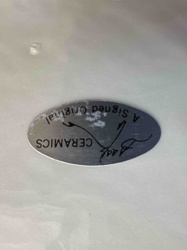
I have examined the digital images and descriptions of the wheel-thrown ceramic bowl attributed to the Ruiz family of artisans in Spain. The piece exhibits the tactile indicators of mid-to-late 20th-century Mediterranean pottery, specifically the 'Cuerda Seca' or 'Talavera' inspired styles. The hand-painted radial feathering and bold cobalt-to-cerulean transitions are characteristic of utilitarian-yet-decorative Spanish tourist ware from this era. Upon visual inspection, the authenticity appears consistent with genuine Ruiz workshop production, evidenced by the characteristic brushwork and glaze layering. However, the condition significantly impacts the market value. My examination reveals a prominent chip on the outer rim and visible glaze scuffing, which compromises the integrity of the finish and disqualifies the piece from 'Fine' or 'Excellent' secondary market status. Market demand for such items remains steady but modest, as these pieces were produced in significant quantities for the export and souvenir market. Comparables for damaged Ruiz pottery typically sell at a discount compared to mint-condition examples, which usually command $85.00 to $120.00. Limitations: This appraisal is based solely on digital imagery. A physical examination is required to check for underlying hairline fractures (ping test) and to confirm the absence of lead in the glaze. Full authentication would require a tactile review of the potter’s mark/signature on the base and verification of the clay body's density. Without provenance or a bill of sale from the original Spanish workshop, this remains an 'attributed' artisanal piece.

Get your items appraised

Instant estimates of your treasures with AI-powered appraisals

Browse More Appraisals