AI estimate as of September 26, 2025 · verify with a professional before acting
AI-Generated · Verify before acting
Everything on this page is generated by AI for informational purposes only. AI can make mistakes — the AI may misidentify items or misattribute them (artist, maker, brand, designer, origin, era). This is not an official valuation and should not be used for insurance, sale, tax, estate, legal, or lending purposes — or any decision requiring a certified appraisal. It is not an authoritative claim about any person, brand, or rights holder — do not share or rely on it as a factual statement about a third party. Always consult qualified professionals before making financial decisions.
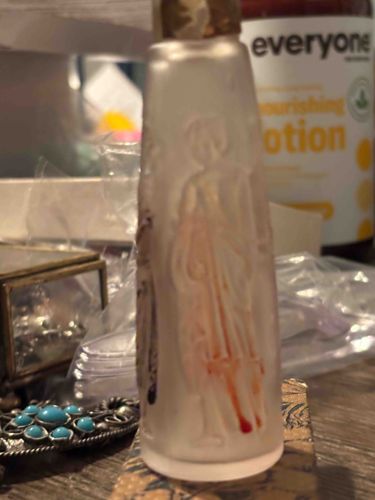
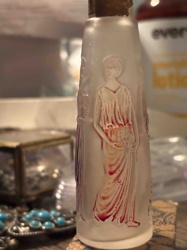
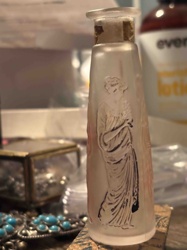
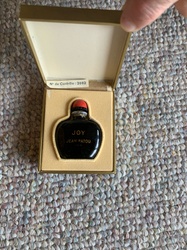
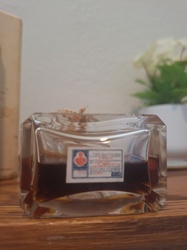
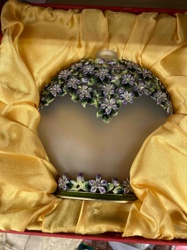
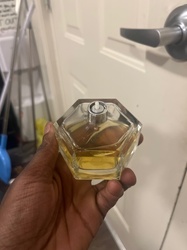
This item is a frosted glass perfume bottle, characterized by its elongated, cylindrical shape with a slightly flared base. It appears to be made of translucent, milky white glass, providing a soft, diffused aesthetic. The most prominent feature is the raised relief design depicting a classical figure, likely a nymph or goddess, draped in flowing robes. The figure's posture suggests elegance and movement, rendered with noticeable detail in the folds of the drapery. There are traces of what appears to be red or reddish-brown pigment partially coloring the etched figure, particularly in the lower half, which could be either a deliberate decorative accent or residue from a previous liquid or staining. The top of the bottle is fitted with a gold-toned, possibly metal, cap that exhibits some surface wear or tarnishing consistent with age. The glass itself appears to be in good condition, with no immediately visible cracks, chips, or significant damage, though the frosted surface might obscure minor imperfections. The overall style suggests an antique or vintage period, possibly late 19th to early 20th century, drawing inspiration from Art Nouveau or classical revival movements due to the figurative design and material choice. The craftsmanship indicates a molded glass process, with the relief work suggesting a decent level of detail for mass-produced decorative items of its era. Unique aspects include the partial coloration on the relief, which could be an original artistic choice or an intriguing form of accumulated patina. The bottle likely held perfume, cologne, or a similar scented liquid.
AI Appraisal Report
Upon my virtual examination of this frosted glass perfume bottle, I find it to be in good overall condition. The frosted glass appears intact, showing no visible cracks or chips, though minor imperfections could be obscured by the frosting. The gold-toned cap exhibits expected surface wear consistent with its likely age, which I estimate to be late 19th to early 20th century, aligning with Art Nouveau or classical revival aesthetics. The most intriguing aspect is the classical figure relief with traces of red/reddish-brown pigment. This could be an original embellishment or a unique patina, warranting further investigation.
Authenticity: Based solely on the image, the bottle appears authentic to its suggested period and style. Its molded glass construction and figural relief are typical of decorative perfume bottles from that era. However, without physical inspection, definitive authentication is challenging. I cannot verify the material composition of the cap nor fully assess the nature of the coloring on the relief. In-person examination would allow for tactile inspection of the glass, closer scrutiny of the cap's material and attachment, and detailed analysis of the pigment to determine if it's original or later accretion.
Market Conditions & Comparables: The market for vintage frosted glass perfume bottles with classical motifs is steady, particularly for those in good condition with appealing designs. Similar items, particularly those with a degree of artistic merit, generally command prices within the $50-$150 range, depending on rarity, designer, and provenance.
Demand & Rarity: While not exceedingly rare, the detailed classical figure and the potential original coloring give it a unique appeal, enhancing its desirability. Demand is primarily from collectors of perfume bottles, Art Nouveau enthusiasts, and those seeking decorative antique accents.
Factors Impacting Value: The good condition of the glass and the attractive, well-executed classical relief are positive factors. The partial coloration, if determined to be original, would significantly enhance its artistic and historical value. Conversely, if it were deemed damage or an unfortunate later addition, it could slightly detract. Provenance information, such as the original owner or manufacturer, would also significantly increase its value.
Limitations: My assessment is limited by the two-dimensional nature of the image. A full authentication would require physical examination to assess weight, exact dimensions, internal condition, and the precise nature of the cap's material and the relief's coloring. Scientific testing could clarify the pigment's age and composition.