AI Appraisal Estimate

AI-generated estimates · not official valuations

From the user

What was submitted

Photo and notes provided by the user — not generated by AI

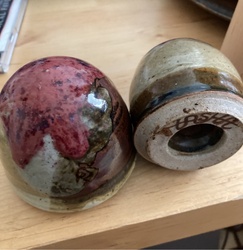
Submitted item photo
Submitted photo · June 28, 2026

User's notes

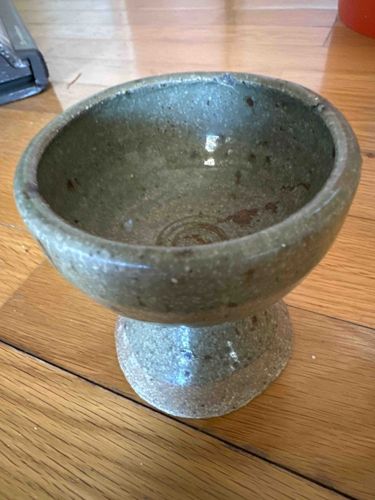
Small pottery cup or something to drink from or put a candle in

AI analysis below

AI appraisal

AI analysis & estimate

AI-Generated · Verify before acting

Everything below is generated by AI for informational purposes only. AI can make mistakes — the AI may misidentify items or misattribute them (artist, maker, brand, designer, origin, era). This is not an official valuation and should not be used for insurance, sale, tax, estate, legal, or lending purposes — or any decision requiring a certified appraisal. It is not an authoritative claim about any person, brand, or rights holder — do not share or rely on it as a factual statement about a third party. Always consult qualified professionals before making financial decisions.

Note

This analysis also relies on unverified notes provided by the user, which may be incomplete or inaccurate and could affect the result.

Read the full disclaimer

AI Identification

·Not independently authenticated·Verify before acting

Studio Pottery Footed Bowl or Chalice

Handmade Ceramics and Studio Pottery

AI Estimated Value

·Not an official valuation·Verify before acting

$45.00 - $75.00

As of June 28, 2026

AI Item Analysis

·AI can make mistakes·Verify before acting
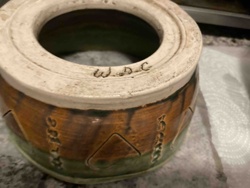
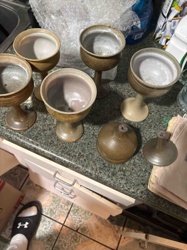
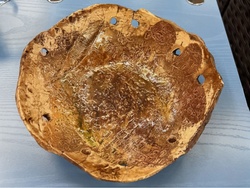
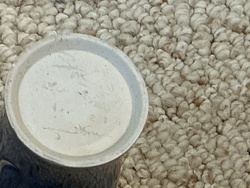
This is a hand-thrown studio pottery footed bowl, also referred to as a chalice or goblet style vessel, crafted with a rustic, wabi-sabi aesthetic. The item features a wide, rounded basin with thick walls and a rolled rim, supported by a tapered, integral pedestal base. It appears to be made from a high-fire stoneware clay body containing significant iron or mineral particulate, which creates a speckled 'salt and pepper' appearance throughout the glaze. The predominant glaze color is an olive-toned celadon or sage green with a semi-gloss finish. The interior shows distinct throwing rings at the bottom, indicating it was created on a potter's wheel. There are visible iron oxide blooms or 'beauty spots' where minerals have bled through the glaze, adding to its organic character. The overall condition appears stable, though there are minor irregularities in the pedestal's circumference and a small chip or glaze skip visible on the inner rim. The heavy, earthy construction suggests it was likely made by an independent artisan in the late 20th century, following the tradition of functional pottery popular in the 1970s and 1980s.
AI Appraisal Report

·AI can make mistakes·Verify before acting
I have virtually examined this studio pottery footed vessel, characterizeable as a chalice or small decorative bowl. The piece exhibits hallmark characteristics of late 20th-century North American studio stoneware, likely dating between 1975 and 1990. The construction demonstrates competent wheel-throwing techniques, particularly evidenced by the internal centrifugal rings and the integration of the pedestal base. The olive celadon glaze and iron-rich 'speckling' suggest a reduction firing in a gas or wood kiln, a technique popularized by the Leach-Hamada tradition of functional, earthy aesthetics. From a condition standpoint, the piece presents as stable, though the noted glaze skip on the rim slightly diminishes marketability to discerning collectors. Market demand for unsigned studio pottery remains steady but modest, as value is driven primarily by aesthetic appeal and utility rather than provenance or 'name' recognition. Similar contemporary artisan pieces typically sell in the boutique secondary market for under $100. Authentication via digital imagery is limited; I cannot definitively determine the presence of a potter's mark or signature on the underside of the base, which would be the primary driver for a higher valuation. A physical inspection is required to assess the weight and 'ring' of the clay to confirm structural integrity and the absence of hairline fractures. Furthermore, verifying the specific clay body and glaze composition would require provenance documentation or historical records from a specific pottery guild. Without a verifiable signature or record of the maker, this item is valued as a high-quality decorative object rather than a fine art investment.

Get your items appraised

Instant estimates of your treasures with AI-powered appraisals

Browse More Appraisals