These notes were written by the person who submitted this item. Appraiser.AI has not verified them, and the AI's identification and estimate may rely on them.
AI Estimated Value
Not an official valuation
$150-250
AI estimate as of August 7, 2025 · verify with a professional before acting
AI-Generated · Verify before acting
Everything on this page is generated by AI for informational purposes only. AI can make mistakes — the AI may misidentify items or misattribute them (artist, maker, brand, designer, origin, era). This is not an official valuation and should not be used for insurance, sale, tax, estate, legal, or lending purposes — or any decision requiring a certified appraisal. It is not an authoritative claim about any person, brand, or rights holder — do not share or rely on it as a factual statement about a third party. Always consult qualified professionals before making financial decisions.
This analysis also relies on unverified notes provided by the user, which may be incomplete or inaccurate and could affect the result.
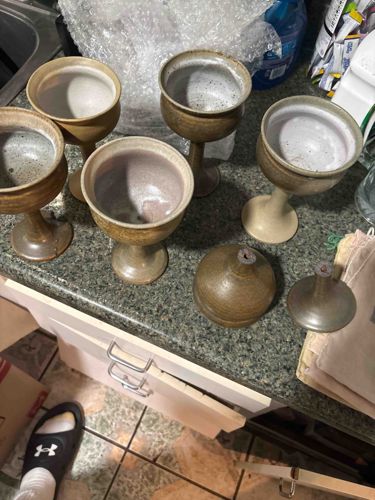
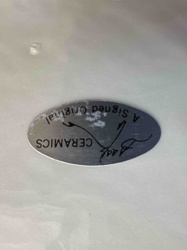
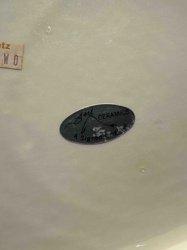
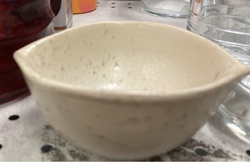
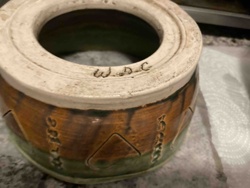
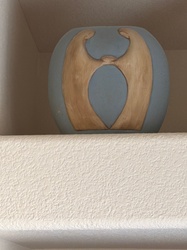
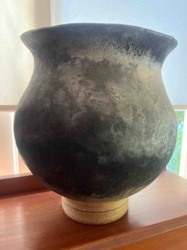
This collection features six handmade ceramic goblets or chalices and two smaller, spherical pottery objects, possibly small vases or decorative elements. The goblets exhibit significant variations in shape, size, and glaze, typical of artisanal pottery. They are primarily a rustic, earthy brown tone, suggesting the use of natural clays. The exterior surfaces have a slightly textured, matte finish, indicating un-glazed or minimally glazed exteriors to highlight the natural properties of the clay. The interiors of the cups showcase a contrasting, lighter glaze, varying from a creamy white to a subtle lavender or muted purple, with visible speckling that suggests a reactive glaze or impurities in the clay/glaze mixture. The forms of the goblets are robust, with thick bowls and sturdy stems, some featuring flared bases while others are more columnar. There are no clear visible artist's marks or signatures on the exteriors or interiors from the provided images, supporting the 'artists unknown' context. The craftsmanship appears deliberate, with a clear hand-formed quality evident in the slightly irregular shapes and organic imperfections. There are no obvious signs of chips, cracks, or significant damage, though some light wear consistent with use or age may be present on the rims or bases. The glazes show some unevenness and pooling, adding to their handmade charm rather than detracting from their quality. The two smaller, spherical items are a similar earthy brown, appearing to be single-piece constructions, possibly with small openings at the top, though their exact function is not definitively clear from the image. Given the handmade nature and rustic aesthetic, these pieces likely date from the mid to late 20th century, possibly reflecting the studio pottery movement. The quality is indicative of an artisan competent in pottery techniques, focusing on form and natural aesthetics rather than mass production precision.
AI Appraisal Report
Upon examining the image of these handmade studio pottery goblets and decorative spheres, I note their rustic charm and artisanal quality. The condition appears to be very good; I observe no obvious chips, cracks, or significant damage, which is a positive factor for value. The variations in shape, size, and glaze are typical of handmade studio pottery and contribute to their unique appeal. The contrasting interior glazes with speckling are a nice touch, demonstrating a deliberate aesthetic choice. Authenticity as handmade pieces from an unknown artist seems clear from the organic imperfections and lack of visible marks.
From a market perspective, handmade studio pottery, particularly functional wares like goblets, has a steady but not exceptionally high demand unless associated with a well-known maker. Comparables for unsigned studio pottery of this style typically range. The two smaller spherical items, while interesting, don't significantly add to the value without clearer function. The primary factors impacting value here are the aesthetic quality, the good condition, and the collective appeal of a set. Without artist attribution, the rarity factor is tied more to the unique handmade nature than to a specific maker's limited output.
Limitations in authenticity verification from images alone are significant. While I can confirm they are handmade, truly authenticating their age or ruling out contemporary mass-produced 'handmade-look' items would require in-hand examination. I would look for specific clay body characteristics, firing techniques, and glaze compositions. Provenance documentation, though stated as 'artists unknown,' could still shed light on their acquisition history. Scientific testing, such as thermoluminescence dating, could confirm age but would be cost-prohibitive for items in this value range.