AI estimate as of September 19, 2025 · verify with a professional before acting
AI-Generated · Verify before acting
Everything on this page is generated by AI for informational purposes only. AI can make mistakes — the AI may misidentify items or misattribute them (artist, maker, brand, designer, origin, era). This is not an official valuation and should not be used for insurance, sale, tax, estate, legal, or lending purposes — or any decision requiring a certified appraisal. It is not an authoritative claim about any person, brand, or rights holder — do not share or rely on it as a factual statement about a third party. Always consult qualified professionals before making financial decisions.
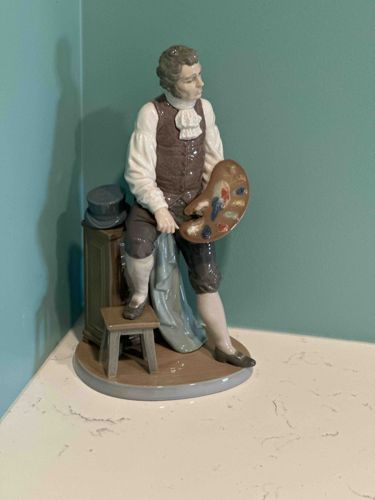
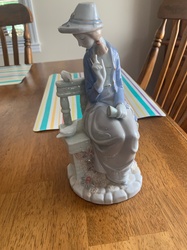
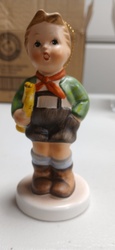
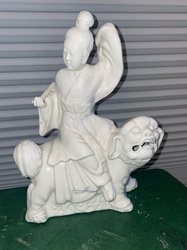
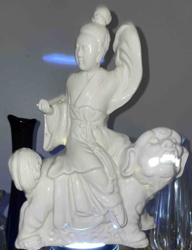
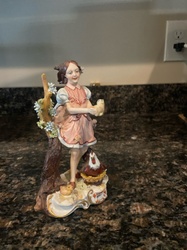
This is a detailed porcelain figure depicting a male artist from what appears to be the 18th century, likely from the Rococo or Neoclassical period based on his attire. The figure is made of glazed porcelain, characterized by its smooth, somewhat translucent finish. The artist is shown standing with his left leg resting on a small, dark wooden stool, suggesting a moment of pause or contemplation during his work. He is dressed in period-appropriate clothing: a crisp white ruffled shirt with voluminous sleeves, a dark brown waistcoat with numerous small buttons, and dark breeches with white stockings. His hair is styled in a powdered wig, typical of the era. In his right hand, he holds an artist's palette, detailed with various dabs of vibrant paints in red, blue, yellow, and brown, indicating its use. His left arm is draped with a light blue or grey fabric, possibly a smock or a piece of cloth used for wiping brushes. To his left, on the ground, rests a small, dark grey top hat. The figure stands on an oval, light grey base. The color palette is relatively muted, utilizing earthy tones for the clothing and skin, with brighter accents for the paints on the palette. The craftsmanship appears to be high, with fine details in the facial features, clothing folds, and accessories, indicating a quality porcelain manufacturer. There are no visible chips, cracks, or repairs in the provided images, suggesting it is in good condition with a consistent glaze.
AI Appraisal Report
This detailed porcelain figure, depicting an 18th-century artist, presents as a high-quality collectible. Based on visual examination of the provided images, the condition appears excellent, with no visible chips, cracks, or repairs. The glazes are consistent and vibrant, particularly the detailed paints on the palette, which is a key artistic element. The specific identification as 'Lladró The Painter' is highly plausible due to the characteristic soft color palette, intricate detailing, and overall aesthetic quality commonly associated with Lladró pieces. However, without a physical inspection for backstamps or etchings, confirming the manufacturer with absolute certainty based solely on images is not possible.
Market conditions for vintage Lladró and similar high-end porcelain figurines remain steady, particularly for well-preserved, larger, and aesthetically pleasing pieces like this one. Comparable sales of similarly sized and themed Lladró artist figures or Rococo-era depictions in excellent condition typically fall within the $500-900 range. Demand for such pieces is driven by collectors of fine porcelain, historical art enthusiasts, and interior decorators seeking classic, elegant accents. The figure's excellent state of preservation significantly enhances its market appeal.
Factors impacting value include the presumed Lladró origin, the intricate detail, and the superb condition. Rarity could be a factor if it's a limited edition, but this cannot be ascertained from images. For full authentication, an in-person examination to verify manufacturer's marks (e.g., Lladró backstamp, model number, artist signature), an assessment of the porcelain body's quality, and a detailed check for any restorationInvisible to the camera would be necessary. Provenance documentation, if available, would further solidify its value and authenticity.