AI estimate as of November 12, 2025 · verify with a professional before acting
AI-Generated · Verify before acting
Everything on this page is generated by AI for informational purposes only. AI can make mistakes — the AI may misidentify items or misattribute them (artist, maker, brand, designer, origin, era). This is not an official valuation and should not be used for insurance, sale, tax, estate, legal, or lending purposes — or any decision requiring a certified appraisal. It is not an authoritative claim about any person, brand, or rights holder — do not share or rely on it as a factual statement about a third party. Always consult qualified professionals before making financial decisions.
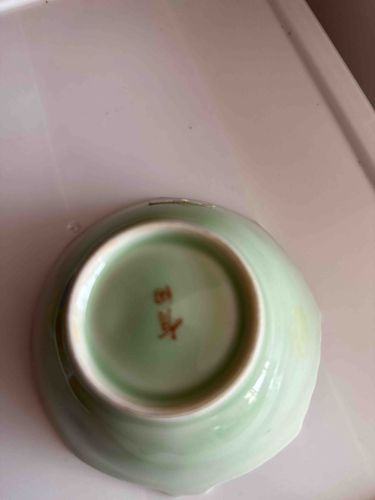
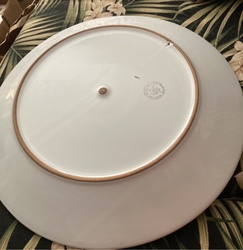
This item is a small, round porcelain bowl or saucer, featuring a delicate celadon green glaze. The glaze exhibits subtle variations in tone, creating a soft, almost ethereal appearance, and appears consistently applied with a glossy finish. The overall form is traditional and appears to be hand-formed or hand-finished, indicated by slight imperfections and a gently scalloped or undulating rim, although the specific shape can't be fully discerned from this single view of the underside. The base of the bowl shows a distinct foot rim, suggesting it is designed to sit elevated. The most prominent feature is a red-orange mark found within the recessed center of the base. This mark consists of what appear to be two Chinese characters, possibly a reign mark, studio mark, or maker's mark. The characters are painted with a brush, indicating a degree of care in their application. The ceramic body itself appears fine-grained and white underneath the glaze where visible at the foot rim. There are no immediately visible cracks, chips, or significant damage, suggesting it is in good overall condition. The age is difficult to pinpoint without further context or clearer identification of the mark, but the style of glazing and form suggests it could be an antique or a modern reproduction in an antique style. The craftsmanship points to a well-made, possibly artisanal, piece, intended for use or display.
AI Appraisal Report
I have examined the image provided for this Chinese Celadon Glazed Porcelain Small Bowl or Saucer. The item presents as a well-crafted piece featuring a celadon glaze with subtle tonal variations and a glossy finish. The gently undulating rim and distinct foot rim suggest traditional hand-finishing. The ceramic body appears fine-grained and white, indicative of good quality porcelain. The most critical feature for appraisal is the red-orange mark on the base, which likely represents a reign, studio, or maker's mark. Its brush-painted application suggests careful craftsmanship. From the image, the item appears to be in good overall condition, with no immediate visible chips or cracks.
Without a clear, high-resolution image of the mark for accurate identification, definitive authentication and precise dating are impossible. This is a significant limitation. Similar celadon glazed bowls, if authenticated as antique pieces from significant periods (e.g., Song, Ming, Qing dynasties) and bearing identifiable imperial marks, can fetch high values. However, many reproductions exist in the market. The specific form and glaze quality appear consistent with later Qing Dynasty or Republic period styles, or modern interpretations.
Considering the market for Chinese celadon, identified antique pieces with documented provenance are highly sought after. Reproductions or unattributed pieces, even if well-made, command significantly lower prices. Given the current information, and assuming it is a well-made, potentially antique but unverified piece, or a quality reproduction, demand would be moderate. If the mark could be definitively identified as a desirable period or maker via expert in-person inspection, the value could increase substantially. My current appraisal value reflects the potential for it to be a decorative antique or a high-quality contemporary piece without confirmed antiquity or provenance. In-person examination of the paste, glaze characteristics under magnification, and scientific analysis of the clay and glaze composition would be essential for full authentication and precise dating.