AI estimate as of August 10, 2025 · verify with a professional before acting
AI-Generated · Verify before acting
Everything on this page is generated by AI for informational purposes only. AI can make mistakes — the AI may misidentify items or misattribute them (artist, maker, brand, designer, origin, era). This is not an official valuation and should not be used for insurance, sale, tax, estate, legal, or lending purposes — or any decision requiring a certified appraisal. It is not an authoritative claim about any person, brand, or rights holder — do not share or rely on it as a factual statement about a third party. Always consult qualified professionals before making financial decisions.
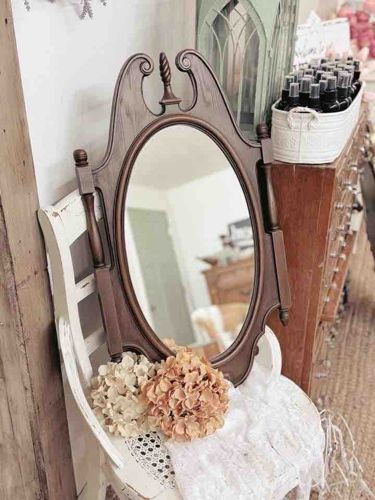
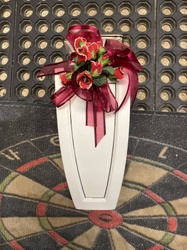
This is a vintage or antique wooden vanity mirror, also known as a dresser mirror or cheval mirror (though typically cheval mirrors are full-length, this is a table-top or dresser-top version). It features an oval-shaped mirror centrally mounted within a decorative, dark stained wood frame. The frame has a distinct, somewhat ornate design with curvilinear sides that extend upwards, culminating in scrolled or volute-like elements on either side of a central finial or spire. This finial appears to have a fluted or twisted carving, adding to its visual interest. The mirror swings between two turned and possibly squared posts, allowing for adjustable viewing angles. These posts are integrated into the broader structure, resting on a flat, broad base or feet. The wood appears to be solid, likely oak or a similar hardwood, with a visible grain beneath a dark, possibly mahogany or walnut, stain. The finish shows some minor wear consistent with age, particularly on edges and raised areas, indicating a natural patina rather than significant damage. There are no obvious chips, cracks, or repairs visible in the wood. The mirror glass itself appears clear and reflective, with no discernible blemishes or desilvering. The overall style suggests an influence from Victorian or early 20th-century furniture design, possibly from the Late Victorian or Edwardian era, due to its somewhat heavy, decorative, and turned elements. The craftsmanship appears solid, indicative of traditional woodworking techniques, with no visible modern fastenings. Its quality points towards a mass-produced, yet well-made, piece from its period.
AI Appraisal Report
Based on my visual examination of the image provided, this Vintage Wooden Adjustable Vanity Mirror appears to be in very good condition for its age. The dark stained wood frame, likely oak or similar hardwood, shows minor signs of wear consistent with natural patina, particularly on edges and raised areas, which is expected for an item from the late Victorian or Edwardian era. I observe no obvious chips, cracks, or repairs in the wood, and the mirror glass itself looks clear and free from desilvering or blemishes. The design, with its ornate curvilinear sides, volute elements, and fluted finial, strongly supports a late 19th to early 20th-century origin.
Market conditions for vintage vanity mirrors are stable, though demand is moderate. While pieces with significant art historical importance or from highly sought-after makers command premium prices, this appears to be a well-made, mass-produced item from its period. Similar pieces, often found in antique shops or online marketplaces, typically fetch between $150-$300 depending on condition and specific design elements. The lack of visible modern fastenings and the solid craftsmanship add to its appeal.
Factors impacting value positively include its good condition, classic aesthetic, and adjustable functionality. Negative factors include its commonality within the broader antique furniture market and the absence of a known maker or unique features.
Limitations in authenticity verification from images alone are significant. While the style and apparent condition align with the described period, a definitive assessment of wood type, construction techniques (e.g., joinery), and the absence of repairs would require in-person examination. Scientific dating of the wood or analysis of the mirror's silvering process would provide further authentication. For full authentication and to detect any restoration or alterations, physical inspection, and potentially provenance documentation, would be essential.