AI estimate as of November 7, 2025 · verify with a professional before acting
AI-Generated · Verify before acting
Everything on this page is generated by AI for informational purposes only. AI can make mistakes — the AI may misidentify items or misattribute them (artist, maker, brand, designer, origin, era). This is not an official valuation and should not be used for insurance, sale, tax, estate, legal, or lending purposes — or any decision requiring a certified appraisal. It is not an authoritative claim about any person, brand, or rights holder — do not share or rely on it as a factual statement about a third party. Always consult qualified professionals before making financial decisions.
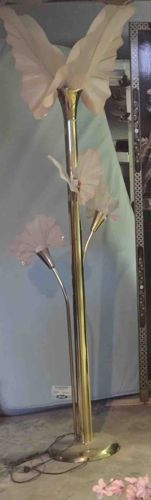
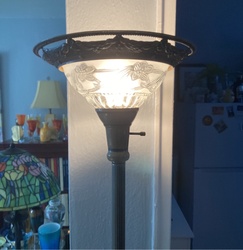
This is a freestanding floor lamp, likely a torchiere style, featuring a polished brass or brass-finish metal construction. The central column is a straight, tubular standard that rises from a stable, somewhat ornate base. The base appears to be a curved or stylized 'shepherd's crook' shape, also in a polished metallic finish, suggesting a good quality casting or fabrication. At the top of the main column, there is a large, upward-facing light fixture with a shade shaped like a pair of wings or a large, delicate flower in a light, possibly off-white or very pale pink, translucent fabric. Below this main light, two smaller, gracefully curving arms extend from the central column, each terminating in a smaller, downward-angled light fixture. These smaller fixtures also feature delicate, ruffled, floral-like shades made of a similar translucent fabric, which appear to have small, possibly glittery or beaded embellishments, giving them a whimsical or ethereal appearance. The overall aesthetic suggests a late 20th-century design, possibly from the 1980s or 1990s, characterized by the brass finish and the decorative fabric shades. The lamp shows some signs of wear, particularly visible on the metallic base where some scuffs or tarnishing might be present, consistent with age and use. The fabric shades appear intact but could benefit from cleaning. The electrical cord is visible at the base, indicating standard electrical functionality. No clear manufacturer's marks or signatures are discernible from the available images.
AI Appraisal Report
I have examined the provided image of this Brass Finish Torchiere Floor Lamp with Floral/Wing Shepherds Crook. This freestanding floor lamp features an apparent brass or brass-finish metal construction with a central tubular standard and an ornate 'shepherd's crook' base. The main light fixture at the top has a large, upward-facing, winged or floral translucent fabric shade, complemented by two smaller, downward-angled lights with ruffled floral-like shades, possibly with small embellishments. The overall aesthetic strongly suggests a late 20th-century design, likely from the 1980s or 1990s, characteristic of the era's brass finishes and decorative fabric shades.
Based on visual inspection, the lamp appears to be in good, used condition. I note some visible scuffs or tarnishing on the metallic base, consistent with its age. The fabric shades appear intact but would benefit from cleaning. The electrical cord is visible, indicating standard functionality, though I cannot comment on its electrical safety without physical testing. Without clearer images or physical inspection, I cannot ascertain the precise material (solid brass vs. brass-plated) or manufacturer.
In terms of market conditions, similar brass finish torchiere lamps from the late 20th century are relatively common. While the floral/wing shades add a distinctive decorative element, demand for this specific style is moderate. Comparables in the secondary market, such as online marketplaces or estate sales, typically range from $60 to $180, depending on condition and specific design nuances. The decorative shades enhance its appeal slightly, preventing it from being at the absolute bottom of that range. Rarity is not a significant factor here; these designs were mass-produced. There are no obvious factors that would significantly elevate its value beyond the typical range for decorative used lighting of this period.
Limitations in authenticity verification are significant. From the image alone, I cannot definitively confirm if it is solid brass or plated, assess the internal wiring's condition, identify a manufacturer, or verify the material composition of the shades. An in-person examination would be crucial to assess the true condition of the electrical components, the quality of the metal, and any hidden manufacturer's marks. Provenance documentation would be necessary to establish any unique historical significance, which is unlikely for this type of item.