AI estimate as of October 17, 2026 · verify with a professional before acting
AI-Generated · Verify before acting
Everything on this page is generated by AI for informational purposes only. AI can make mistakes — the AI may misidentify items or misattribute them (artist, maker, brand, designer, origin, era). This is not an official valuation and should not be used for insurance, sale, tax, estate, legal, or lending purposes — or any decision requiring a certified appraisal. It is not an authoritative claim about any person, brand, or rights holder — do not share or rely on it as a factual statement about a third party. Always consult qualified professionals before making financial decisions.
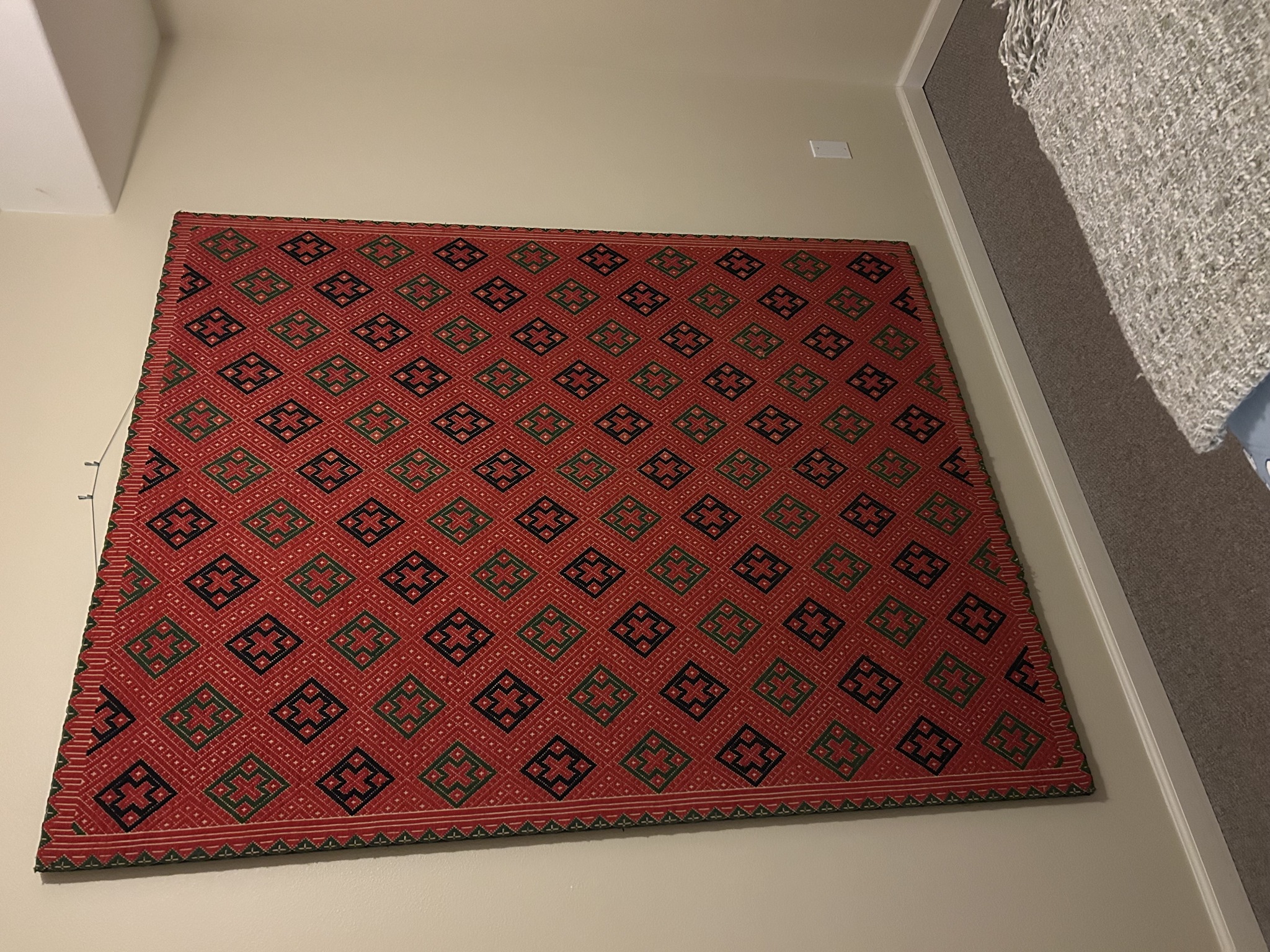
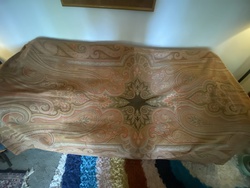
This large, rectangular textile piece is displayed mounted on a light-colored interior wall. The composition features a vibrant, predominantly red background filled with a repeating, all-over geometric pattern composed of nested diamond and cross motifs in contrasting shades of dark blue, black, and green. The field is bordered by a series of narrow, linear patterned bands running along the perimeter of the textile. The construction appears to be a flat-woven textile or tapestry technique, showing fine detail and precise symmetry in its repeating motifs. The item appears to be in clean, well-preserved condition with no obvious tears, stains, or major fading visible from this perspective. There are no clearly visible maker's marks, signatures, or labels present in the image. The overall visual style is consistent with traditional or tribal flat-woven textiles, such as kilims or indigenous geometric weaving traditions, though the exact origin and age cannot be determined without physical inspection. The attribution rests entirely on the visual observation of its woven structure and geometric design.
AI Appraisal Report
Based on what I can see in the photograph, this large, rectangular textile hanging features a vibrant red background with a repeating, all-over geometric pattern of nested diamond and cross motifs in dark blue, black, and green, finished with narrow linear patterned borders. The visual style suggests a traditional flat-woven textile or tapestry technique, potentially reminiscent of kilims or indigenous geometric weaving traditions. However, I cannot verify from a photo the exact materials, age, regional origin, or whether the construction is genuinely antique or a later reproduction, as would need physical inspection to confirm. My estimated value range of $1,200 to $1,800 assumes the hypothesis that the textile possesses the age, quality, and craftsmanship traditionally associated with vintage or antique flat-woven tribal textiles of this type. The clean, well-preserved condition observed visually supports a higher end for this assumed bracket. General market demand for decorative tribal and geometric flat-woven textiles remains steady among interior designers and collectors seeking bold graphic statements, though prices fluctuate based on true antiquity and material composition. To establish a more precise valuation and test the attribution, an in-person examination by a textile expert is needed, alongside potential fiber analysis to determine material content and age. If the piece were to turn out to be a modern reproduction, replica, or made 'in the style of' rather than an older authentic textile, the market value would decrease significantly, likely falling into the $150 to $300 range as a purely decorative furnishing.