AI identification & appraisal estimate

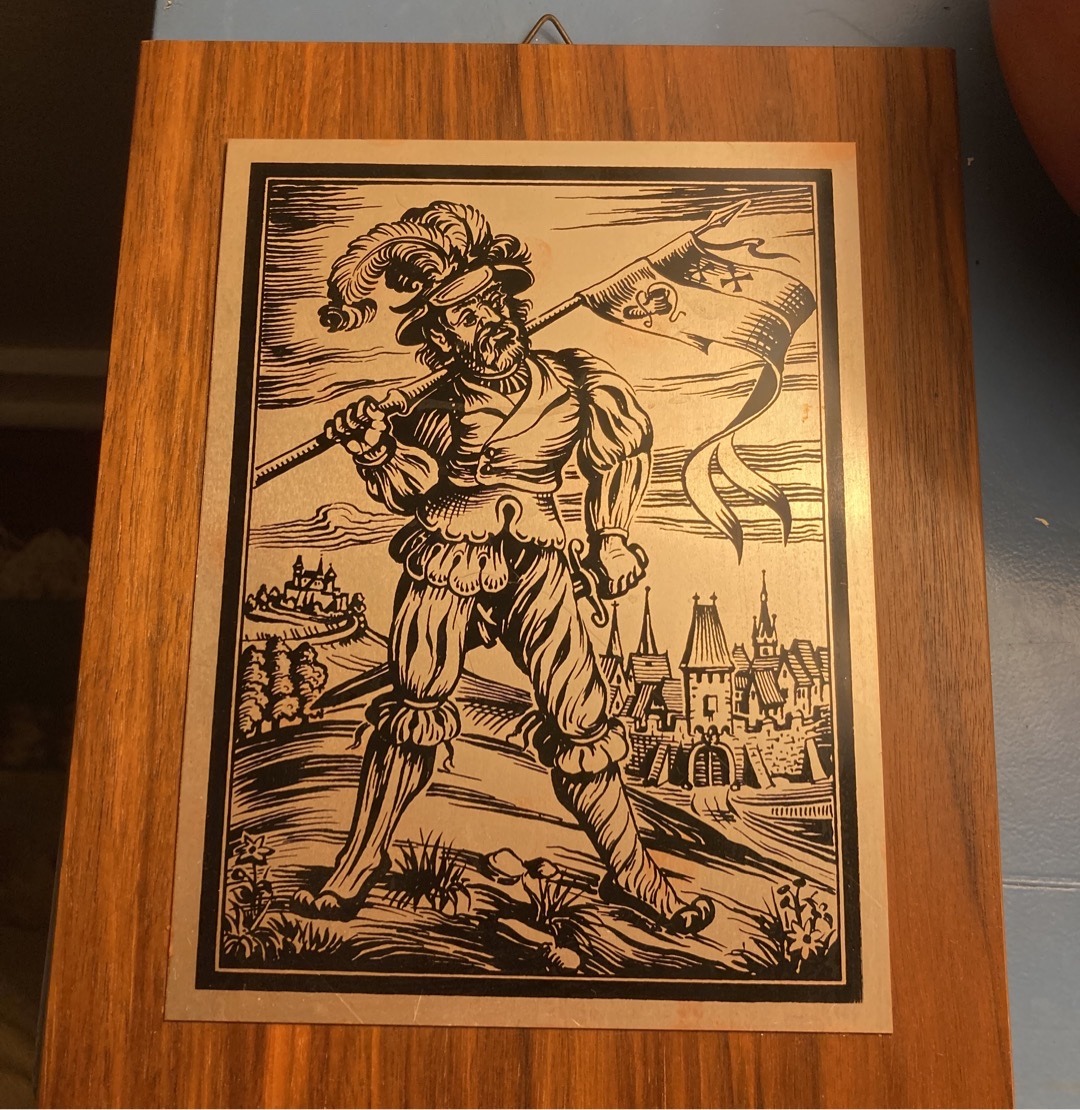
Wood-mounted metallic plaque with landsknecht-style illustration

Submitted photo of Wood-mounted metallic plaque with landsknecht-style illustration
Photo submitted by the user — not generated by AI

User's notes

copper or another metal or a substance over copper because yiu can see the burnish coming through in spots

These notes were written by the person who submitted this item. Appraiser.AI has not verified them, and the AI's identification and estimate may rely on them.

AI Estimated Value

Not an official valuation

$40 - $120

AI estimate as of July 18, 2026 · verify with a professional before acting

AI-Generated · Verify before acting

Everything on this page is generated by AI for informational purposes only. AI can make mistakes — the AI may misidentify items or misattribute them (artist, maker, brand, designer, origin, era). This is not an official valuation and should not be used for insurance, sale, tax, estate, legal, or lending purposes — or any decision requiring a certified appraisal. It is not an authoritative claim about any person, brand, or rights holder — do not share or rely on it as a factual statement about a third party. Always consult qualified professionals before making financial decisions.

This analysis also relies on unverified notes provided by the user, which may be incomplete or inaccurate and could affect the result.

Read the full disclaimer

AI Item Analysis

This item appears to be a wall hanging consisting of a rectangular metallic sheet mounted onto a wood-grain finished plaque, likely MDF or solid wood with a veneer. The metallic surface features a black-inked illustration in the style of a Northern Renaissance woodcut, specifically consistent with 16th-century German landsknecht depictions. The central figure is a soldier with a feathered hat, puffed sleeves, and hose, carrying a large banner and a sword. A medieval-style cityscape with spires and a castle is visible in the background. The user-supplied information suggests the metallic base may be copper or a copper-based alloy, which is consistent with the reddish-gold burnish visible in areas where the surface coating appears worn. The illustration itself is reminiscent of works by artists such as Sebald Beham or Niklas Stör, though it is likely a modern reproduction or mid-20th-century decorative piece. There are no clearly visible maker's marks or signatures in the image, so this identification is based solely on stylistic analysis. Condition issues include light surface scratches on the metal and minor wear along the edges of the wooden mount. The banner exhibits heraldic-style symbols including crosses and what appears to be a stylized floral or crest element.

AI Appraisal Report

Based on my visual analysis of the provided images, I have examined this decorative wall hanging featuring a Landsknecht-style illustration. The piece appears to consist of a thin metallic sheet—described by the owner as potentially copper or a copper alloy—mounted to a wood-veneer or laminate plaque. From what I can see, the illustration is rendered in a style reminiscent of 16th-century Northern Renaissance woodcuts, though the execution and mounting suggest a mid-to-late 20th-century decorative production rather than a period artifact. I cannot verify the exact composition of the metal or the substrate through a photograph; a physical inspection would be required to determine if the base is solid copper or a plated composite. The estimate assumes the item is a vintage decorative reproduction. If it were found to be a contemporary mass-produced item on MDF, the value would likely fall below $30. Conversely, if it were a signed work by a known 20th-century metal artist, the value could exceed $200. The current market for mid-century 'Old World' style decor remains stable but niche, with values primarily driven by aesthetic appeal and interior design trends rather than historical rarity. Typical comparable items of this type and size generally trade within the $40 to $120 range. Identifying the presence of any maker's marks on the reverse or beneath the mount, along with provenance documentation, would be necessary to further refine this hypothesis. Without a physical examination or scientific testing of the metallic surface, this assessment remains a working estimate based on stylistic characteristics and user-supplied descriptions of surface wear and burnish color. Authenticity as a period-correct 16th-century piece is not supported by the visible mounting and condition.

Keep exploring

More decorative art appraisals

Get your items appraised

Instant AI-powered appraisal estimates from a photo

Browse More Appraisals