AI estimate as of August 9, 2025 · verify with a professional before acting
AI-Generated · Verify before acting
Everything on this page is generated by AI for informational purposes only. AI can make mistakes — the AI may misidentify items or misattribute them (artist, maker, brand, designer, origin, era). This is not an official valuation and should not be used for insurance, sale, tax, estate, legal, or lending purposes — or any decision requiring a certified appraisal. It is not an authoritative claim about any person, brand, or rights holder — do not share or rely on it as a factual statement about a third party. Always consult qualified professionals before making financial decisions.
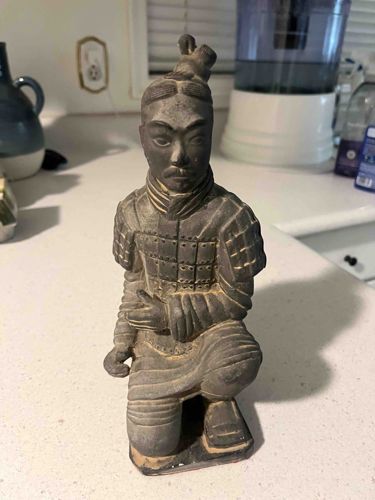
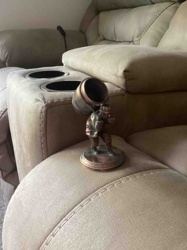
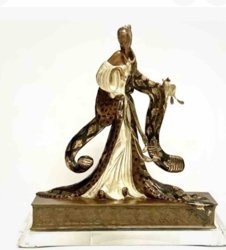
This item is a decorative figurine, appearing to be a replica or homage to a Terracotta Army warrior from ancient China. The figure is depicted in a kneeling or squatting posture, wearing detailed armored attire. It is crafted from a dark, possibly gray or black, material that could be resin, painted ceramic, or a composite stone, giving it a weathered, aged appearance. The texture suggests a matte finish with some areas showing lighter highlights, particularly on raised surfaces, which could be intentional distressing or minor wear.
The warrior's attire is intricately rendered, showing individual armor plates, likely simulating leather or metal, fastened with rivets or stitching details. The face possesses distinct Asian features, including a mustache and a neatly tied topknot hairstyle. The craftsmanship appears to be of decent quality, with attention to detail in the molding of the armor and facial features, though some areas seem slightly less refined, which is common in mass-produced decorative items.
Observable condition issues include some scuffing and discoloration, particularly on the base and protruding edges, indicative of normal handling and placement over time. The bottom edge of the base shows exposed material, possibly revealing the true color of the base material or an unpainted section. There are no visible maker's marks or signatures. Given its likely function as a decorative piece, the estimated age is relatively modern, probably within the last few decades, as older authentic Terracotta figures are exceedingly rare and valuable. Its overall quality suggests it is a decorative art piece intended for display rather than a historical artifact.
AI Appraisal Report
I have examined the provided images of this kneeling Terracotta Army Warrior figurine. In my professional opinion, this item is a decorative replica, likely dating from the last few decades, rather than an authentic ancient artifact. The material appears to be resin or a similar composite, designed to mimic aged ceramic or stone.
Condition-wise, it presents as a handled decorative item with minor scuffs and discoloration consistent with display wear. There are no significant breaks or repairs visible. Authenticity, based solely on imagery, cannot be definitively confirmed as an ancient piece; however, the lack of expected material degradation for its supposed age, the apparent molding techniques, and common manufacturing characteristics strongly indicate modern production. Without in-person examination, including tactile assessment of the material, weight, and detailed surface inspection for tool marks or firing imperfections (if ceramic), a conclusive authenticity statement as an antique is impossible.
Market conditions for such decorative replicas are generally stable, driven by aesthetic appeal rather than historical significance. Comparable items, often found in home decor stores, museum gift shops, or online marketplaces, typically range in the lower to mid-tier of decorative objects. Demand exists among those who appreciate historical aesthetics or Chinese cultural motifs, but rarity is low due to widespread production of similar decorative items.
Factors significantly impacting value include its status as a decorative replica, preventing it from achieving the high values of genuine artifacts or high-end sculptural art. Its value is predominantly tied to its visual appeal and condition as a decorative object. Verifying authenticity as ancient would require direct laboratory analysis of the material composition, and provenance documentation tracing its origin back to archaeological findings.
Limitations: My assessment of modernity is based on visual cues common in contemporary reproductions. A physical inspection would allow for tactile verification of material (e.g., coldness of stone vs. warmth of resin), examination of the underside for manufacturing marks, and closer scrutiny of details for signs of age or mass production.