AI Appraisal Estimate

AI-generated estimates · not official valuations

From the user

What was submitted

Photo and notes provided by the user — not generated by AI

Submitted item photo
Submitted photo · June 25, 2026

User's notes

No additional notes provided.

AI analysis below

AI appraisal

AI analysis & estimate

AI-Generated · Verify before acting

Everything below is generated by AI for informational purposes only. AI can make mistakes — the AI may misidentify items or misattribute them (artist, maker, brand, designer, origin, era). This is not an official valuation and should not be used for insurance, sale, tax, estate, legal, or lending purposes — or any decision requiring a certified appraisal. It is not an authoritative claim about any person, brand, or rights holder — do not share or rely on it as a factual statement about a third party. Always consult qualified professionals before making financial decisions.

Read the full disclaimer

AI Identification

·Not independently authenticated·Verify before acting

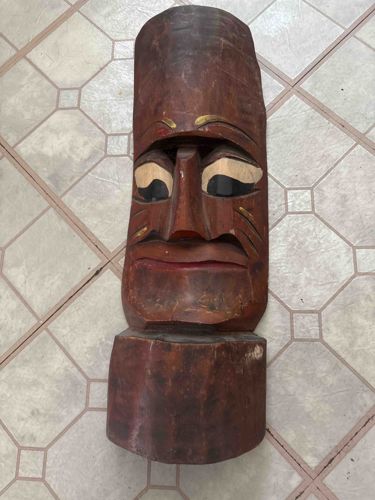
Polynesian-Style Carved Wood Tiki Figurine

Folk Art / Decorative Collectibles

AI Estimated Value

·Not an official valuation·Verify before acting

$150 - $250

As of June 25, 2026

AI Item Analysis

·AI can make mistakes·Verify before acting
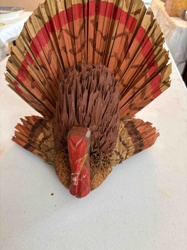
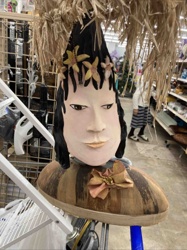
This is a hand-carved decorative wooden sculpture resembling a Polynesian Tiki or Moai figure. The item is carved from a single, solid piece of medium-toned wood, likely a tropical hardwood like monkeypod or acacia. It stands approximately 18 to 24 inches tall with a cylindrical, vertical construction. The face features prominent, stylized features including large indented eyes painted with cream and black accents, a wide triangular nose, and etched lines representing cheeks and eyebrows highlighted with yellow or gold paint. The mouth is carved in a stern, straight-lipped expression with subtle red pigment. The wood has a dark reddish-brown stained finish that appears aged. Condition-wise, the piece shows significant patina and wear consistent with age or outdoor display, including scuffing, minor wood splits (checks) along the side and bottom, and paint loss on the facial features. The base is chunky and unrefined, showing clear tool marks from the carving process. There are no visible maker's marks or signatures, suggesting it may be a folk-art piece or a mid-20th-century souvenir from the Tiki culture era, possibly the 1960s or 70s. The craftsmanship is rustic yet expressive, capturing a mask-like persona with a weathered, vintage aesthetic.
AI Appraisal Report

·AI can make mistakes·Verify before acting
I have carefully examined the submitted images of this hand-carved Polynesian-style figurine. The piece demonstrates characteristics consistent with mid-to-late 20th-century 'Tiki Culture' decor, likely produced as a souvenir or residential decorative item during the 1960s or 70s. The use of tropical wood, specifically appearing to be monkeypod, combined with the rustic tool marks and stylized polychrome accents (cream, yellow, and red), suggests a folk-art origin or a product of a commercial workshop in a region like the Philippines or Hawaii. The condition is fair; while the checking and scuffing provide an aged 'patina,' they are structural responses to environmental changes and represent moderate wear and tear. Market demand for Tiki-era collectibles remains steady but is highly dependent on provenance or known artist signatures (e.g., Witco). As an unsigned piece with significant paint loss and unrefined carving on the base, it falls into the decorative category rather than a high-end investment piece. The absence of a maker's mark limits its ceiling value compared to branded mid-century modern manufacturers. Limitations: This evaluation is based on visual data only. A physical inspection is required to confirm the wood density and identify specific pigment components. Full authentication would necessitate provenance documentation, such as original sales receipts or historical context of the collection, to distinguish this from modern mass-produced replicas designed to look aged. Scientific wood-dating or microscopic analysis of the paint would be required to rule out contemporary 'vintage-style' reproductions.

Get your items appraised

Instant estimates of your treasures with AI-powered appraisals

Browse More Appraisals