AI Appraisal Estimate

AI-generated estimates · not official valuations

From the user

What was submitted

Photo and notes provided by the user — not generated by AI

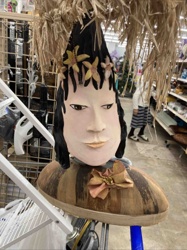
Submitted item photo
Submitted photo · May 24, 2026

User's notes

No additional notes provided.

AI analysis below

AI appraisal

AI analysis & estimate

AI-Generated · Verify before acting

Everything below is generated by AI for informational purposes only. AI can make mistakes — the AI may misidentify items or misattribute them (artist, maker, brand, designer, origin, era). This is not an official valuation and should not be used for insurance, sale, tax, estate, legal, or lending purposes — or any decision requiring a certified appraisal. It is not an authoritative claim about any person, brand, or rights holder — do not share or rely on it as a factual statement about a third party. Always consult qualified professionals before making financial decisions.

Read the full disclaimer

AI Identification

·Not independently authenticated·Verify before acting

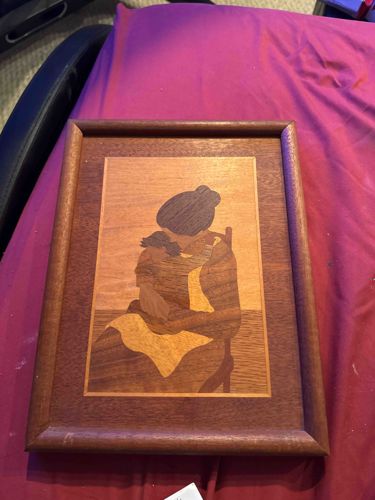
Framed Wood Marquetry Inlay Portrait of Mother and Child

Folk Art & Decorative Collectibles

AI Estimated Value

·Not an official valuation·Verify before acting

$150 - $250

As of May 24, 2026

AI Item Analysis

·AI can make mistakes·Verify before acting
This item is a decorative wood marquetry panel featuring a tender portrait of a mother holding a child, presented within an integral wooden frame. The central artwork is meticulously constructed from various thin wood veneers of different species, colors, and grain patterns to create contrast and depth without the use of paint. The mother, shown in profile with her hair in a bun, is depicted using dark-grained wood, while the child and the mother's apron are rendered in a lighter, golden-toned wood with a distinct wavy grain. A mid-tone wood forms the furniture and background elements. The piece demonstrates high craft quality, utilizing complex 'intarsia' or marquetry techniques common in mid-20th-century decorative arts, likely dating from the 1960s to the 1980s. The outer frame is characterized by a simple beveled profile, appearing to be made of a mahogany or sapele type wood with a reddish-brown finish. Visible condition notes include minor scuffing on the bottom edge of the frame and a slight dusty patina consistent with age. There are no immediate signs of wood lifting or significant loss in the inlay itself, indicating the adhesive has held well over time. No visible artist signature is discernible from the front, but the skilled execution suggests a professional artisan or established studio production.
AI Appraisal Report

·AI can make mistakes·Verify before acting
I have conducted a visual examination of the framed wood marquetry inlay depicting a Mother and Child. The piece showcases a high level of craftsmanship, particularly in the selection of 'ribbon-stripe' and 'fiddleback' grain veneers to simulate textile textures and human hair. Based on the construction style and framing materials, I estimate this piece dates to the mid-to-late 20th century (circa 1960–1980), likely of European origin, where such studio-produced marquetry flourished. The condition appears very good; the veneer remains stable with no visible buckling—a common defect in older marquetry—and the finish retains a warm, aged patina. The market for such decorative folk art is currently stable but niche. Values are driven primarily by subject complexity and size rather than artist signature, as many similar works from this period were produced by specialized workshops like those in Sorrento, Italy, or Germany. Comparables for unsigned mid-century marquetry of this size and detail typically fetch between $100 and $300 at specialty decor auctions. The sentimental subject matter slightly enhances appeal. However, as this examination was performed via image analysis, I cannot verify the type of adhesive used or the presence of a signature on the reverse side of the panel. A physical inspection would be required to rule out the use of synthetic photomechanical 'marquetry' imitations, though the grain alignment here strongly suggests genuine wood veneer. Full authentication would involve examining the joinery of the frame and checking for any labels or stamps on the backing paper that might link it to a specific studio.

Get your items appraised

Instant estimates of your treasures with AI-powered appraisals

Browse More Appraisals