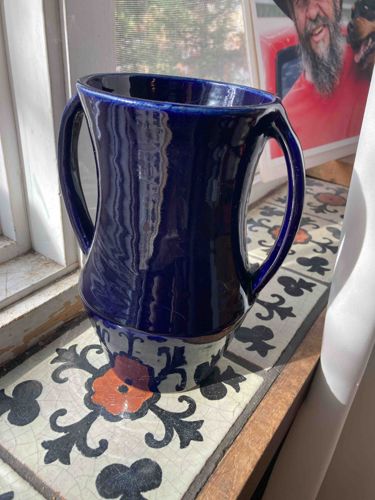
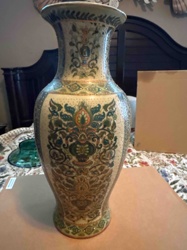
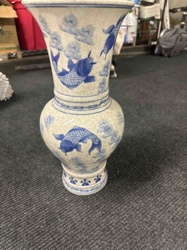
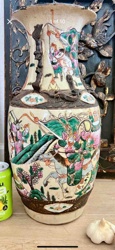
Great, smoky mountains, ceramic vase, year unknown, approximately 8 inches high by 4 inches round
These notes were written by the person who submitted this item. Appraiser.AI has not verified them, and the AI's identification and estimate may rely on them.
AI Estimated Value
Not an official valuation
$40-$60
AI estimate as of November 11, 2025 · verify with a professional before acting
AI-Generated · Verify before acting
Everything on this page is generated by AI for informational purposes only. AI can make mistakes — the AI may misidentify items or misattribute them (artist, maker, brand, designer, origin, era). This is not an official valuation and should not be used for insurance, sale, tax, estate, legal, or lending purposes — or any decision requiring a certified appraisal. It is not an authoritative claim about any person, brand, or rights holder — do not share or rely on it as a factual statement about a third party. Always consult qualified professionals before making financial decisions.
This analysis also relies on unverified notes provided by the user, which may be incomplete or inaccurate and could affect the result.
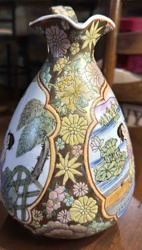
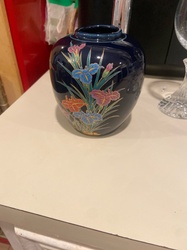
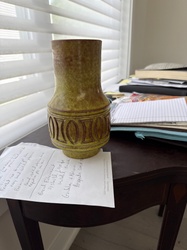
This is a ceramic vase, approximately 8 inches in height and 4 inches in diameter, characterized by its striking cobalt blue glaze. The vase features a slightly flared rim and a body that subtly tapers inward towards the base, creating an elegant, curvilinear silhouette. It is equipped with two symmetrically placed, U-shaped handles that extend from just below the rim to the upper portion of the body, offering a balanced aesthetic. The glaze is a deep, rich cobalt blue with a high-gloss finish, reflecting ambient light vividly and showing some streaks or variations in depth typical of hand-applied glazes, giving it an artisanal quality. While the primary body of the vase is uniformly blue, the base appears to have been left unglazed or is of a different, possibly off-white or natural ceramic color, as suggested by the context information, though this area is largely obscured by the tiled surface it rests on. The condition appears to be good with no obvious chips, cracks, or significant repair, based on the visible areas. There is a natural patina consistent with age and use, but no overt damage. The craftsmanship suggests a handmade or studio pottery origin, as indicated by the slightly irregular surface textures and the organic flow of the glaze. Without clearer views of the base, specific manufacturing details like maker's marks or stamps cannot be discerned, nor can the exact style period or age be definitively determined beyond it being a decorative ceramic piece. The overall impression is one of sturdy construction and functional design, suitable for holding flowers or as a standalone decorative object.
AI Appraisal Report
I have examined the provided image of the Two-Handled Cobalt Blue Ceramic Vase, approximately 8 inches in height and 4 inches in diameter. The vase features a striking cobalt blue glaze and two U-shaped handles. Visually, the condition appears good, with no obvious chips, cracks, or significant repairs. The variations in glaze depth suggest a handmade or studio pottery origin, common in decorative ceramics. The slightly irregular surface texture further supports this assessment. However, without a physical examination, I cannot definitively confirm the absence of hairline cracks or professional restorations which would impact its value.
Given the information provided, including the 'Great Smoky Mountains' context, this piece appears to be a decorative, mass-produced souvenir or a studio pottery piece from a regional artisan. Its 'year unknown' status and lack of discernible maker's marks from the image limit its historical and collectible appeal.
In the current market for decorative ceramics of this nature, similar vases without strong provenance, significant artistic merit, or established maker's marks typically fetch modest prices. Comparable items, often found in antique malls or online marketplaces for decorative arts, range from $30 to $80, depending on the specific aesthetic appeal and condition. The cobalt blue color is popular and generally desirable. However, its widespread use prevents it from being a rarity factor in itself.
To fully authenticate this piece and determine its exact origin, maker, and age, a physical examination would be crucial. This would allow for inspection of the base for maker's marks, assessment of the ceramic body and glaze application techniques in detail, and potentially, scientific testing if provenance suggested a rare or significant origin. Without such in-person examination or documentation, its value remains within the decorative rather than the fine art or antique collectible range.