AI identification & appraisal estimate

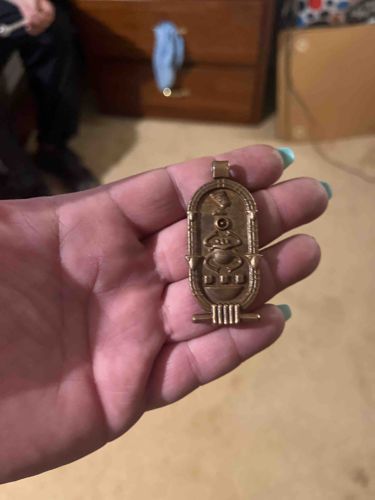
Nefertiti Royal Cartouche Pendant

This name is the AI's identification of the item — it may be incorrect.

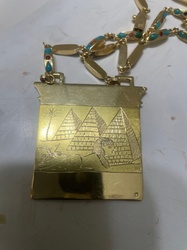
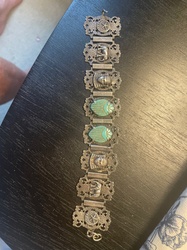
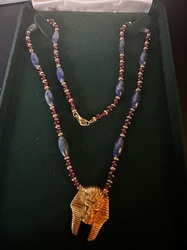
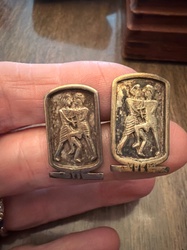
Submitted photo of Nefertiti Royal Cartouche Pendant
Photo submitted by the user — not generated by AI

AI Estimated Value

Not an official valuation

$25.00 - $45.00

AI estimate as of March 15, 2026 · verify with a professional before acting

AI-Generated · Verify before acting

Everything on this page is generated by AI for informational purposes only. AI can make mistakes — the AI may misidentify items or misattribute them (artist, maker, brand, designer, origin, era). This is not an official valuation and should not be used for insurance, sale, tax, estate, legal, or lending purposes — or any decision requiring a certified appraisal. It is not an authoritative claim about any person, brand, or rights holder — do not share or rely on it as a factual statement about a third party. Always consult qualified professionals before making financial decisions.

Read the full disclaimer

AI Item Analysis

This item is an oval-shaped cartouche pendant, a design traditionally used in Ancient Egypt to enclose royal names. The piece is constructed from a yellow-toned metal, likely brass, bronze-plated alloy, or low-karat gold, measuring approximately 1.5 to 2 inches in height. It features a raised relief depiction of Queen Nefertiti at the top, followed by stylized hieroglyphic characters including a sun disk and seating figures. The border is detailed with a textured, rope-like pattern and vertical hash marks at the base, characteristic of the 'shen' ring foundation. The pendant includes a rectangular integrated bale at the top for a neck chain. Condition-wise, it shows a dark, aged patina in the recessed areas which enhances the detail, while the raised surfaces show light handling wear and minor oxidation consistent with a mid-to-late 20th-century souvenir or fashion jewelry piece. There are no visible maker's marks on the front; the reverse is not shown but would typically feature a flat finish or a hallmark. The craftsmanship quality suggests it is a mass-produced casting rather than a bespoke artisan piece, likely dating to the 1970s revival era or later. This style remains a quintessential example of Egyptomania in decorative accessories.
AI Appraisal Report

I have carefully examined the provided images of this Nefertiti cartouche pendant. Based on its visual characteristics, I have identified it as a mass-produced Egyptomania souvenir, likely dating from the 1970s or 1980s. The piece exhibits casting lines and surface porosity consistent with non-precious metal alloys, such as brass or a plated base metal. The presence of a dark, uniform patina in the recessed areas suggests a chemically induced 'antique' finish rather than natural age-related oxidation. While the design captures the iconic aesthetic of the King Tut-inspired fashion revivals, the lack of artisanal finishing and hallmarks indicates it was manufactured for the high-volume tourism or costume jewelry market. Currently, market demand for base-metal Egyptian revival pieces is steady but dominated by common examples, keeping the secondary market value low. Comparable items on auction platforms frequently sell within the $20-50 range. Without a physical inspection, I cannot definitively determine the metal composition or look for microscopic maker's marks on the reverse side. A full authentication would require an acid or XRF scan to verify metal purity and a physical weight assessment. Any accompanying provenance, such as an original purchase receipt from Cairo or a known jeweler, would provide further context but is unlikely to significantly alter the valuation of a piece of this manufacturing grade. Therefore, this value reflects its decorative appeal rather than investment-grade precious metal content.

Keep exploring

More jewelry / egyptian revival accessories appraisals

Get your items appraised

Instant AI-powered appraisal estimates from a photo

Browse More Appraisals