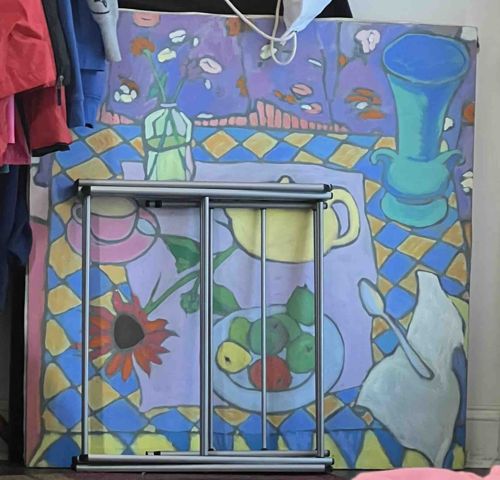
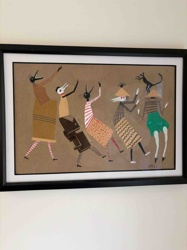
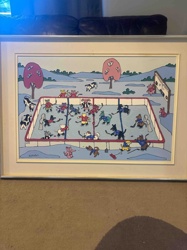
There’s a drying rack in front of it. 36” oil canvas r wood Athens ga late 70s
These notes were written by the person who submitted this item. Appraiser.AI has not verified them, and the AI's identification and estimate may rely on them.
AI Estimated Value
Not an official valuation
$600-900
AI estimate as of October 30, 2025 · verify with a professional before acting
AI-Generated · Verify before acting
Everything on this page is generated by AI for informational purposes only. AI can make mistakes — the AI may misidentify items or misattribute them (artist, maker, brand, designer, origin, era). This is not an official valuation and should not be used for insurance, sale, tax, estate, legal, or lending purposes — or any decision requiring a certified appraisal. It is not an authoritative claim about any person, brand, or rights holder — do not share or rely on it as a factual statement about a third party. Always consult qualified professionals before making financial decisions.
This analysis also relies on unverified notes provided by the user, which may be incomplete or inaccurate and could affect the result.
This item is an oil painting on canvas, stated to be approximately 36 inches in size, originating from Athens, Georgia, and dating to the late 1970s. The artwork depicts a still life scene with a naive or folk art aesthetic, characterized by its bold colors and simplified forms. The composition features a table with a distinct blue and yellow diamond or checkered pattern tablecloth. On the table, various domestic items are arranged: a light green vase holding slender flowers, a pink teacup, a yellow teapot, a bowl filled with green, red, and yellow fruit (likely apples and pears), and a light blue or white jug with a spoon resting against it. A prominent red and orange sunflower is also visible on the table. The background features a solid lavender or light purple wall with abstract floral or plant motifs in shades of green and orange. The color palette is vibrant and almost pastel-like, with strong outlines defining each object. The painting appears to be mounted on a wooden stretcher, as indicated by the 'r wood' context. While the full extent of the painting's condition is obscured by a drying rack in the foreground, visible areas indicate a generally good state consistent with its age. There are no obvious tears or significant paint loss discernible from the image. The brushstrokes appear relatively broad and unrefined, contributing to its folk art appeal. The style suggests an untrained artist or one intentionally employing a simplistic, direct approach, emphasizing color and form over realistic detail. This unique and charming piece captures a specific regional artistic sensibility from the indicated period.
AI Appraisal Report
This late 1970s Naive Still Life Oil Painting 'Athens Ga' presents as a charming and characteristic example of folk art from the period. Based on the provided image, the condition appears good for its age, with no immediately visible tears, significant paint loss, or major abrasions. The 'r wood' context suggests it is mounted on a wooden stretcher, which is typical. The colors remain vibrant, and the broad, unrefined brushwork is consistent with the naive aesthetic. While a drying rack partially obscures the view, the visible areas show no red flags regarding surface stability.
Market conditions for late 20th-century American folk or naive art are moderately active, particularly for pieces with regional interest or strong aesthetic appeal. Comparables for unsigned, good-condition folk art paintings of this size and style typically range from $400 to $1,000, with stronger prices for works attributed to known folk artists or those with compelling narratives. This piece's 'Athens Ga' origin adds a desirable regional provenance. Demand for such pieces is steady among collectors of outsider and folk art.
Factors impacting value include its strong visual appeal, vibrant color palette, and clear folk art style. The absence of a signature, while common in folk art, prevents attribution to a specific artist, thus limiting the ceiling for value. The main limitation in authenticity verification from an image alone is the inability to conduct a physical examination of the canvas, stretcher, and paint layers. Full authentication would require in-person inspection to confirm the medium's authenticity, assess paint stability, examine stretcher construction, and look for any hidden artist's marks or labels. Provenance documentation connecting the piece directly to Athens, GA, and its stated timeframe would also enhance its value and confirm its backstory.