These notes were written by the person who submitted this item. Appraiser.AI has not verified them, and the AI's identification and estimate may rely on them.
AI Estimated Value
Not an official valuation
$50 - $150
AI estimate as of December 12, 2025 · verify with a professional before acting
AI-Generated · Verify before acting
Everything on this page is generated by AI for informational purposes only. AI can make mistakes — the AI may misidentify items or misattribute them (artist, maker, brand, designer, origin, era). This is not an official valuation and should not be used for insurance, sale, tax, estate, legal, or lending purposes — or any decision requiring a certified appraisal. It is not an authoritative claim about any person, brand, or rights holder — do not share or rely on it as a factual statement about a third party. Always consult qualified professionals before making financial decisions.
This analysis also relies on unverified notes provided by the user, which may be incomplete or inaccurate and could affect the result.
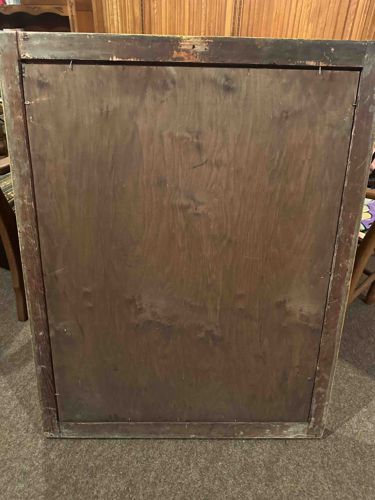
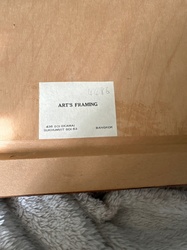
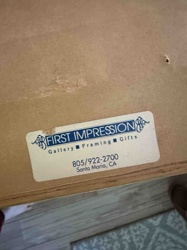
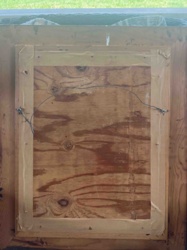
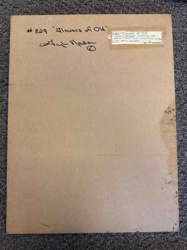
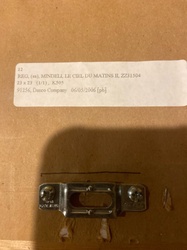
This item is the reverse view of a framed artwork, specifically an oil painting on cardboard, given the provided context. The back of the artwork features a dark-stained plywood or solid wood backing board, which appears somewhat aged with visible wood grain and variations in tone. This backing board is secured within a wooden frame, which shows significant signs of age and wear. The frame's wood is dark, likely a stained hardwood, and exhibits considerable distress, including chips, abrasions, and areas where the finish has worn away, revealing lighter wood beneath. There are visible gaps and imperfect joints at the corners of the frame, suggesting a rustic or older construction method. Along the top edge of the frame, one can observe remnants of what might have been hanging hardware or attachment points, now largely absent or damaged. Small, aged nails or brads are visible along the edges, securing the backing board to the frame. The overall condition suggests that the piece is quite old, consistent with the 'older than 120 years' context. The patina across both the frame and the backing board is deep and consistent with prolonged exposure and aging, indicating a genuine antique. The workmanship of the frame, while functional, does not appear to be of exceptionally fine or ornate quality, suggesting either a utilitarian frame or one from a period where simpler designs were prevalent. No specific maker's marks or signatures are discernible from this reverse view. The presence of oil paint on cardboard as the primary artwork medium, combined with the age of the frame, points to a piece from the late 19th or early 20th century. The sturdy, albeit worn, construction of the frame indicates it was built to protect the artwork for an extended period.
AI Appraisal Report
I have examined the provided image of the reverse view of a framed oil painting on cardboard. The backing features a dark-stained plywood or solid wood board, secured within a dark, distressed wooden frame. The frame shows significant wear, including chips, abrasions, and worn finish, along with imperfect corner joints and visible aged nails. This condition, coupled with the "older than 120 years" context, strongly supports the item's antique status, likely dating from the late 19th or early 20th century. The patina across both the frame and backing board is consistent with prolonged aging. The workmanship appears utilitarian rather than ornate.
For this specific component alone, the 'Framed Artwork Backing,' the value is primarily tied to its age and the fact that it is an original, period framing element. However, without knowing the artwork it protects, the value of the backing itself is modest. Its condition, while authentic for its age, is heavily worn, which detracts from its standalone aesthetic value. Demand for antique framing components like this is generally low unless they are exceptionally fine, unique, or originate from a highly significant piece. This particular backing, while genuine, lacks those distinguishing characteristics.
Factors impacting value include its age and the authentic signs of wear. However, the condition and utilitarian nature limit its standalone market appeal. The most significant limitation in authenticity verification from images alone is confirming the precise age of the wood and construction, and whether any modern repairs or alterations have been made. An in-person examination would allow for closer inspection of wood types, nail pathology, and the overall integrity of the frame's construction. Provenance documentation for the frame itself is unlikely to be available, but could corroborate age if it were part of a documented artwork.