AI estimate as of August 2, 2025 · verify with a professional before acting
AI-Generated · Verify before acting
Everything on this page is generated by AI for informational purposes only. AI can make mistakes — the AI may misidentify items or misattribute them (artist, maker, brand, designer, origin, era). This is not an official valuation and should not be used for insurance, sale, tax, estate, legal, or lending purposes — or any decision requiring a certified appraisal. It is not an authoritative claim about any person, brand, or rights holder — do not share or rely on it as a factual statement about a third party. Always consult qualified professionals before making financial decisions.
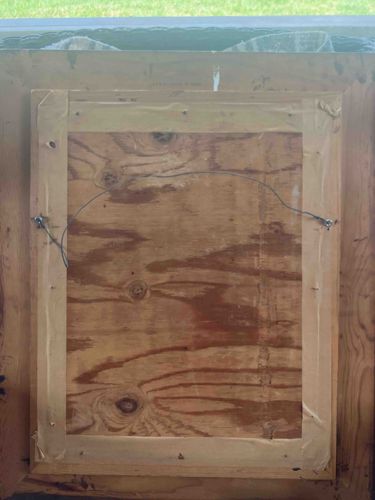
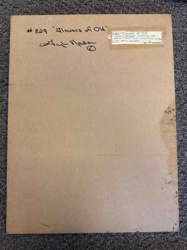
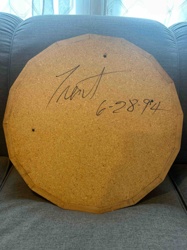
The item depicted is the reverse side of a framed piece, likely a painting, print, or photograph, designed for wall display. The primary material visible is a large sheet of plywood or a similar wood-based panel, which serves as the backing for the artwork, providing support and protection. This backing is characterized by distinct wood grain patterns and variations in color, ranging from light beige to darker reddish-brown tones, with numerous dark knots indicative of natural wood. The overall dimensions appear substantial, suggesting the framed piece itself is of a medium to large size.
Around the perimeter of the central plywood panel, thin strips of lighter-colored wood or wood molding have been stapled or nailed, creating an inner frame structure that likely secures the artwork and its matting or glass within the outer frame (not visible). These strips are fastened with small, visible nails or staples, indicating a practical and functional construction rather than an ornate finish. Some areas show a slight discoloration or darkening of the wood, possibly from age, moisture exposure, or simply natural variations.
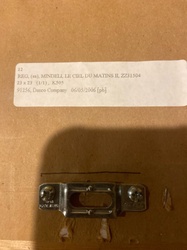
Attached towards the upper corners of the plywood backing are two metal D-rings or similar picture hanging hardware components. A black, multi-strand wire is strung between these two points, forming a classic hanging wire setup. The wire itself shows signs of slight tension and has a subtle curve. The hardware appears standard for picture framing. No specific manufacturer's marks, signatures, or dates are discernible on the visible surfaces, making an exact age or manufacturer difficult to pinpoint. However, the use of plywood as a backing and the type of hanging hardware suggest a contemporary to mid-20th-century construction. The overall condition appears stable, with no obvious signs of severe damage such as cracks, major warping, or breaks, although minor wear consistent with handling and age would be expected.
AI Appraisal Report
Upon my virtual examination of the provided image, I can assess this item as an art frame backing, likely for a medium to large piece. The primary material, plywood, with its visible wood grain and knots, suggests practical, durable construction. The securing strips of lighter wood and the standard D-ring hangers with black wire are consistent with conventional picture framing practices from the mid-20th century to contemporary periods. The condition appears stable, with no visible severe damage like warping or cracks, though typical wear from handling and age is implied.
Regarding value, it's crucial to understand that this is only the backing. Its intrinsic value is minimal, representing basic framing components. Market conditions for stand-alone frame backings are virtually non-existent; these items are sold as bulk commodities to framers or bundled as part of a complete frame system. There is no demand or rarity consideration for such a component in isolation. The value drivers here are purely material cost and the labor of assembly, which would be negligible.
My valuation is based on the components themselves, not the unseen artwork it once supported. For full authentication and a more comprehensive appraisal (of the artwork it supports, not the backing itself), an in-person examination would be critical to inspect the front of the artwork, frame quality, and any discernible artist signatures or dates. Provenance documentation, such as receipts or exhibition history, and potentially scientific testing (for the artwork) would be essential to determine true authenticity and historical significance. Based solely on what is visible, this backing holds no significant artistic or collectible value.