These notes were written by the person who submitted this item. Appraiser.AI has not verified them, and the AI's identification and estimate may rely on them.
AI Estimated Value
Not an official valuation
$25-50
AI estimate as of July 23, 2025 · verify with a professional before acting
AI-Generated · Verify before acting
Everything on this page is generated by AI for informational purposes only. AI can make mistakes — the AI may misidentify items or misattribute them (artist, maker, brand, designer, origin, era). This is not an official valuation and should not be used for insurance, sale, tax, estate, legal, or lending purposes — or any decision requiring a certified appraisal. It is not an authoritative claim about any person, brand, or rights holder — do not share or rely on it as a factual statement about a third party. Always consult qualified professionals before making financial decisions.
This analysis also relies on unverified notes provided by the user, which may be incomplete or inaccurate and could affect the result.
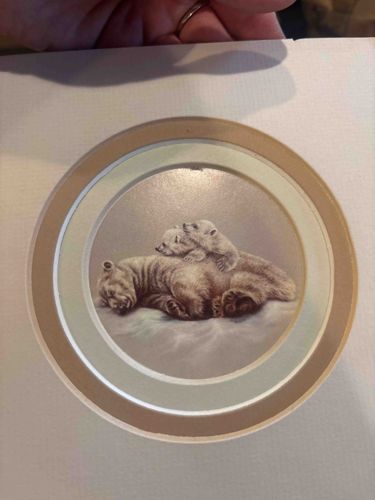
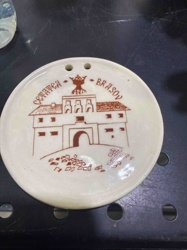
This item is a decorative plate or a framed print, circular in shape, featuring a central image of a polar bear and two polar bear cubs. The primary polar bear is depicted lying down, with one cub resting on its back and another small cub positioned near its head, implying a tender family scene. The artwork has a soft, muted color palette, primarily in shades of brown, cream, and subtle grays, characteristic of wildlife art often associated with Alaskan themes. The image is enclosed within a round frame or border, which appears to be part of the plate's design or a matting element if it's a framed print. This border consists of two concentric rings: an inner, lighter-colored ring (possibly cream or light beige) and an outer, darker ring (a medium brown or taupe). The overall background of the item, outside the circular design, is a light, neutral color, suggesting either a simple mat board or the base color of the plate itself. Due to the visual context, the item seems to be mounted on or part of a larger, light-colored surface. There are no visible signs of damage, wear, or significant discoloration on the artwork or the surrounding border, indicating it is in good condition. The craftsmanship appears to be of good quality, with fine detail in the depiction of the bears' fur and expressions. There are no discernible manufacturer's marks, signatures, or specific dates visible in the provided image. Given the 'Alaskan art' context, this piece likely belongs to the late 20th or early 21st century, fitting a style common in collectible wildlife series.
AI Appraisal Report
Upon examining the provided image of this Polar Bear Family Decorative Plate/Framed Print, I assess its condition as good. There are no visible chips, cracks, scratches, or significant discoloration that would detract from its aesthetic appeal. The colors appear vibrant, and the details of the polar bears are well-preserved, suggesting careful handling and storage. Authenticity, based solely on visual inspection, is challenging. While the style aligns with common Alaskan wildlife art of the late 20th to early 21st century, the absence of manufacturer marks, a clear artist's signature, or any provenance documentation prevents a definitive authentication as a specific collectible series or an original piece.
Market conditions for decorative plates and animal-themed framed prints are generally stable but do not command high values unless tied to a renowned artist, a highly sought-after brand, or exceptional rarity. This piece appears to be a mass-produced or limited-edition decorative item rather than fine art. Comparables would include similar wildlife-themed plates or prints from companies like Bradford Exchange, W.S. George, or various Alaskan souvenir art producers. Demand for such items is primarily from collectors of wildlife art or those seeking decorative accents for their homes. Rarity is likely low given the probable production methods for this type of item.
Factors significantly impacting value are the lack of identifiable artist/manufacturer, the absence of an original limited-edition certificate, and its nature as a decorative item rather than a unique artwork.
Limitations in authenticity verification from images alone are significant. For full authentication, I would require a physical examination to check for any hidden marks or impressed signatures, assess the material quality of the plate or archival aspects of the print, and physically gauge its craftsmanship. Provenance documentation, such as purchase receipts, certificates of authenticity, or records of previous ownership, would be crucial. Scientific testing is not typically applied to items of this nature unless there's a strong claim of high value or unique materials.