AI Appraisal Estimate

AI-generated estimates · not official valuations

From the user

What was submitted

Photo and notes provided by the user — not generated by AI

Submitted item photo
Submitted photo · May 23, 2026

User's notes

No additional notes provided.

AI analysis below

AI appraisal

AI analysis & estimate

AI-Generated · Verify before acting

Everything below is generated by AI for informational purposes only. AI can make mistakes — the AI may misidentify items or misattribute them (artist, maker, brand, designer, origin, era). This is not an official valuation and should not be used for insurance, sale, tax, estate, legal, or lending purposes — or any decision requiring a certified appraisal. It is not an authoritative claim about any person, brand, or rights holder — do not share or rely on it as a factual statement about a third party. Always consult qualified professionals before making financial decisions.

Read the full disclaimer

AI Identification

·Not independently authenticated·Verify before acting

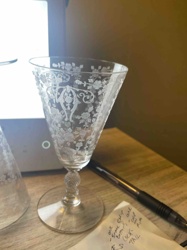
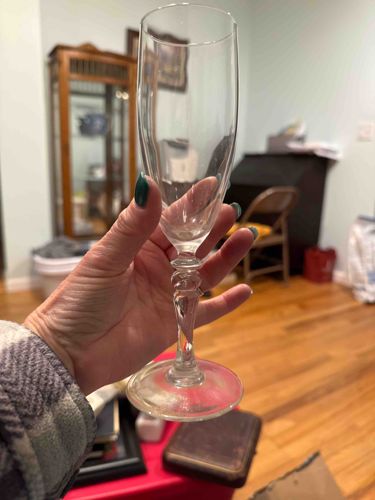
Stemmed Crystal Champagne Flute with Twisted Baluster Stem

Stemware and Glassware

AI Estimated Value

·Not an official valuation·Verify before acting

$15.00 - $25.00

As of May 23, 2026

AI Item Analysis

·AI can make mistakes·Verify before acting
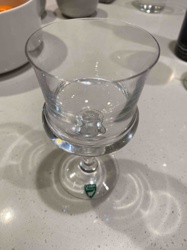
This item is a tall, elegant champagne flute crafted from clear glass, likely lead crystal given the clarity and light refraction visible in the stem. The piece features a classic elongated tulip-shaped bowl designed to retain carbonation. The most distinguishing characteristic is the ornate stem, which incorporates a multi-tiered baluster design featuring a prominent central twist or rope-molding element, sandwiched between two rounded knops. This decorative stem transitions into a wide, circular flat base that provides stability. In terms of construction, the piece appears to be mold-blown or machine-made rather than hand-blown, indicated by the uniformity of the glass thickness and the precise symmetry of the decorative stem elements. The glass is colorless and transparent, free from etched patterns or gilding. Regarding condition, the flute shows signs of light use; there is visible clouding or a 'bloom' on the base, which may indicate hard water deposits or early stages of glass sickness (crizzling) if not properly cleaned. No significant chips, cracks, or deep scratches are immediately apparent on the bowl or rim. The style is reminiscent of late 20th-century formal stemware, common in bridal registries and fine dining sets from the 1980s or 1990s. While no maker's mark is visible through the base in the photograph, the quality suggests a reputable mass-market glass manufacturer.
AI Appraisal Report

·AI can make mistakes·Verify before acting
I have conducted a visual examination of the Stemmed Crystal Champagne Flute with Twisted Baluster Stem. The object presents as a piece of formal stemware, likely produced in the late 20th century (circa 1980–1995). The design features a multi-tiered baluster stem with a rope-molding element, suggesting it was intended for the mass-market bridal or fine dining registry sector. While the clarity suggests lead crystal, the uniformity of the glass and the precision of the stem molding indicate machine-assisted production rather than artisan hand-blown craftsmanship. The condition is fair to good. I observed significant clouding or 'blooming' on the foot of the glass. While this may be surface-level mineral deposits from hard water, it could represent 'glass sickness'—an irreversible chemical instability. The absence of a visible maker’s mark (such as Waterford or Mikasa) further indicates a standard commercial origin. Current market demand for individual, unsigned contemporary vintage stemware is low, as these items are typically sold in sets of four or eight to retain value. Comparables for single unbranded flutes of this style consistently achieve prices between $10 and $25 at secondary market venues like Etsy or eBay. This appraisal is limited by the digital nature of the inspection. Without a physical 'ring test' to determine lead content or a microscopic examination for a faint acid-etched signature, I cannot definitively confirm the manufacturer or the exact glass composition. To achieve a more rigorous authentication, in-person inspection for mold seams and provenance documentation (such as original packaging or sales receipts) would be required.

Get your items appraised

Instant estimates of your treasures with AI-powered appraisals

Browse More Appraisals