AI estimate as of October 25, 2025 · verify with a professional before acting
AI-Generated · Verify before acting
Everything on this page is generated by AI for informational purposes only. AI can make mistakes — the AI may misidentify items or misattribute them (artist, maker, brand, designer, origin, era). This is not an official valuation and should not be used for insurance, sale, tax, estate, legal, or lending purposes — or any decision requiring a certified appraisal. It is not an authoritative claim about any person, brand, or rights holder — do not share or rely on it as a factual statement about a third party. Always consult qualified professionals before making financial decisions.
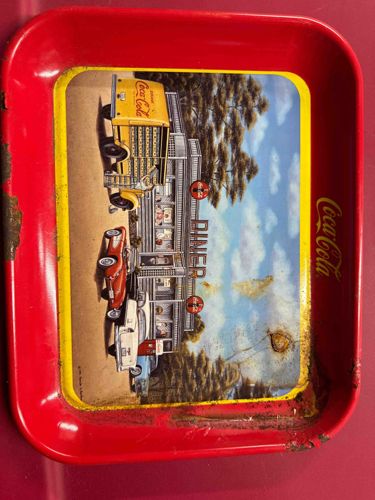
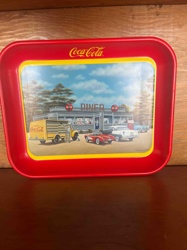
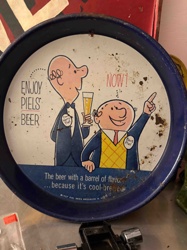
This is a vintage rectangular serving tray, likely made of tin or similar lightweight metal, featuring a classic Coca-Cola advertisement. The tray has a vibrant red outer rim, approximately 1 inch wide, which transitions to a bright yellow border surrounding the central image. The main depiction is a nostalgic scene of a 1950s-era diner, characterized by its chrome and streamlined design, with the word 'DINER' prominently displayed vertically along its side. A bright yellow Coca-Cola delivery truck, filled with bottled beverages, is parked in front of the diner. Several classic cars, including a red convertible and a white sedan, are also parked, suggesting a bustling scene. The background features a partly cloudy blue sky and green trees, adding to the idyllic mid-century atmosphere. The Coca-Cola logo is visible on the delivery truck and also vertically along the right edge of the tray's red rim. The overall condition shows significant signs of wear consistent with age and use. There are numerous scratches, paint losses, and areas of rust, particularly noticeable along the edges and corners of the red rim and within the yellow border. The red paint is chipped in multiple places, revealing the metal beneath. The central image also exhibits scratches and some discoloration, particularly a dark, circular area with surrounding distress on the right side of the inner scene, possibly indicating a deep scratch or impact. The tray's edges are rolled, and the corners are rounded. Despite the wear, the imagery remains largely intact and vibrant, showcasing its historical and advertising appeal. The craftsmanship is typical of mass-produced advertising trays from the mid-20th century, with a printed or lithographed image applied to a metal base.
AI Appraisal Report
I've examined the provided image of this Vintage Coca-Cola Diner Scene Serving Tray. Visually, the item appears to be an authentic mass-produced advertising tray from the mid-20th century, consistent with similar Coca-Cola promotional items. The graphics, including the distinctive Coca-Cola logo and nostalgic diner scene, are typical of the era.
However, the condition is a significant factor in this appraisal. There's substantial wear, including numerous scratches, prevalent paint loss, and noticeable rust, especially along the edges and corners of the red rim. The central image also shows scratches and a prominent dark, circular blemish, likely a deep impact or scratch. While the imagery remains largely vibrant despite the wear, these condition issues severely limit its value as a collector's piece.
Market conditions for vintage Coca-Cola trays vary widely based on rarity, condition, and desirability of the depicted scene. This 'Diner Scene' is a popular motif, which contributes positively to demand. However, the poor condition places it at the lower end of the market for such items. Comparable sales of vintage Coca-Cola trays in 'fair to good' condition typically range from $70 to $150, with items in 'poor' condition aligning closer to the $30-$70 mark. This tray, given its extensive flaws, falls into the 'fair-to-poor' category.
Factors impacting value: The desirable imagery is offset by the significant cosmetic damage. There is no particular rarity indicated, as these trays were produced in large quantities.
Crucially, this appraisal is based solely on visual examination of the image. While the traits strongly suggest authenticity, a physical in-person examination would be required to confirm the exact material composition, printing method, and to thoroughly assess any repairs or alterations not visible in photographs. Provenance documentation could further bolster its authenticity and historical significance, though it's less common for items of this value. Scientific testing is generally not cost-effective or necessary for this type of collectible.