AI Appraisal Estimate

AI-generated estimates · not official valuations

From the user

What was submitted

Photo and notes provided by the user — not generated by AI

Submitted item photo
Submitted photo · May 25, 2026

User's notes

al agnew

AI analysis below

AI appraisal

AI analysis & estimate

AI-Generated · Verify before acting

Everything below is generated by AI for informational purposes only. AI can make mistakes — the AI may misidentify items or misattribute them (artist, maker, brand, designer, origin, era). This is not an official valuation and should not be used for insurance, sale, tax, estate, legal, or lending purposes — or any decision requiring a certified appraisal. It is not an authoritative claim about any person, brand, or rights holder — do not share or rely on it as a factual statement about a third party. Always consult qualified professionals before making financial decisions.

Note

This analysis also relies on unverified notes provided by the user, which may be incomplete or inaccurate and could affect the result.

Read the full disclaimer

AI Identification

·Not independently authenticated·Verify before acting

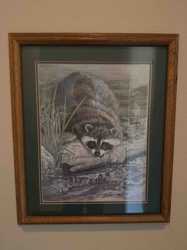
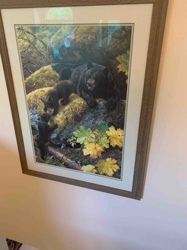
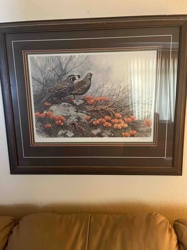
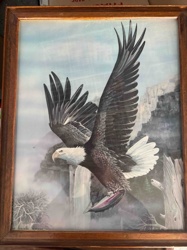
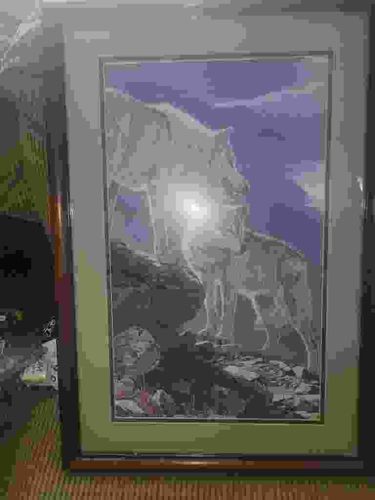
Al Agnew Wolf Art Print, Triple Matted and Framed

Wildlife Art & Decor

AI Estimated Value

·Not an official valuation·Verify before acting

$150 - $250

As of May 25, 2026

AI Item Analysis

·AI can make mistakes·Verify before acting
This is a large-format framed art print by the renowned wildlife artist Al Agnew, specifically featuring a grey wolf (Canis lupus) in a wilderness setting. The artwork is characterized by Agnew's signature realism and dramatic lighting, depicting a wolf standing atop a rocky outcrop against a twilight purple-blue sky. The piece is professionally housed in a dark wood or possibly black composite frame with a subtle gold or wood-tone inner lip. It features high-quality triple matting: a wide light-grey outer mat, a slim dark-green middle mat, and a thin bottom mat that provides depth and a professional finish. Based on the style and subject matter, this piece likely dates from the 1990s or early 2000s, a peak period for Agnew’s commercial popularity in North American wildlife art. The construction appears sturdy, with the paper substrate flat and free from obvious waving or moisture damage. While the image resolution is low, the print appears to be in good vintage condition with no visible fading, though there is some light dust accumulation on the frame and glass. The craftsmanship of the framing suggests it was intended for gallery or upscale decor use. Any potential signature or limited edition numbering is likely located in the bottom corners, potentially obscured by the matting or the image quality.
AI Appraisal Report

·AI can make mistakes·Verify before acting
I have carefully reviewed the provided documentation and imagery for this Al Agnew wildlife print. The work demonstrates Agnew’s characteristic mastery of lupine subjects and dramatic backlighting. The professional triple matting and dark wood frame significantly enhance the aesthetic appeal, representing a substantial initial investment in archival presentation. Based on visual inspection, the print remains flat without cockling, suggesting it has been kept in a climate-controlled environment. There is no evidence of UV-induced fading, which is common in secondary market wildlife prints of this era. The market for 1990s wildlife art has shifted from its peak; however, Agnew remains a staple name for collectors of North American fauna. The value here is driven largely by the 'ready-to-hang' nature of the high-quality framing. Similar framed Agnew prints typically realize between $100 and $300 at suburban galleries or specialized estate auctions. Limitations and Authentication: From these images, I cannot determine if this is a limited edition lithograph or a high-quality open edition giclée. The lack of visible signature or numbering (likely obscured by the matting) prevents a premium valuation. To finalize this appraisal, an in-person inspection is required to remove the backing and verify the presence of a hand-signed signature, edition number (e.g., 450/2500), and the artist's seal. I would also need to examine the paper for a watermark and use a jeweler's loupe to inspect the dot pattern to differentiate between a standard offset lithograph and a premium fine art print. Any provenance, such as a Certificate of Authenticity (COA) from a recognized gallery, would further solidify this valuation.

Get your items appraised

Instant estimates of your treasures with AI-powered appraisals

Browse More Appraisals