AI estimate as of August 16, 2025 · verify with a professional before acting
AI-Generated · Verify before acting
Everything on this page is generated by AI for informational purposes only. AI can make mistakes — the AI may misidentify items or misattribute them (artist, maker, brand, designer, origin, era). This is not an official valuation and should not be used for insurance, sale, tax, estate, legal, or lending purposes — or any decision requiring a certified appraisal. It is not an authoritative claim about any person, brand, or rights holder — do not share or rely on it as a factual statement about a third party. Always consult qualified professionals before making financial decisions.
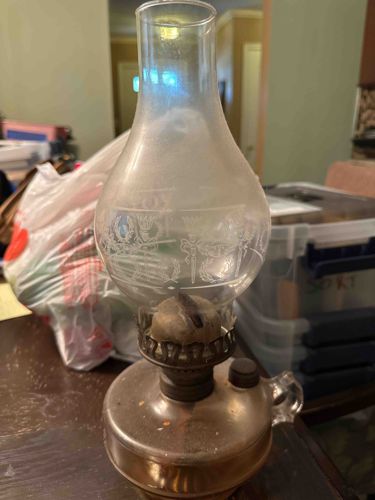
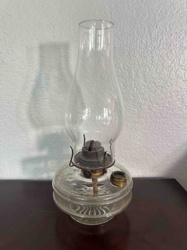
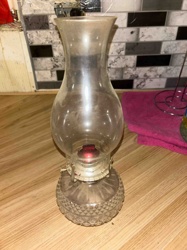
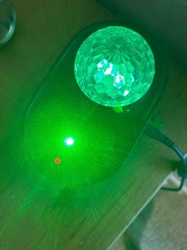
This item is an antique or vintage oil lamp, characterized by its clear glass chimney and metal base. The chimney, or "globe," is made of clear glass, with a subtle frosted or etched decorative band near the bottom that appears to depict figures or scenes, although the specific details are obscured by both surface grime and the image resolution. The glass itself shows some signs of use, including dust, smudges, and possibly some clouding from age and heat exposure. It has a classic flared shape, wider at the bottom to enclose the burner and tapering towards the top. The base of the lamp is constructed from a metallic material, likely brass or a similar alloy, given its tarnished, dull gold/bronze appearance. It features a rounded fuel reservoir with a prominent handle on one side, which is also made of clear glass, suggesting thoughtful design for ease of carrying. The burner assembly, situated atop the reservoir, is also metal and appears to be made of the same tarnished material as the base, with a visible wick adjustment knob. The overall condition suggests significant age and use, with noticeable patina, dust, and potential residue from past burning. There are no obvious signs of major cracks or breaks, but the general condition indicates it has not been recently cleaned or restored. The craftsmanship appears functional and typical of mass-produced oil lamps from the late 19th or early to mid-20th century. The etched decoration on the chimney adds a touch of classic appeal, indicating some level of decorative effort.
AI Appraisal Report
Upon visual examination of the provided image, this Vintage Kerosene Oil Lamp with an Etched Glass Chimney appears to be a functional and decorative piece from the late 19th to early 20th century. My assessment of condition indicates significant age and use; the metallic components show typical tarnishing and patina consistent with brass or a similar alloy, and the glass chimney exhibits dust, smudges, and potential clouding. The etched decorative band on the chimney adds a desirable aesthetic element, though its details are obscured. There are no obvious signs of major damage like cracks or breaks, suggesting it is structurally intact, albeit in 'as-found' condition requiring cleaning.
From a market perspective, comparable items in similar condition typically fall into the modest collectible range. Demand for general antique oil lamps remains steady among collectors of rustic or period home decor, but true rarity is usually reserved for lamps with unique designs, provenance, or high-quality art glass. This piece, while charming, appears mass-produced rather than custom or designer. The clear glass handle on the base is a nice feature, enhancing its utility and visual appeal.
Factors significantly impacting its value include its current uncleaned state and the lack of distinct identifying marks or maker's tags. While the general design and etching are attractive, they are not unique enough to command a premium. The obscured details of the etching on the chimney limit a full appreciation of its artistry.
It is crucial to note that this authenticity verification is based solely on visual cues from an image. A definitive appraisal would require in-person examination to assess the glass for hidden flaws (e.g., internal cracks, chips around the fitter), the integrity of the burner mechanism, and the exact material composition of the metal base. Examination under magnification could reveal maker's marks or patent dates. Provenance documentation, if available, would significantly enhance its value by connecting it to a specific history or maker. Scientific testing, such as material analysis, would confirm the metal composition, though this is rarely done for items of this value range.