AI Appraisal Estimate

AI-generated estimates · not official valuations

From the user

What was submitted

Photo and notes provided by the user — not generated by AI

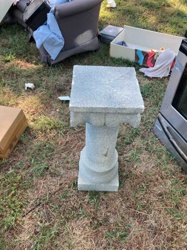
Submitted item photo
Submitted photo · June 6, 2026

User's notes

No additional notes provided.

AI analysis below

AI appraisal

AI analysis & estimate

AI-Generated · Verify before acting

Everything below is generated by AI for informational purposes only. AI can make mistakes — the AI may misidentify items or misattribute them (artist, maker, brand, designer, origin, era). This is not an official valuation and should not be used for insurance, sale, tax, estate, legal, or lending purposes — or any decision requiring a certified appraisal. It is not an authoritative claim about any person, brand, or rights holder — do not share or rely on it as a factual statement about a third party. Always consult qualified professionals before making financial decisions.

Read the full disclaimer

AI Identification

·Not independently authenticated·Verify before acting

Painted Cast Concrete Garden Figurine of a Seated Boy

Garden Decor / Outdoor Sculpture

AI Estimated Value

·Not an official valuation·Verify before acting

$75 - $150

As of June 6, 2026

AI Item Analysis

·AI can make mistakes·Verify before acting
This is a garden figurine crafted from what appears to be painted cast concrete, depicting a young Black boy in a seated position. The figure is designed to be placed outdoors, likely as a lawn ornament or porch decoration. It measures approximately 18-24 inches in height, judging by its proportion to the wooden steps it is placed against. The boy is depicted with dark skin, wearing a pink-colored collared shirt with visible buttons down the front, and light blue overalls with suspenders that are also painted blue. His bare feet are visible, and his hands are clasped together in his lap, holding a small object, possibly a nut or a toy. His hair is sculpted in short, tight curls typical of African American hairstyles. The painted finish shows significant wear and weathering, particularly on the face, hands, and feet, suggesting prolonged exposure to the elements. There is some chipping and fading of the paint, revealing the underlying gray concrete material. A notable white scuff mark or paint loss is present on his forehead. The overall craftsmanship is folk art in style, with simplified features and robust construction suitable for outdoor display. The style and subject matter are reminiscent of garden gnomes or other decorative lawn statues popular from the mid-20th century onwards. There are no obvious maker's marks or signatures visible from the provided images.

AI Appraisal Report

·AI can make mistakes·Verify before acting
Based on my visual examination of the provided image, this painted cast concrete garden figurine of a seated boy appears to be an authentic example of decorative outdoor statuary from the mid-to-late 20th century. The condition shows significant wear consistent with outdoor exposure, including paint fading, chipping, and a notable scuff on the forehead, revealing the underlying concrete. This level of wear is typical for an item intended for garden use. The folk art style and subject matter resonate with collectibles often found in vintage garden decor. The lack of visible maker's marks is common for this type of mass-produced or small-batch folk art piece. Market conditions for vintage garden statuary of this nature are generally steady. Comparable items, particularly those depicting children or unique ethnic figures, tend to perform modestly. Demand is niche; while there is interest in vintage garden decor, pieces like this are not considered high-value antiques due to their material and typical production methods. Rarity is difficult to ascertain without provenance; many such figurines were made, though specific designs might be harder to find. The primary factors impacting value are its decorative appeal, its size, and its weathered but intact state. It is important to note the limitations of an appraisal based solely on images. I cannot definitively verify the material as concrete without physical inspection, though it appears consistent. Full authentication would ideally involve in-person examination to assess the material composition, look for subtle maker's marks, and evaluate the craftsmanship more closely. Provenance documentation, such as original sales receipts or information about its acquisition, would also be invaluable for confirming its age and origin.

Get your items appraised

Instant estimates of your treasures with AI-powered appraisals

Browse More Appraisals