AI Appraisal Estimate

AI-generated estimates · not official valuations

From the user

What was submitted

Photo and notes provided by the user — not generated by AI

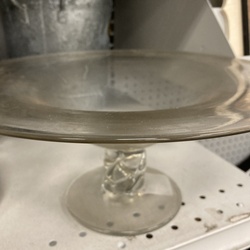
Submitted item photo
Submitted photo · June 22, 2026

User's notes

No additional notes provided.

AI analysis below

AI appraisal

AI analysis & estimate

AI-Generated · Verify before acting

Everything below is generated by AI for informational purposes only. AI can make mistakes — the AI may misidentify items or misattribute them (artist, maker, brand, designer, origin, era). This is not an official valuation and should not be used for insurance, sale, tax, estate, legal, or lending purposes — or any decision requiring a certified appraisal. It is not an authoritative claim about any person, brand, or rights holder — do not share or rely on it as a factual statement about a third party. Always consult qualified professionals before making financial decisions.

Read the full disclaimer

AI Identification

·Not independently authenticated·Verify before acting

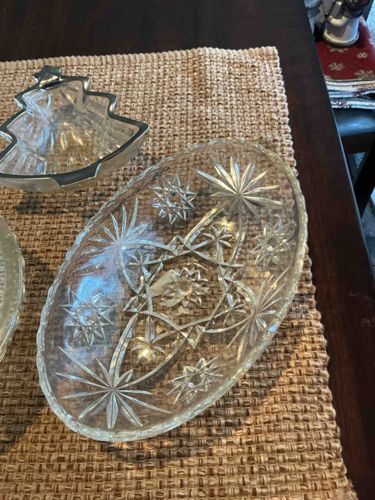
American Brilliant Period Style Cut Glass Oval Celery Dish

Antique and Vintage Glassware

AI Estimated Value

·Not an official valuation·Verify before acting

$45.00 - $65.00

As of June 22, 2026

AI Item Analysis

·AI can make mistakes·Verify before acting
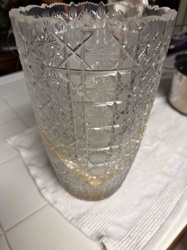
This item is an oval-shaped serving dish, commonly known as a celery or relish tray, crafted from heavy pressed or cut glass. The design features a complex 'Whirling Star' or 'Pinwheel' pattern, which was highly popular during the American Brilliant Period of glassmaking (late 19th to early 20th century), though this specific piece likely dates from the mid-20th century as a revival or mass-produced press-cut variant. The dish measures approximately 9 to 11 inches in length and is characterized by deep, sharp radial cuts that extend from several starburst centers. The rim is finished with a classic sawtooth edge, which shows high-quality craftsmanship but is prone to micro-chipping. The glass is clear with high lead content, indicated by the way it refracts light and its likely substantial weight. Structurally, the piece appears in good vintage condition with no large fissures visible, though close inspection often reveals minor 'flea bites' on the sharpest peaks of the sawtooth rim. The pattern includes smaller faceted stars interspersed between the larger motifs, creating a dense, brilliant geometric texture across the entire basin. Such pieces were staples of formal Victorian and Edwardian dining sets, used to serve chilled celery stalks or assorted pickles.
AI Appraisal Report

·AI can make mistakes·Verify before acting
Based on my visual examination of this oval celery dish, I have identified it as a high-quality press-cut piece in the 'Whirling Star' or 'Pinwheel' motif. While it mimics the intricate patterns of the American Brilliant Period (ABP, 1876–1916), the lack of 'grey' or hand-polished finishing and the specific depth of the molding suggest a mid-20th-century revival or a later mass-market production rather than an original hand-cut period piece. The sawtooth rim appears relatively intact, though as with most pieces of this age, minor 'flea bites' are present upon close inspection of the peaks. Market demand for ABP-style glass has softened significantly over the last decade, with younger collectors shifting away from formal serving trays. Comparable items at regional auctions and online marketplaces typically realize between $40 and $70 depending on the clarity of the glass and the 'ping' (resonance) when struck. Factors negatively affecting value include the commonality of the pattern and a slight lack of signature/maker’s mark, which is typical for these utilitarian forms. Limitations: A definitive assessment of lead content and antiquity cannot be performed via images alone. For full authentication, an in-person examination is required to check for 'cutter’s tracks' and the specific refractive index of the glass. I would also need to conduct a black-light test; period ABP glass typically fluoresces a pale yellow-green due to manganese, whereas later glass may fluoresce differently or not at all. Provenance documentation from a previous estate would also assist in confirming its manufacture date.

Get your items appraised

Instant estimates of your treasures with AI-powered appraisals

Browse More Appraisals