AI estimate as of August 18, 2025 · verify with a professional before acting
AI-Generated · Verify before acting
Everything on this page is generated by AI for informational purposes only. AI can make mistakes — the AI may misidentify items or misattribute them (artist, maker, brand, designer, origin, era). This is not an official valuation and should not be used for insurance, sale, tax, estate, legal, or lending purposes — or any decision requiring a certified appraisal. It is not an authoritative claim about any person, brand, or rights holder — do not share or rely on it as a factual statement about a third party. Always consult qualified professionals before making financial decisions.
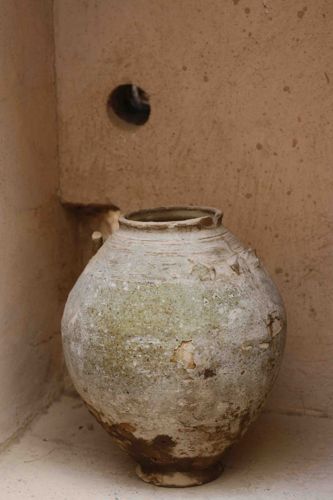
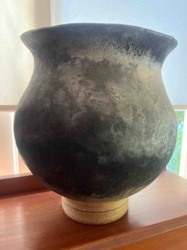
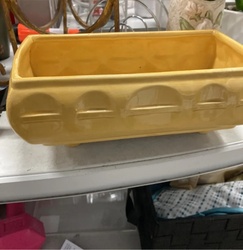
This is a weathered, globular ceramic pot or jar, likely made of earthenware given its rustic appearance and the visible signs of degradation. The pot exhibits a classic amphora or storage jar shape, with a wide, bulbous body tapering slightly towards a narrower neck and a flared rim. It appears to have two small, rudimentary handles or protrusions visible on its upper shoulders, though their exact form is obscured by the aging and potentially some damage. The primary color of the pot is a mottled off-white or light grey, heavily aged with significant patches of greenish-brown moss, dirt, and mineral deposits, particularly concentrated towards the base and in crevices. The surface is uneven and textured, showing extensive wear, including numerous chips, flakes, and areas where the outer glaze or slip has deteriorated, revealing the coarser clay body underneath. Some larger areas of surface loss are visible, contributing to its ancient, distressed aesthetic. The condition suggests it has been exposed to the elements for a prolonged period, possibly buried or left outdoors. The craftsmanship appears to be hand-thrown, indicated by the subtle irregularities in its form and surface. There are no discernible maker's marks or signatures visible from the provided image. Based on its form, material, and extreme patination, it likely dates to an older period, possibly ancient or antique, and was likely used for storage of liquids or grains.
AI Appraisal Report
This earthenware storage jar presents a fascinating, ancient aesthetic. Visually, the piece exhibits significant patination consistent with prolonged exposure to elements, possibly burial, which lends considerable character. The extensive moss, mineral deposits, chips, and surface deterioration appear authentic to its age and material. The globular body, tapering neck, flared rim, and rudimentary handles suggest a functional storage vessel. Based on the craftsmanship irregularities, it appears hand-thrown. No maker's marks are discernible, which is typical for ancient utilitarian pottery. All visual indicators suggest authenticity as an antique or ancient piece of earthenware, likely used for storage of liquids or grains.
Market conditions for such pieces are driven by their decorative appeal, historical interest, and perceived age. Comparables for authentic, heavily patinated ancient or antique storage jars can range widely based on provenance, definitive dating, and cultural origin. Demand tends to be from collectors interested in antiquities, Wabi-sabi aesthetics, or garden/rustic decor. Its rarity is difficult to ascertain without knowing its origin; similar utilitarian vessels are not inherently rare, but one with this level of undisturbed patination can be.
Factors significantly impacting value include its extreme condition and patina, which, while visually appealing, also raise questions without proper authentication. The lack of definitive cultural origin or precise dating limits its value in the academic or high-end antiquities market. Without proven provenance or scientific testing, it functions more as a decorative antique. While its current state is visually compelling, significant damage or evidence of restoration could negatively impact value.
Limitations regarding authenticity verification from images alone are substantial. I cannot definitively ascertain the age or origin without physical inspection, which would allow for tactile examination of the clay body, assessment of weight, and closer inspection of surface deterioration to rule out modern artificial aging. Provenance documentation (e.g., excavation reports, ownership history) would be crucial for establishing genuine antiquity and cultural context. Scientific testing, such as thermoluminescence (TL) dating, would be necessary for a definitive age determination.