AI Appraisal Estimate

AI-generated estimates · not official valuations

From the user

What was submitted

Photo and notes provided by the user — not generated by AI

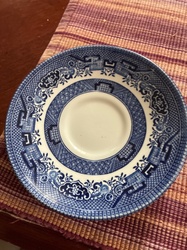
Submitted item photo
Submitted photo · June 4, 2026

User's notes

No additional notes provided.

AI analysis below

AI appraisal

AI analysis & estimate

AI-Generated · Verify before acting

Everything below is generated by AI for informational purposes only. AI can make mistakes — the AI may misidentify items or misattribute them (artist, maker, brand, designer, origin, era). This is not an official valuation and should not be used for insurance, sale, tax, estate, legal, or lending purposes — or any decision requiring a certified appraisal. It is not an authoritative claim about any person, brand, or rights holder — do not share or rely on it as a factual statement about a third party. Always consult qualified professionals before making financial decisions.

Read the full disclaimer

AI Identification

·Not independently authenticated·Verify before acting

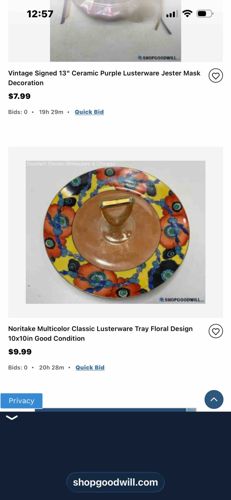
Noritake Lusterware Centerpieces Tray with Floral Design

Vintage Collectible Ceramics / Kitchenware

AI Estimated Value

·Not an official valuation·Verify before acting

$65 - $95

As of June 4, 2026

AI Item Analysis

·AI can make mistakes·Verify before acting
This item is a circular Noritake lusterware tray, measuring approximately 10 by 10 inches. The piece features a vibrant, multi-colored Art Deco-inspired floral design on the outer rim, characterized by bold orange poppy-like flowers and smaller blue and green circular motifs set against a striking yellow background. The center of the tray possesses a contrasting solid tan or copper-toned iridescent luster finish. A distinctive integrated handle rises from the center, finished in the same copper tone, which provides both utility for serving and a sculptural element to the design. The construction is ceramic with a high-gloss glazed finish across the entire surface. While the listing notes 'Good Condition,' typical lusterware of this age often shows light surface scratches or minor rubbing to the delicate metallic overglaze. This piece reflects the craftsmanship of Japanese ceramics from the early 20th century, specifically the 1920s to 1930s, known as the 'Made in Japan' era. The quality is indicated by the precision of the hand-painted floral borders and the characteristic sheen of the luster glaze, which creates a pearlescent effect when it catches the light.
AI Appraisal Report

·AI can make mistakes·Verify before acting
Based on my visual examination of this Noritake lusterware centerpiece tray, I find it to be a representative example of early 20th-century Japanese ceramic craftsmanship, likely dating between 1921 and 1933. The piece exhibits the classic 'Hand Painted' Art Deco aesthetics favored during the Morimura Brothers era. The orange poppies and blue geometric accents remain vibrant, though the copper-toned luster on the central handle and basin shows characteristic minor thinning consistent with light use. Authenticity is supported by the specific pigment palette and the distinct handle morphology typical of Noritake's exported serving ware from this period. The market for Noritake lusterware remains stable but niche. While 'Nippon' marked pieces (pre-1921) often command higher premiums, 'Made in Japan' era lusterware is valued for its decorative utility. Comparables for handled centerpieces in similar condition typically hammer between $50 and $110 at regional auctions. The value is buoyed by the popular floral-on-yellow motif, though limited by the ubiquity of mass-produced Japanese exports from this decade. Critically, this appraisal is based on photographic evidence only. A physical inspection is required to check for 'flea bites' on the rim, hairline fractures under the handle, or professional restorations (often hidden via spray-glaze) which could decrease value by 50% or more. To fully authenticate the piece, I would need to inspect the 'backstamp' (maker's mark) on the underside to confirm the specific production factory and era. Scientific testing is generally not required for ceramics of this period, but provenance documentation regarding its storage history would assist in confirming the integrity of the delicate overglaze.

Get your items appraised

Instant estimates of your treasures with AI-powered appraisals

Browse More Appraisals