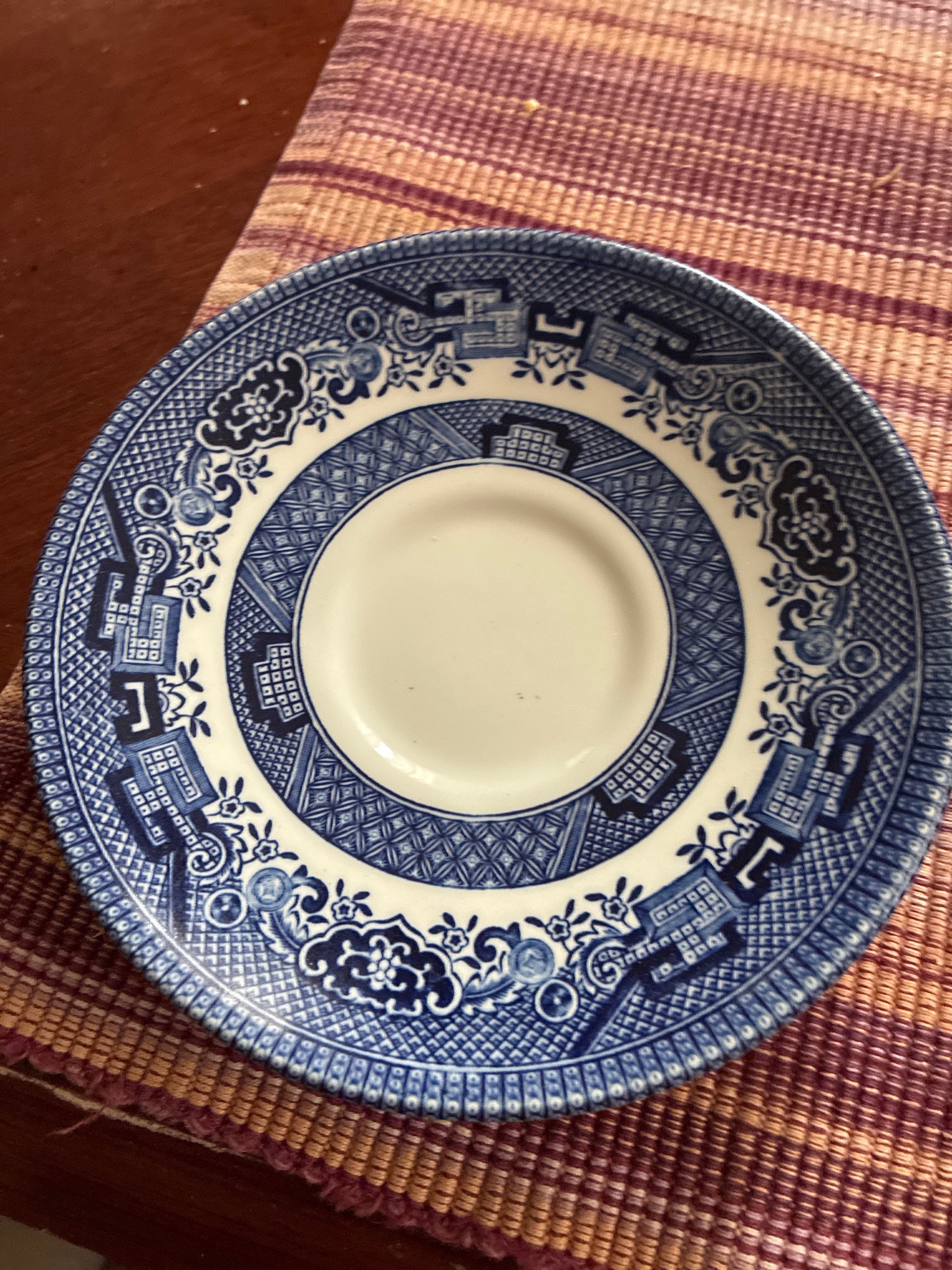
Blue Willow Tea Saucer
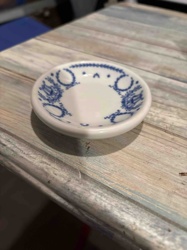
This is a circular ceramic tea saucer featuring the classic 'Blue Willow' transfer-ware pattern. The object is crafted from white earthenware or ironstone with a clear glaze finish. The design is executed in a deep cobalt blue and features the signature elements of the Chinoiserie style, including a multi-tiered decorative border. The rim is adorned with a 'fish roe' or 'diaper' geometric pattern, followed by an intricate landscape border transition containing floral scrolls and butterfly-like motifs. A central well, designed to hold a teacup, is left white but is surrounded by an inner circular band containing more geometric fretwork and stylized architectural pagoda rooftops. The construction shows a standard shallow dish profile with a slightly raised outer rim. Regarding condition, there are visible dark specks (pinholes or kiln debris) within the central well and evidence of light surface abrasions. The crispness of the transfer suggests a mid-20th-century production rather than early 19th-century soft-paste porcelain. The pattern reflects the storied English tradition of mimicking Chinese motifs that became popular in the late 18th century, though this specific piece likely dates from 1940-1970 based on the saturation and uniformity of the blue pigment.
AI-Generated Appraisal Disclaimer
Estimated Value
$5.00 - $12.00
Basic Information
Category
Antique and Vintage Collectible Ceramics / Kitchenware
Appraised On
April 14, 2026
Estimated Value
$5.00 - $12.00
Item Description
This is a circular ceramic tea saucer featuring the classic 'Blue Willow' transfer-ware pattern. The object is crafted from white earthenware or ironstone with a clear glaze finish. The design is executed in a deep cobalt blue and features the signature elements of the Chinoiserie style, including a multi-tiered decorative border. The rim is adorned with a 'fish roe' or 'diaper' geometric pattern, followed by an intricate landscape border transition containing floral scrolls and butterfly-like motifs. A central well, designed to hold a teacup, is left white but is surrounded by an inner circular band containing more geometric fretwork and stylized architectural pagoda rooftops. The construction shows a standard shallow dish profile with a slightly raised outer rim. Regarding condition, there are visible dark specks (pinholes or kiln debris) within the central well and evidence of light surface abrasions. The crispness of the transfer suggests a mid-20th-century production rather than early 19th-century soft-paste porcelain. The pattern reflects the storied English tradition of mimicking Chinese motifs that became popular in the late 18th century, though this specific piece likely dates from 1940-1970 based on the saturation and uniformity of the blue pigment.
Related Tags
Get Your Items Appraised
Instant estimates of your treasures with AI-powered instant appraisals