AI Appraisal Estimate

AI-generated estimates · not official valuations

From the user

What was submitted

Photo and notes provided by the user — not generated by AI

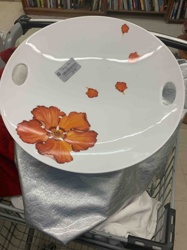
Submitted item photo
Submitted photo · June 10, 2026

User's notes

No additional notes provided.

AI analysis below

AI appraisal

AI analysis & estimate

AI-Generated · Verify before acting

Everything below is generated by AI for informational purposes only. AI can make mistakes — the AI may misidentify items or misattribute them (artist, maker, brand, designer, origin, era). This is not an official valuation and should not be used for insurance, sale, tax, estate, legal, or lending purposes — or any decision requiring a certified appraisal. It is not an authoritative claim about any person, brand, or rights holder — do not share or rely on it as a factual statement about a third party. Always consult qualified professionals before making financial decisions.

Read the full disclaimer

AI Identification

·Not independently authenticated·Verify before acting

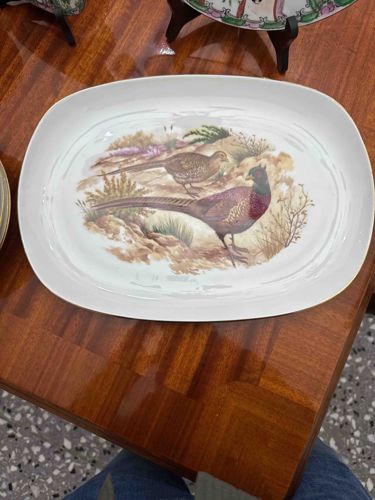
Oval Porcelain Serving Platter with Pheasant Motif

Dinnerware / Serving Ware

AI Estimated Value

·Not an official valuation·Verify before acting

$40 - $75

As of June 10, 2026

AI Item Analysis

·AI can make mistakes·Verify before acting
This is an oval-shaped serving platter crafted from white porcelain, featuring a detailed hand-painted or transfer-printed illustration of two pheasants in a naturalistic setting. The platter has a gently curved, slightly raised rim and a smooth, glossy surface. The central decorative motif depicts a male common pheasant (Phasianus colchicus) with its characteristic iridescent green head, red wattles, and rich brown and purple body plumage, alongside a more subtly colored female pheasant. They are positioned amidst earthy tones of brown, beige, and muted greens representing grass, shrubs, and possibly rocks, suggesting a rustic outdoor environment. The artwork is rendered with fine detail, showcasing the birds' feathers and the texture of the foliage. The edge of the platter features a delicate gold-colored trim, indicating a certain level of refinement. The overall condition appears good, with no immediately visible chips, cracks, or significant wear to the glaze or painted design. Some minor surface scuffs or utensil marks might be present but are not discernible from the image. The style suggests a mid-20th century to contemporary manufacturing period, typical of decorative tableware. The craftsmanship appears to be of good quality, suitable for both display and functional use.
AI Appraisal Report

·AI can make mistakes·Verify before acting
Based on my visual examination of the provided image, I assess this oval porcelain serving platter. The condition appears to be very good; I observe no chips, cracks, or significant loss to the hand-painted or transfer-printed pheasant motif. The gold-colored trim seems intact, and the glossy surface shows no overt signs of heavy wear, although minor surface scuffs or utensil marks cannot be ruled out without a physical inspection. The authenticity of the decoration as hand-painted versus transfer-printed is difficult to definitively determine from an image alone, impacting potential artistic value. However, the detail suggests a quality application. Market conditions for decorative porcelain serving platters, particularly those with game bird motifs, are generally stable but not experiencing high demand. Comparable items, often from mid-20th century manufacturers or contemporary producers, typically retail in the $30-$100 range, depending on brand, specific artistry, and condition. This piece falls into a common category, limiting its rarity. Factors impacting value include its good condition and attractive, detailed imagery. Conversely, it lacks a known prestigious maker's mark or historical provenance, which would significantly elevate its value. Limitations in authenticity verification from the image are primarily about the decoration technique (hand-painted vs. transfer) and any maker's marks, which are crucial for full authentication. An in-person examination would allow for tactile assessment of the surface for brushstrokes, inspection of the underside for maker's marks or signatures, and a thorough check for hairline cracks or crazing not visible in photographs. Provenance documentation would confirm its history and manufacturer, solidifying its value.

Get your items appraised

Instant estimates of your treasures with AI-powered appraisals

Browse More Appraisals